

Science-based Equitable Aquaculture Food Act or the SEAfood Act This bill addresses the development and production of aquaculture in the U.S. Exclusive Economic Zone. For example, the bill requires the Government Accountability Office to produce a report that examines aquaculture permitting, monitoring, and regulations during the 15-year period prior to the enactment of the bill. Additionally, the National Academies of Sciences, Engineering, and Medicine must complete a study to develop the scientific basis for efficient and effective regulation of offshore aquaculture. Further, the National Oceanic and Atmospheric Administration must (1) establish an assessment program to evaluate offshore aquaculture, including the development of performance standards for offshore aquaculture operations; and (2) establish the Aquaculture Centers of Excellence program to award grants to assist certain institution in establishing or enhancing an aquaculture curriculum for undergraduate or graduate courses of study.
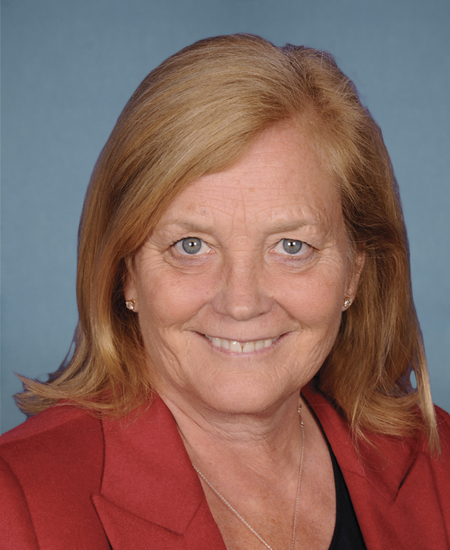
Rep. Chellie Pingree
Sponsored bills
Advancing Equality for Wabanaki Nations Act This bill allows the Wabanaki Nations in Maine to access future federal laws that are passed by Congress for the benefit of Indian tribes. Four Indian tribes (Maliseet, Micmac, Penobscot, and Passamaquoddy) make up the Wabanaki Nations. Currently, these tribes are unable to access certain federal laws and related benefits because such laws are preempted by the Maine Indian Claims Settlement Act of 1980.
Truth and Healing Commission on Indian Boarding School Policies Act This bill establishes the Truth and Healing Commission on Indian Boarding School Policies in the United States and sets forth its powers, duties, and membership. Among other duties, the commission must investigate the impacts and ongoing effects of the Indian Boarding School Policies (federal policies under which American Indian, Alaska Native, and Native Hawaiian children were forcibly removed from their family homes and placed in boarding schools). Further, the commission must develop recommendations on ways to (1) protect unmarked graves and accompanying land protections; (2) support repatriation and identify the tribal nations from which children were taken; and (3) discontinue the removal of American Indian, Alaska Native, and Native Hawaiian children from their families and tribal communities by state social service departments, foster care agencies, and adoption agencies.
Save Oak Flat Act This bill repeals the requirement for the Department of Agriculture to convey the 2,422 acres of Forest System land located in Tonto National Forest in Pinal County, Arizona, known as Oak Flat, to Resolution Copper Mining, LLC, in exchange for various parcels of land owned by Resolution Copper. Oak Flat is withdrawn from (1) entry, appropriation, or disposal under the public land laws; (2) location, entry, and patent under the mining laws; and (3) disposition under all laws pertaining to mineral and geothermal leasing or mineral materials.
The Jackie Walorski Maternal and Child Home Visiting Reauthorization Act of 2022 This bill reauthorizes through FY2027, increases funding for, and modifies the Maternal, Infant, and Early Childhood Home Visiting Program. This program supports home visits for expectant and new parents who live in communities that are at-risk for poor maternal and child health outcomes. Changes to the program include setting out requirements for allocating program funds; increasing the percentage of funds reserved for tribal entities; establishing a publicly available dashboard that reports program outcomes; requiring activities to reduce unnecessary data collection, reporting, and other administrative requirements of the program; and allowing for virtual home visits (provided certain conditions are met). The bill also reduces funding for the Medicare Improvement Fund.
Protecting Communities from Plastics Act This bill sets forth a variety of requirements and incentives to reduce the production and use of plastics and other petrochemicals, including by directing the Environmental Protection Agency to place a temporary pause on certain new permits for petrochemical facilities under the Clean Air Act and the Clean Water Act.
Coastal Communities Ocean Acidification Act of 2022 This bill directs the National Oceanic and Atmospheric Administration (NOAA) to collaborate with state, local, and tribal entities that are conducting or have completed community vulnerability assessments, research planning, climate action plans, or other similar activities related to ocean acidification and coastal acidification and their impacts of ocean acidification on coastal communities. NOAA must (1) support collaborative interagency relationships and information at the state, local , and tribal level; and (2) assist state, local, and tribal entities in improving existing systems and programs to better address ocean acidification and coastal acidification and identify whether such activities can be used as a model for other communities.
Lymphedema Treatment Act This bill provides for Medicare coverage of lymphedema compression treatment items. Specifically, the bill provides for coverage of standard and custom fitted gradient compression garments and other approved items that are prescribed by a physician or other specified health care professional to treat lymphedema.
Revitalizing the Economy of Coal Communities by Leveraging Local Activities and Investing More Act of 2021 or the RECLAIM Act of 2021 This bill revises requirements concerning the Abandoned Mine Reclamation Fund, including by expanding the eligible uses of the fund. Specifically, the bill allows the fund to be used to provide support for economic revitalization, diversification, and development in economically distressed mining communities through the reclamation and restoration of land and water resources adversely affected by abandoned coal mines. In addition, it requires specified amounts to be annually distributed from the fund through FY2026 to states and Indian tribes for reclaiming and restoring lands and waters so affected.
This bill authorizes the Department of Commerce to award competitive grants to Indian tribes to further achievement of tribal coastal zone objectives. Specifically, these tribal coastal zone objectives include protecting, restoring, or preserving areas in the zone that hold important ecological, cultural, or sacred significance for the tribes or traditional, historic, and aesthetic values essential to the tribes; preparing and implementing a special area management plan and technical planning for important coastal areas; and implementing any coastal or shoreline stabilization measure for the purpose of public safety, public access, or cultural or historical preservation.