

Fair and Open Skies Act This bill prohibits the Department of Transportation (DOT) from issuing a foreign air carrier permit or an exemption from certain air carrier certificate requirements under the United States-European Union Air Transport Agreement of April 2007, unless DOT finds that issuing the permit or exemption would be consistent with Article 17 bis of the agreement, which provides that opportunities created by the agreement do not undermine labor standards or the labor-related rights and principles contained in the laws of the respective parties to the agreement; and imposes conditions on the permit or exemption necessary to ensure compliance with Article 17 bis . The bill modifies policy considerations relating to air carrier certificates to require DOT to consider preventing entry into U.S. markets by flag of convenience carriers (i.e., foreign air carriers established in a country other the home country of their majority owner in order to avoid regulations of the home country) and preventing the undermining of labor standards. In carrying out such air carrier certificate requirements, DOT must consider preventing entry of flag of convenience carriers into U.S. markets as being in the public interest and consistent with public convenience and necessity for safety in air transportation and air commerce. In formulating U.S. international air transportation policy relating to the elimination of discrimination and unfair competition, the Department of State and DOT must include in their considerations the undermining of labor standards.
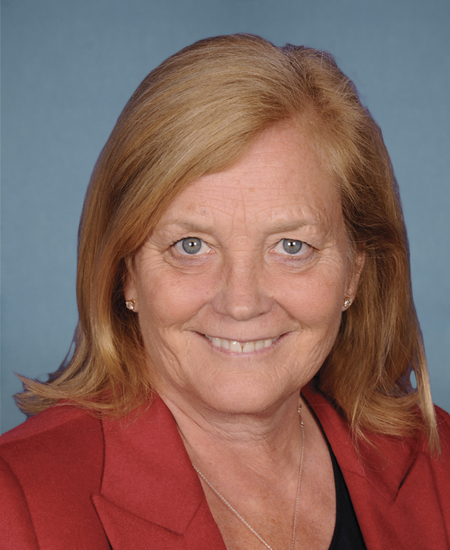
Rep. Chellie Pingree
Sponsored bills
Big Cat Public Safety Act This act revises requirements governing the trade of big cats (i.e., species of lion, tiger, leopard, cheetah, jaguar, or cougar or any hybrid of such species) under the Lacey Act to limit the possession, breeding, and exhibition of big cats. The Lacey Act prohibits any person from importing, exporting, buying, selling, transporting, receiving, or acquiring big cats across state lines or the U.S. border. However, some exemptions are provided for certain entities, such as universities and wildlife sanctuaries. (Sec. 3) The act expands the Lacey Act prohibitions to include a prohibition on possessing or breeding big cats. Breeding means facilitating propagation or reproduction (whether intentionally or negligently), or failing to prevent propagation or reproduction. Owners of big cats that were born before this act's enactment may keep their big cats, but the owners must register them with the U.S. Fish and Wildlife Service. The act modifies the list of entities that are exempt from prohibitions to export, buy, sell, transport, receive, acquire, possess, or breed big cats. The modified list includes exemptions for entities or facilities exhibiting animals to the public if they (1) hold a Class C license in good standing under the Animal Welfare Act, and (2) do not allow individuals to come into direct physical contact with big cats. However, direct contact is allowed if the individual is a trained professional, a veterinarian, or directly supporting conservation programs that do not involve commercial activities and meet other specified restrictions. (Sec. 4) A person who knowingly violates the act must be fined not more than $20,000, or imprisoned for no more than five years, or both. The act considers each violation to be a separate offense. The offense must be deemed to have been committed not only in the district where the violation first occurred, but also in any district in which the defendant may have taken or been in possession of the prohibited wildlife species. (Sec. 5) The act extends forfeiture provisions to fish, wildlife, or plants that are bred or possessed; thus, big cats bred or possessed in violation of the act are subject to forfeiture. (Sec. 6) The Department of the Interior must issue regulations to implement this act.
Rebuild America's Schools Act of 2022 This bill provides support for long-term improvements to public elementary and secondary school facilities. First, the bill sets forth allocations to states and establishes a need-based grant program for local educational agencies (LEAs) to improve school facilities. Further, the bill specifies allowable uses of grant funds, including carrying out major repairs, improving indoor air quality, and making facilities accessible to disabled individuals. Additionally, the bill requires LEAs that receive funds for new construction, modernization, or renovation projects to comply with hazard-resistance building codes and performance criteria under the WaterSense program of the Environmental Protection Agency. Further, the bill requires such LEAs to adopt certain green practices (environmental standards) and requires the use of iron, steel, and manufactured products that are made in the United States (Buy America). The bill restores school infrastructure tax credit bonds. The bill also sets forth reporting requirements, including annual reports on grant program projects and a report by the Government Accountability Office that requires a study of the geographic distribution of projects, the impact of selected projects on student and staff health and safety, and the accessibility of projects to high-poverty schools. The bill also establishes the Office of School Infrastructure and Sustainability within the Department of Education. Next, the bill extends through FY2027 the Impact Aid Construction program. Finally, the bill establishes a grant program to assist LEAs with repairing or replacing concrete foundations affected by pyrrhotite (an iron sulfide material linked to crumbling foundations).
This bill declares that Donald Trump, under the Fourteenth Amendment (which disqualifies from office specified officials who have engaged in insurrection or rebellion), is ineligible to again hold the Office of President of the United States, or to hold any office, civil or military, under the United States.
VA Employee Fairness Act of 2021 This bill repeals provisions excluding any matter or question concerning professional conduct or competence; peer review; or the establishment, determination, or adjustment of employee compensation from the applicability of collective bargaining rights for Veterans Health Administration employees.
Sunshine Protection Act of 2021 This bill makes daylight savings time the new, permanent standard time. States with areas exempt from daylight savings time may choose the standard time for those areas.
Boundary Waters Wilderness Protection and Pollution Prevention Act This bill withdraws certain federal lands and waters in Minnesota from mining and related activities. Specifically, the bill withdraws approximately 234,328 acres of federal land and waters in a specified area in the Rainy River Watershed of Superior National Forest from entry, appropriation, and disposal under the public land laws; location, entry, and patent under the mining laws; and operation of the mineral leasing, mineral materials, and geothermal leasing laws. The area is adjacent to the Boundary Waters Canoe Area Wilderness and the Boundary Waters Canoe Area Wilderness Mining Protection Area. Land or interest in land within such area that is acquired by the United States shall be immediately withdrawn in accordance with this bill. The Forest Service is authorized to permit the removal of sand, granite, iron ore, and taconite from national forest system lands within such area if the removal is not detrimental to the water quality, air quality, and health of forest habitat within the Rainy River Watershed.
Respect for Marriage Act This act provides statutory authority for same-sex and interracial marriages. Specifically, the act replaces provisions that define, for purposes of federal law, marriage as between a man and a woman and spouse as a person of the opposite sex with provisions that recognize any marriage between two individuals that is valid under state law. (The Supreme Court held that the current provisions were unconstitutional in United States v. Windsor in 2013.) The act also replaces provisions that do not require states to recognize same-sex marriages from other states with provisions that prohibit the denial of full faith and credit or any right or claim relating to out-of-state marriages on the basis of sex, race, ethnicity, or national origin. (The Supreme Court held that state laws barring same-sex marriages were unconstitutional in Obergefell v. Hodges in 2015; the Court held that state laws barring interracial marriages were unconstitutional in Loving v. Virginia in 1967.) The act allows the Department of Justice to bring a civil action and establishes a private right of action for violations. The act does not (1) affect religious liberties or conscience protections that are available under the Constitution or federal law, (2) require religious organizations to provide goods or services to formally recognize or celebrate a marriage, (3) affect any benefits or rights that do not arise from a marriage, or (4) recognize under federal law any marriage between more than two individuals.
International Violence Against Women Act of 2022 This bill requires a U.S. global strategy to prevent and respond to violence against women and girls. The bill establishes in the Department of State an Office of Global Women's Issues, which shall be headed by an Ambassador-at-Large for Global Women's Issues. The Ambassador-at-Large shall (1) coordinate U.S. government efforts regarding gender equality and the advancement of women and girls in foreign policy, and (2) develop or update periodically a U.S. global strategy to prevent and respond to gender-based violence. The bill establishes in the U.S. Agency for International Development the position of Senior Coordinator for Gender Equality and Women's Empowerment who shall coordinate policies, programs, and funding regarding gender equality and women's empowerment.
First Responder Fair Return for Employees on Their Initial Retirement Earned Act or the First Responder Fair RETIRE Act This act allows disabled federal first responders (e.g., law enforcement officers, customs and border protection officers, and firefighters) to continue receiving federal retirement benefits in the same manner as though they had not been disabled. Under current law, federal first responders are subject to a mandatory retirement age of 57. To facilitate this earlier retirement, federal first responders are required to pay a greater percentage of their salary towards retirement. Additionally, their annuity amount is calculated at a higher rate than other federal employees. This act allows a federal first responder to remain in the accelerated retirement system if they are placed in another civil service position outside of that system after returning to work from a work-related injury or illness. Further, if such an employee is separated from service before they are entitled to receive an annuity, they may receive a refund of their accelerated contributions.