

Maddy summaryHR 9578, the Ranked Choice Voting Act, would require all states to use ranked choice voting for elections of U.S. Senators and Representatives (including primaries and general elections) starting with the 2027 elections. The bill specifies that voters would rank candidates in order of preference, with ballots tabulated by eliminating the lowest-ranked candidate in each round until a winner emerges with a majority. States would receive federal funds based on registered voters to implement the system, and the bill prohibits separate runoff elections for these federal offices. This legislation would fundamentally change how federal congressional elections are conducted across all states, while not affecting state or local elections.
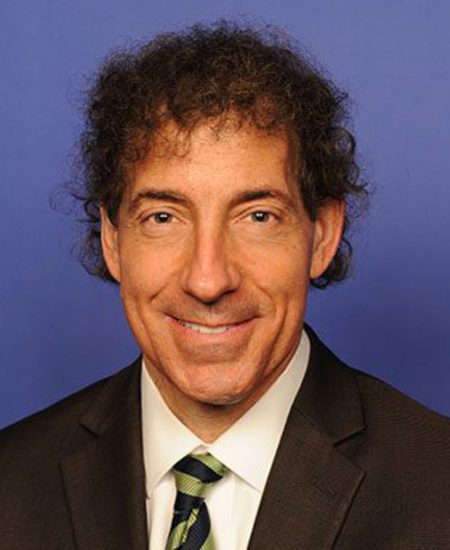
Rep. Jamie Raskin
Sponsored bills
Maddy summaryHRES 1437 is a ceremonial resolution designating the week beginning September 9, 2024, as "National Hispanic-Serving Institutions Week." It recognizes Hispanic-serving institutions (HSIs) - colleges and universities with at least 25% Hispanic enrollment - and their role in educating low-income students, advancing economic mobility, and serving 31.7% of all undergraduate students. The resolution calls for the public and organizations to observe this week with ceremonies and activities during Hispanic Heritage Month. It does not create new laws, allocate funding, or change existing policies - it is purely a symbolic gesture of recognition.
Maddy summaryHRES 1432 designates September 10, 2024, as "National Firearm Suicide Prevention Day" to raise public awareness about firearm suicides and promote safe storage practices. The resolution encourages healthcare professionals to discuss safe firearm storage with patients and supports the day's goals of reducing firearm suicides through education. It directly affects the general public and healthcare providers by highlighting evidence that safe storage lowers suicide risk, referencing statistics like 54.6% of U.S. suicides in 2022 involving firearms. The bill is symbolic, with no new legal requirements, and aligns with existing awareness efforts like Firearm Suicide Prevention Day.
Maddy summaryHRES 1436 is a symbolic resolution (not a law) introduced in the U.S. House of Representatives. It recognizes suicide as a preventable public health crisis by citing statistics from the CDC, VA, and SAMHSA showing rising suicide rates across age groups, including veterans and adolescents. The resolution formally supports designating September as "National Suicide Prevention Month" and September 10, 2024, as "World Suicide Prevention Day." It does not create new policies, allocate funding, or directly affect any individuals - its purpose is solely to express congressional support for suicide prevention awareness and efforts.
Maddy summaryHR 9529, the SAFER Nursing Homes Act of 2024 (despite its title referencing "Sustained Allocations" in the text), provides mandatory funding for inspections of nursing facilities participating in Medicare and Medicaid. It allocates $492 million for fiscal year 2025 specifically to support surveys and certifications of skilled nursing facilities and nursing facilities under federal programs. This funding directly affects Medicare/Medicaid-certified nursing homes by ensuring resources for required regulatory oversight. The bill does not create new rules but secures financial support for existing inspection processes, with future funding determined annually by the Health and Human Services Secretary.
Maddy summaryThe Stand with Ukraine Act of 2024 establishes a framework for sustained U.S. security assistance to Ukraine in response to Russia's invasion. It endorses a 10-year bilateral security agreement and directs the U.S. government to provide military equipment, training, and security assistance to strengthen Ukraine's defense capabilities against Russian aggression. Key provisions include treating Ukraine as a major non-NATO ally for defense transfers, fast-tracking military sales through the Foreign Military Sales program, and creating mechanisms to prioritize defense article transfers. The bill also includes specific support for Ukraine's recovery, reconstruction, and demining efforts following the conflict. This legislation directly affects U.S. foreign policy implementation, military assistance programs, and Ukraine's ability to build a credible defense against Russian threats.
Maddy summaryThe Pigs and Public Health Act prohibits growth-promoting drugs like ractopamine that cause pigs to become nonambulatory (unable to stand or walk), sets new transportation standards for pig welfare including proper bedding, water, and temperature controls, and requires humane euthanasia of nonambulatory pigs rather than processing them for food. It creates an online portal for workers to confidentially report violations of these standards and provides whistleblower protections against retaliation for reporting safety or health concerns. The bill also mandates a study on public health risks from nonambulatory pigs entering the food supply, including pathogens like swine influenza, Salmonella, and antibiotic-resistant bacteria. These requirements apply to slaughter facilities, meat processing plants, and transportation providers that handle pigs. The act aims to improve animal welfare, worker safety, and reduce public health risks associated with diseased pigs entering the food system.
Maddy summaryHR 9408, the Pedestrian Protection Act, requires the U.S. Secretary of Transportation to establish new safety standards for motor vehicles to reduce collisions and injuries involving pedestrians, bicyclists, and other vulnerable road users. The bill mandates rulemaking within 3-4 years to set standards for vehicle design features (like hood, bumper, and windshield design) and minimum visibility requirements, with full compliance required 2 years after final rules are issued. It also directs the creation of public comparative ratings for vehicle safety technology and driver visibility features, with a report to Congress due within 5 years. The law directly affects vehicle manufacturers by requiring design changes and new safety disclosures, while prioritizing the safety of pedestrians and cyclists in vehicle design.
Maddy summaryThis bill amends Section 1983 of federal law (42 U.S.C. 1983) to explicitly allow lawsuits against federal officials for violating constitutional rights. It directly affects federal employees or agents who act under federal authority, expanding the current Bivens doctrine which previously only covered state actors. The key mechanism is a simple textual change inserting "of the United States" before "of any State" in the statute, enabling civil actions against federal officials for constitutional violations. This is a procedural amendment to existing law, not a new policy.
Maddy summaryThe Stop Militarizing Our Streets Act of 2024 restricts the Department of Defense from selling military-grade assault weapons or specific high-capacity ammunition (like .223 Remington and 7.62 NATO) in the commercial marketplace, and prohibits the department from procuring weapons or ammunition from dealers that sell these items commercially. The bill establishes detailed requirements for dealers who want to sell to the government, including mandatory background checks through NICS, security measures, limits on ammunition sales to individuals (500 rounds of covered ammunition or 1,000 rounds of other types in 30 days), and employee training on recognizing straw purchases and preventing illegal sales. Government-owned plants that produce firearms or ammunition for commercial sale must report annual sales data to Congress, including customer locations and revenue. The bill also authorizes the Attorney General to establish licenses for ammunition dealers and allow them to use the NICS background check system. This legislation directly affects the Department of Defense, firearms and ammunition dealers, and government-owned manufacturing facilities.