9/11 Responder and Survivor Health Funding Correction Act This bill increases funding for and otherwise modifies a federal program that provides medical monitoring and treatment to responders and survivors who suffer from health conditions related to the September 11, 2001, attacks on the World Trade Center. Among the changes, the bill allows certain health care providers other than physicians to determine whether an individual's health condition is related to the attacks, and it establishes a research program to study the impacts of the attacks on health and educational outcomes of individuals who were 21 years of age or younger when the attacks occurred.
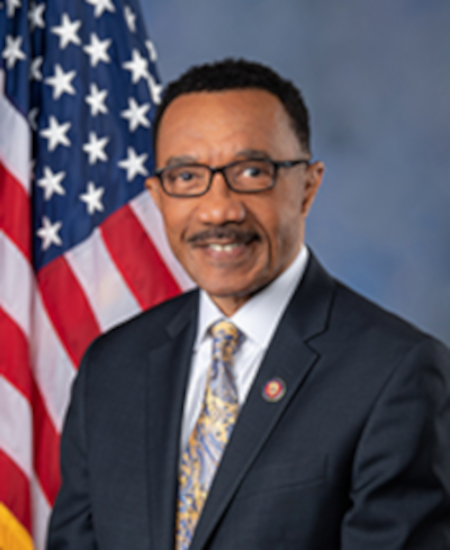
Rep. Kweisi Mfume
Sponsored bills
Refund to Rainy Day Savings Act This bill directs the Internal Revenue Service (IRS) to establish and implement the Refund to Rainy Day Savings program (i.e., a program to provide for unexpected expenses) to allow taxpayers to deposit 20% of their income tax refunds into the savings program. The bill sets forth rules for investments in and disbursement from the savings program. The bill also reauthorizes the Assets for Independence Act for FY2022-FY2026. The IRS may make grants to qualified entities to conduct AFI innovation projects. The bill directs the Department of Health and Human Services to establish a three-year matched savings account pilot program to encourage savings by participants in the savings program.
Choice Neighborhoods Initiative Act of 2021 This bill allows the Department of Housing and Urban Development to make competitive grants to local governments, public housing agencies, or nonprofit entities owning a major housing project to implement transformational housing programs in eligible neighborhoods with a concentration of extreme poverty and severely distressed housing. A program must, among other requirements, allow residents of public or assisted housing displaced by such a program to return to the replacement housing provided under the program.
Central American Women and Children Protection Act of 2021 This bill temporarily authorizes the Department of State to enter into bilateral compacts with the governments of El Salvador, Guatemala, and Honduras to strengthen criminal justice systems, social supports, and other means to protect women and children from domestic and gender-based violence. At least 15 days before entering a compact, the State Department must submit to Congress a copy of the proposed agreement and related materials. Authority to enter a compact terminates on September 30, 2023, and a compact may last no more than six years. To support the objectives outlined in a compact, the State Department may provide assistance to international organizations, civil society, or other private entities for programs and activities to prevent and respond to domestic and gender-based violence in a compact country. The bill bars the provision of assistance to the government of a compact country as direct budgetary support. The State Department may suspend or terminate the assistance if a compact country or entity receiving the assistance engaged in conduct contrary to U.S. national security interests or inconsistent with the objectives of the compact. The State Department must notify Congress at least 15 days before suspending or terminating assistance. The bill also requires the State Department to annually report on progress made under each compact, including its effect on reported violence against women and children and other domestic and gender-based violence indicators.
This concurrent resolution recognizes the disparity in wages paid to Black women and its impact on women, families, and the nation, and reaffirms Congress' support for ensuring equal pay and closing the gender wage gap.
Equal Pay for Equal Work Act This bill establishes the National Equal Pay Enforcement Task Force to improve enforcement of equal pay laws.
Medical Device Nonvisual Accessibility Act of 2021 This bill requires certain medical devices with a digital interface to meet nonvisual accessibility standards established by the Food and Drug Administration (FDA). Specifically, the FDA must establish regulations to require a Class II or Class III medical device with a digital interface to provide a blind or low-vision user access to the same services and information, and generally the same ease of use, as provided to a user who is not low-vision or blind. (The FDA classifies medical devices in three classes. Class I devices are low-risk, Class II devices are moderate-risk, and Class III devices are high-risk.) A Class II or Class III medical device that does not meet the nonvisual accessibility standards established under this bill may not be sold.
Domestic Workers Bill of Rights Act This bill provides rights and protections for domestic workers (e.g., housekeepers, nannies, caretakers, personal assistants, and chauffeurs), including pay and leave rights, and health and safety protections. Specifically, the bill repeals the exemption of domestic live-in employees from certain minimum wage and maximum hour requirements. Employers must provide written notice of termination and provide at least 30 days of lodging and two weeks of severance pay to terminated live-in employees. Live-in employees also must be provided with reasonable access to telephone and internet service during their employment. The bill requires employers to provide domestic workers with a written agreement covering wages, sick leave, benefits, and other matters. Further, domestic workers may request and be granted changes to work schedules due to personal events. The bill also provides domestic workers with certain privacy rights, extends to domestic workers protections against discrimination in employment, and increases the federal medical assistance percentage (FMAP) for certain Medicaid-funded medical services provided by domestic workers. The Department of Labor must (1) award grants for a domestic worker national hotline for reporting emergencies, training on hazards facing domestic workers, and workforce investment activities for domestic workers; and (2) establish a Domestic Worker Wage and Standards Board to investigate standards in the domestic workers industry. Labor must publish online a document that describes the rights and protections for domestic workers under this bill.

Protecting Renters from Evictions Act of 2021 This bill extends through December 31, 2021, the order issued by the Centers for Disease Control and Prevention titled Temporary Halt in Residential Evictions To Prevent the Further Spread of COVID–19 and published on September 4, 2020.
Diversity and Inclusion at the Department of State Act This bill establishes a new position and requires other activities to promote diversity and inclusion in the Department of State. The bill creates the presidentially-appointed position of Chief Diversity and Inclusion Officer in the Office of the Deputy Secretary of State to, among other activities, develop a strategic plan to guide implementation of diversity and inclusion efforts and support State Department personnel from traditionally underrepresented groups. The officer reports directly to the Secretary of State. Additionally, the State Department must establish a Diversity and Inclusion Leadership Council to coordinate applicable strategic plans, initiatives, and policies. The bill also modifies merit selection processes for promotions, performance pay, and related matters to promote diversity and inclusion in the Foreign Service. Specifically, it adds factors (e.g., testimony from peers and subordinates or demonstrated support for diversity and inclusion) that may be considered in recommendations and rankings related to a Foreign Service officer's performance. The State Department must also establish a mentorship program for entry- and mid-level members of the Foreign Service and periodically offer a Senior Executive Service development program to members of the civil service in the top two pay grades. Senior Executive Service members serve as high-level managers within federal agencies. The bill requires the State Department to report on its diversity and inclusion efforts, as well as demographic information about members of boards that make personnel decisions and candidates for the Senior Executive Service.