This resolution expresses the sense of the House of Representatives that the United States shall recognize kind actions in our country, encourage kindness, spread love, and foster a culture of being kind to one another.
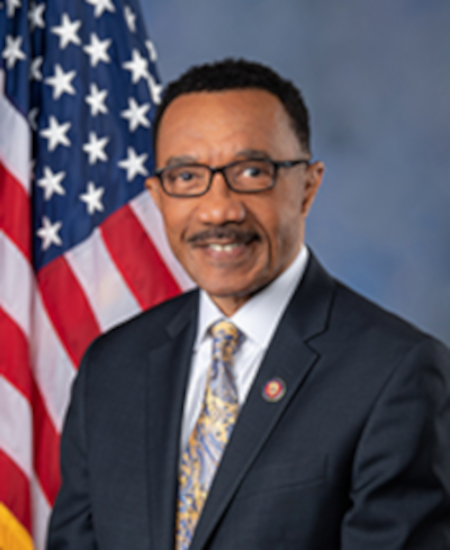
Rep. Kweisi Mfume
Sponsored bills
This resolution celebrates the contributions of small businesses in every U.S. community and supports the designation of National Small Business Week. Further, it supports efforts to provide small businesses with aid and assistance through certain programs and initiatives.
Federal Acquisition E-Commerce Fairness and Competition Act This bill requires the General Services Administration (GSA) to expand the testing program for e-commerce portal models. Specifically, the GSA must (1) expand the proof-of-concept testing program by testing at least three commercial e-commerce portal models, including the E-Commerce Model, the E-Procurement Model, and the E-Marketplace Model (as described in a GSA implementation plan published in March 2018), to ensure that such program is representative of available commercial e-commerce portal models that qualify for the program; and (2) report to Congress. The GSA must ensure that a commercial e-commerce portal provider awarded a contract that is owned or controlled by a person or entity with a market capitalization greater than $600 billion at any time in the two years preceding this bill's enactment (e.g., Amazon) does not sell products through the commercial e-commerce portal that compete with products sold by any third-party supplier through such portal.
Medicare Negotiation and Competitive Licensing Act of 2021 This bill establishes several requirements relating to the prices of prescription drugs. Specifically, the bill requires the Centers for Medicare & Medicaid Services (CMS) to negotiate with pharmaceutical companies regarding prices for drugs covered under Medicare. (Current law prohibits the CMS from doing so.) If the CMS is unable to negotiate the price of a drug, such drug is subject to competitive licensing in order to further its sale under health insurance programs, notwithstanding existing government-granted exclusivities. The negotiated prices also apply to other federal health care programs, private health insurance, and the uninsured; pharmacies that charge more than the negotiated price for uninsured individuals are subject to civil penalties. Manufacturers must also comply with specified reporting requirements relating to prices and licensing, subject to civil penalties. The bill also institutes an excise tax on drugs for which the price spikes beyond a certain limit, subject to specified exemptions, as well as on drugs for which the price exceeds the negotiated price.
William Collins Jet Fuel Exposure Recognition Act This bill requires the Department of Veterans Affairs (VA), for purposes of wartime disability compensation and VA health care, to presume that covered veterans were exposed to toxic substances, chemicals, and airborne hazards during military service, unless there is affirmative evidence that the veterans were not exposed to such substances in connection with their service. Under the bill, covered veterans are those who worked for a cumulative period of at least two years in active service in a military occupational specialty that involved consistent exposure to jet fuel. In adjudicating claims for compensation for a service-connected disability related to jet fuel exposure with evidence of a disability and a presumption of toxic exposure during active service, the VA must (1) provide a medical examination and request a medical opinion for service-connection; and (2) direct the medical provider to consider the exposure of the veteran to toxic substances during all military deployments and the synergistic effect of all combined toxic substances through inhalation, dermal exposure, and ingestion. Every other year for a period of eight years, the VA must make publicly available a report related to the effect of jet fuel used by the Armed Forces on the health of individuals. In evaluating claims for compensation for service-connected disabilities, the VA must take into consideration the findings of such reports.
Improving Medicare Coverage Act This bill temporarily expands eligibility for Medicare. It also temporarily establishes a premium and cost-sharing assistance program for low-income beneficiaries. Specifically, the bill lowers the age of eligibility for Medicare from 65 to 60. The Centers for Medicare & Medicaid Services must establish procedures to provide for automatic enrollment of qualifying individuals. Enrollment must be completed within 11 months of the bill's enactment. The bill also establishes a program under Medicare to assist low-income Medicare beneficiaries with premiums, coinsurance, deductibles, and other costs. Currently, such assistance is provided through Medicare Savings Programs, which are administered by state Medicaid programs. The bill also establishes a related special enrollment period under Medicare, expands eligibility for assistance to beneficiaries with income up to 200% of the federal poverty line, and provides for joint eligibility determinations with respect to the bill's program and the low-income subsidy program under the Medicare prescription drug benefit. The bill's provisions generally take effect six months after the bill's enactment and terminate five years later.
Prohibition of Medicaid Funding for Conversion Therapy Act This bill prohibits state Medicaid programs from covering conversion therapy. The bill defines conversion therapy as any practice or treatment that seeks to change a person's sexual orientation or gender identity in exchange for monetary compensation.
This bill establishes Rosa Parks Day as a federal holiday.
Diversifying Investigations Via Equitable Research Studies for Everyone Trials Act or the DIVERSE Trials Act This bill requires activities to increase diversity in clinical trials. It also expands reporting by laboratories that test for and diagnose COVID-19 and requires a study on data collection and data sharing during public health emergencies. Specifically, the Food and Drug Administration (FDA) must issue guidance on decentralized clinical trials to promote meaningful demographic and geographic diversity in patient engagement, enrollment, and participation. Decentralized clinical trials include those executed through telemedicine or other digital technologies to allow for the remote collection and assessment of clinical trial data. The FDA may also work with foreign regulators to harmonize international regulations governing decentralized clinical trials and the use of digital health technology. In addition, the Department of Health and Human Services (HHS) may support community education, outreach, and recruitment activities for clinical trials of treatments for conditions that disproportionately impact populations underrepresented in clinical trials. The bill also specifies that drug or device manufacturers may provide, subject to some limits, free digital health technologies and other remuneration to patients in approved clinical trials without violating laws that address fraud and abuse in federal programs. Furthermore, laboratories that test for and diagnose COVID-19 must report additional demographic data, including information about social determinants of health. HHS must also contract with the National Academy of Medicine to study and propose a design for an interoperable platform to facilitate data sharing during public health emergencies.

This resolution establishes a House Permanent Select Committee on Aging.