

Maddy summaryThis bill, HR 2102 (Major Richard Star Act), allows veterans with combat-related disabilities to receive both full military retired pay and veterans' disability compensation simultaneously, without the previous offset that reduced retired pay. It directly affects veterans already eligible for both benefits due to combat-related injuries, removing the requirement that their retired pay be reduced by the disability compensation amount. The key provision amends Title 10 and Title 38 to eliminate the offset rule (sections 5304 and 5305 of Title 38) for these veterans. The change applies to payments starting after the bill’s enactment date, effective for all qualifying veterans. This is a policy change to increase financial support for affected veterans, not a new benefit.
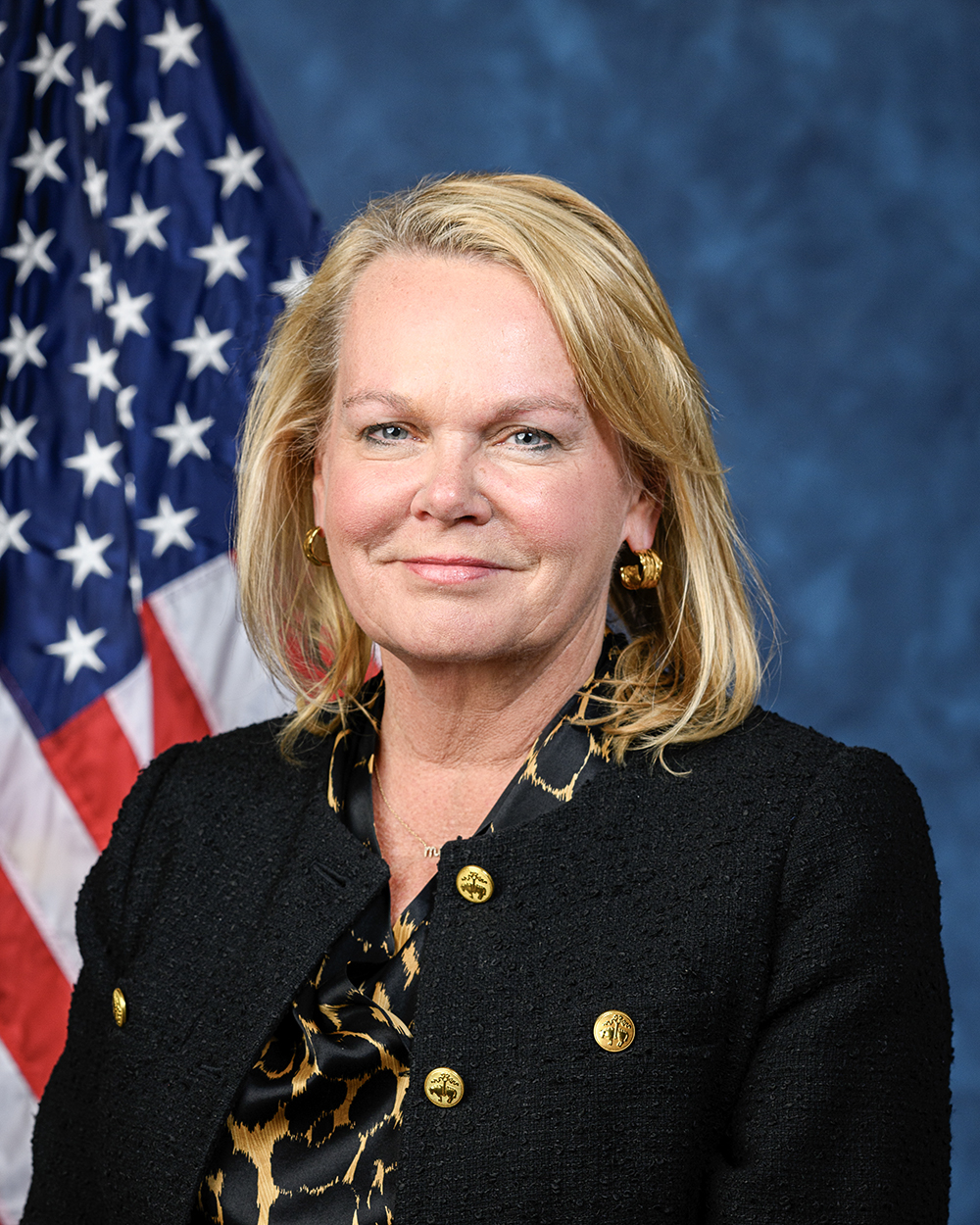
Rep. April McClain Delaney
Sponsored bills
Maddy summaryHR 2109, the Cybersecurity for Rural Water Systems Act, requires the federal rural water assistance program to provide cybersecurity help to small water systems serving under 10,000 people. It adds specific provisions for these systems to assess their cyber threat protections and implement security plans, procedures, and technologies. The bill increases annual funding for the program from $25 million to $32.5 million (2026-2030), with $7.5 million specifically allocated each year for this cybersecurity assistance. This directly affects rural water providers who lack resources to address growing cyber risks to their infrastructure.
Maddy summaryThis bill increases loan limits for farmers under the Farm Service Agency. It raises farm ownership loan caps from $600,000/$1.75 million to $850,000/$3.5 million (for direct/guaranteed loans) and operating loan caps from $400,000/$1.75 million to $750,000/$3 million, effective 2025. It also creates a refinancing program allowing distressed guaranteed loans to convert to direct loans if borrowers prove problems can be fixed and the farm can return to financial stability. Additionally, it doubles the microloan limit from $50,000 to $100,000 and updates inflation calculations for loan adjustments using USDA land value data instead of previous metrics.
Maddy summaryHR 2628, the American Innovation Act, authorizes significant funding increases for federal science and innovation programs through fiscal year 2036. It sets annual funding levels for the National Science Foundation, Department of Energy’s Office of Science, Department of Defense science programs, National Institute of Standards and Technology, and NASA’s Science Mission Directorate, with amounts rising each year and adjusted annually for inflation using the Consumer Price Index. The bill also exempts these appropriations from automatic spending cuts (sequestration) under the Balanced Budget Act. This legislation directly affects federal research agencies by securing long-term funding for scientific development and technological advancement.
Maddy summaryThe IDEA Full Funding Act (HR 2598) mandates specific annual federal funding levels for the Individuals with Disabilities Education Act (IDEA), directly affecting schools and students with disabilities nationwide. It requires the federal government to appropriate either a fixed dollar amount or a specified percentage (increasing annually from 4.5% to 40%) of a calculated total - based on the number of eligible students and average per-pupil costs - starting in fiscal year 2026 through 2035. The bill sets clear, escalating funding targets, with the higher of two calculated amounts (dollar figure or percentage) becoming available for obligation each fiscal year. This establishes a binding financial commitment to address long-standing underfunding of special education services under IDEA.
Maddy summaryHCONRES 25 is a symbolic congressional resolution stating that the Trump administration's planned 25% tariffs on imports from Canada and Mexico violate the USMCA trade agreement. It directly addresses the administration's tariff announcement (set for April 2, 2025), which Congress claims undermines the USMCA's terms. The resolution emphasizes that these tariffs threaten established trade relationships, harm the $1.6 trillion annual trade between the U.S. and these nations, and contradict the agreement's goal of maintaining a level playing field. As a non-binding expression of congressional opinion, it does not alter tariffs but highlights concerns about USMCA compliance.
Maddy summaryThis bill creates a new Medicare payment model (the "Comprehensive Alternative Response for Emergencies Model") that allows Medicare Part B to cover ground ambulance services provided in response to emergency medical calls *without* a full transport. It directly affects Medicare beneficiaries receiving emergency ambulance care and ambulance providers, ensuring they are paid for services like dispatch and initial response that don't include transport. The model requires payment rates to align with standard transport payments, mandates compliance with state protocols, and operates for a 5-year test period. A report by the Comptroller General will evaluate the model's impact on beneficiary access, outcomes, and regional differences after 4 years.
Maddy summaryHR 2559, the Taiwan Allies Fund Act, authorizes $40 million annually (2026-2028) from existing foreign aid funds to support countries maintaining or strengthening unofficial ties with Taiwan, particularly those facing economic or diplomatic pressure from China. The bill directs funds to help eligible countries diversify supply chains, counter Chinese propaganda, develop health initiatives as alternatives to China's "Health Silk Road," and advance Taiwan's participation in international organizations. Countries receiving funds cannot get more than $5 million per year, and the State Department must coordinate with Taiwan and report annually on fund usage and effectiveness. This is a targeted financial assistance program, not a policy change affecting Taiwan's status or U.S. diplomatic recognition.
Workplace Violence Prevention for Health Care and Social Service Workers Act This bill requires the Department of Labor to address workplace violence in health care, social service, and similar sectors. Specifically, Labor must issue an occupational safety and health standard that requires certain employers to take actions to protect workers and other personnel from workplace violence. The standard applies to employers in the health care sector, in the social service sector, and in sectors that conduct activities similar to those in the health care and social service sectors. Among other elements, the standard must require each employer to (1) develop a workplace violence prevention plan, (2) promptly investigate incidents of workplace violence, and (3) provide relevant training and education to employees. The bill requires certain hospitals and skilled nursing facilities to comply with this standard as a condition of Medicare participation.
Maddy summaryThis bill (HR 2532) blocks federal funding for large-scale layoffs at the Department of Health and Human Services (HHS) and its sub-agencies. It prohibits using federal funds to remove 3% or more of all HHS employees, or 3% or more at any single sub-agency, within a 60-day period. This applies to actions like layoffs under federal workforce rules (Title 5) or agency reorganizations. The bill directly affects HHS employees and its operating divisions by preventing rapid, widespread workforce reductions. It does not change HHS policies but restricts how personnel actions can be funded.