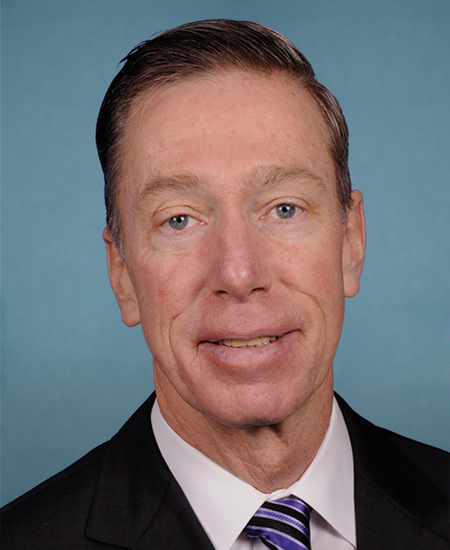
Photo of Stephen F. Lynch
D United States House · District 8 · Massachusetts On the 2026 ballot

Rep. Stephen F. Lynch

Compare
Total votes
2,837
all sessions
Attendance
98%
68 missed
Lower than 81% of chamber peers
With party
97%
of cast votes
Near the chamber average
Bipartisan score
2%
crosses aisle rarely
Near the chamber average
Sponsored
1,646
bills & resolutions
Higher than 84% of chamber peers
Committees
7
assignments
1,646 bills and resolutions

Sponsored bills

Total
1,646
Primary
61
Co-sponsor
1,585
This page
1,646
matching current filters
Co-sponsor HR 6088
In committee · Indiana House · Co-sponsor
Restoring Food Security for American Families and Farmers Act of 2025

Maddy summaryHR 6088, the *Restoring Food Security for American Families and Farmers Act of 2025*, repeals specific sections (10101-10108) from a prior reconciliation law. This action revives previous provisions related to food security programs that were modified by those repealed sections. The bill directly affects federal food assistance and agricultural support programs by restoring their prior legal framework. It does not create new policies but reverses recent changes to existing food security measures.

In committee Jan 13, 2026 1 co-sponsor
Co-sponsor HR 909
Passed · Indiana House · Co-sponsor
Crime Victims Fund Stabilization Act of 2025

Maddy summaryHR 909, the Crime Victims Fund Stabilization Act of 2025, modifies how funds from the False Claims Act are deposited into the Crime Victims Fund. It specifies that from 2025 through 2029, certain False Claims Act proceeds (specifically those for qui tam plaintiff payments and government damage reimbursements) cannot be deposited into the fund. This change directly affects the composition of the Crime Victims Fund by excluding these specific revenue streams during the specified period. The bill does not create new benefits or alter victim services; it only adjusts fund allocation rules for existing False Claims Act revenues.

Passed Jan 13, 2026 1 co-sponsor
Co-sponsor HR 7016
In committee · Indiana House · Co-sponsor
No Funds for NATO Invasion Act

Maddy summaryHR 7016, the "No Funds for NATO Invasion Act," blocks federal funding for any U.S. military invasion of a North Atlantic Treaty Organization (NATO) member country or territory covered by NATO's Article 5 mutual defense clause. The bill prohibits using any federal funds for such invasions and bans U.S. officials from executing these actions. It directly affects U.S. military operations and funding decisions involving NATO members. The law applies to all federal spending, preventing the use of existing budgets for this specific purpose.

In committee Jan 12, 2026 1 co-sponsor
Co-sponsor HR 6976
In committee · Indiana House · Co-sponsor
Duty Status Reform Act

Maddy summary# Summary of Reserve Component Duty Consolidation Legislation This legislation is a comprehensive revision of military reserve component terminology and definitions throughout the U.S. Code. The primary purpose is to replace the outdated term "inactive duty training" with the more accurate and consistent term "reserve component duty" across all relevant sections of federal law. ## Key Provisions: 1. **Terminology Change**: - Replaces "inactive duty training" with "reserve component duty" in over 50 sections of the U.S. Code (primarily Titles 10, 32, and 37) - Also replaces related terms like "inactive duty" and "inactive duty for training" with "reserve component duty" 2. **Repeals**: - Repeals Chapter 13 of Title 10 - Repeals Sections 10147, 10148, 12406, 12503, 12552 of Title 10 - Repeals Sections 114, 115, and 328 of Title 32 3. **Definition Updates**: - Creates new definitions for "reserve component duty" and "remote assignment" in Title 10 - Defines "Active Guard and Reserve functions" more precisely - Clarifies that reserve component duty includes: * Training as described in sections 552(a) and 553(a) of Title 32 * Support activities authorized for members of the reserve components * Duty prescribed under sections 543 of Title 32 4. **Transition Provisions**: - Establishes a 10-year transition period from the date of enactment - Allows for earlier implementation if all relevant departments (Defense, Homeland Security, Veterans Affairs) certify readiness - Provides for early TRICARE eligibility for members ordered to active duty or full-time National Guard duty 5. **Conforming Amendments**: - Makes numerous technical changes to ensure consistent terminology throughout the U.S. Code - Updates references to training requirements, pay, and benefits to reflect the new terminology This legislation represents a significant effort to modernize military reserve component terminology, eliminate confusing and outdated references, and create a more consistent framework for understanding and managing reserve component service obligations and benefits.


In committee Jan 9, 2026 1 co-sponsor
Co-sponsor HCONRES 69
In committee · Indiana House · Co-sponsor
Recognizing the 15th Anniversary of the January 8, 2011, Tucson, Arizona, shooting and honoring the survivors, victims, and former Congresswoman Gabby Giffords, a gun violence survivor, and one of the Nation's most influential voices of courage in the fight to end gun violence.

Maddy summaryThis concurrent resolution (HCONRES 69) commemorates the 15th anniversary of the January 8, 2011, Tucson shooting that killed six people and injured 13, including former Congresswoman Gabby Giffords. It honors the victims, survivors, and Giffords - now a prominent advocate for gun violence prevention - and recognizes her leadership in promoting civility and reducing gun violence. The resolution also commends Tucson residents and first responders for their resilience and reaffirms Congress’s commitment to respectful dialogue and opposing political violence. As a ceremonial resolution, it does not create new laws or policies.

In committee Jan 8, 2026 1 co-sponsor
Co-sponsor HR 6891
In committee · Indiana House · Co-sponsor
Buy Now, Pay Later Protection Act of 2025

Maddy summaryThe Buy Now, Pay Later Protection Act of 2025 brings "buy now, pay later" (BNPL) loans under federal consumer credit regulations by amending the Truth in Lending Act (TILA). It defines BNPL loans as closed-end retail loans repaid in four or fewer interest-free installments with no finance charge, directly affecting consumers using these payment plans and BNPL lenders. The bill extends existing TILA protections - such as disclosure requirements and consumer defenses against creditors - to BNPL loans, updating references in key sections to include BNPL alongside credit cards. The Consumer Financial Protection Bureau (CFPB) must issue implementing rules within one year, bringing BNPL lenders under federal supervision for the first time.

In committee Dec 18, 2025 1 co-sponsor
Co-sponsor HCONRES 61
Failed · Indiana House · Co-sponsor
Directing the President, pursuant to section 5(c) of the War Powers Resolution, to remove United States Armed Forces from hostilities with presidentially designated terrorist organizations in the Western Hemisphere.

Maddy summaryHCONRES 61 directs the President to withdraw U.S. military forces from hostilities against any terrorist organization designated by the president in the Western Hemisphere. This bill specifically applies to military operations involving U.S. armed forces in the region targeting such groups. The key provision requires the withdrawal unless Congress has passed a formal declaration of war or specific authorization for that military action. The resolution invokes Section 5(c) of the War Powers Resolution to compel this change in military deployment.

Failed Dec 17, 2025 1 co-sponsor
Co-sponsor HR 6818
In committee · Indiana House · Co-sponsor
Part-Time Worker Bill of Rights Act

Maddy summaryHR 6818, the Part-Time Worker Bill of Rights Act, would expand rights for part-time workers by reducing eligibility requirements for family and medical leave from 12 months to 90 days of employment under the FMLA. The bill prohibits employers from discriminating against part-time workers based on hours worked, requiring equal treatment for benefits, promotions, and scheduling. It mandates that employers obtain written statements from employees about their desired work hours and prioritize offering available work hours to existing employees before hiring new external workers. The bill establishes enforcement mechanisms including civil penalties for violations and allows employees to file private lawsuits for damages, with the Secretary of Labor having investigative authority to ensure compliance. This legislation directly affects part-time workers and employers with more than 15 employees across both private and public sectors.

In committee Dec 17, 2025 1 co-sponsor
Co-sponsor HR 6786
In committee · Indiana House · Co-sponsor
Schedules That Work Act

Maddy summaryThe Schedules That Work Act would require employers in retail, food service, hospitality, cleaning, and warehouse sectors to provide workers with 14 days' advance notice of their schedules and pay predictability wages for last-minute changes. It allows employees to request schedule changes related to caregiving responsibilities, health conditions, education, or other jobs, with employers required to engage in good-faith discussions about such requests. The bill prohibits retaliation against employees who request schedule changes and mandates written notice of schedule changes and predictability pay. It applies to employers with 15 or more employees in covered sectors, aiming to address widespread issues with unpredictable schedules that negatively impact workers' ability to care for family members, maintain housing stability, and access health care.

In committee Dec 17, 2025 1 co-sponsor
Co-sponsor HR 6731
In committee · Indiana House · Co-sponsor
Restore Trust in Government Act

Maddy summaryHR 6731, the "Restore Trust in Government Act," requires Members of Congress, the President/Vice President, and their spouses or dependent children to divest certain financial investments during federal service. It defines "covered investments" broadly (including stocks, commodities, and derivatives) but excludes Treasury bonds, municipal bonds, family farm interests, and some Alaska Native Settlement stock. Covered individuals must sell holdings within 90-180 days of taking office or enacting the law, with limited exceptions for qualified blind trusts or spouses’ occupational trading. Violations incur a 10% fee on the investment value and require returning profits, paid to the Treasury. Ethics offices enforce these rules, publish penalty details, and issue divestiture certificates.

In committee Dec 16, 2025 1 co-sponsor
Showing 161 to 170 of 1,646 bills
Previous 1 … 16 17 18 … 165 Next