

Maddy summaryHCONRES 68 would require the President to remove U.S. military forces from Venezuela unless Congress has explicitly authorized their use through a declaration of war or a specific law. This applies to any U.S. Armed Forces currently stationed in Venezuela without such authorization. The resolution is based on the War Powers Resolution, which mandates congressional oversight of military deployments. It directs the immediate withdrawal of unapproved forces without adding new time limits or conditions.
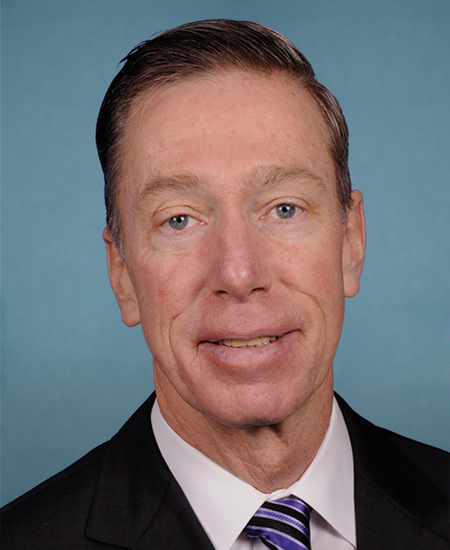
Rep. Stephen F. Lynch
Sponsored bills
Maddy summaryHR 7227, the Mental Health and MAMA Act of 2026, eliminates cost-sharing (like copays or deductibles) for mental health and substance use treatment services during pregnancy and for one year after childbirth. It directly affects pregnant and postpartum individuals covered by group health plans or individual insurance policies, requiring these plans to cover such services with no out-of-pocket costs from pregnancy diagnosis through the 12-month period following birth. The law applies to in-network providers and includes telehealth services, with implementation delayed until two years after enactment. It amends key laws including the Public Health Service Act, ERISA, and the Internal Revenue Code to standardize this coverage requirement across health insurance systems. This policy change aims to improve access to care during a critical health period without altering existing coverage definitions.
Maddy summaryHR 7183, the Youth Financial Learning Act, provides federal grants to state education agencies to integrate financial literacy education into public elementary and secondary schools. It directly affects schools by funding programs teaching consumer finance, credit, student loans, and financial aid through school-based curriculum, after-school partnerships with community organizations, and teacher training. Key provisions require states to provide 25% matching funds, prioritize high-need schools, ensure geographic diversity in program access, and use funds to supplement - not replace - existing education resources. The grants, available for up to four years, aim to enhance students' practical financial knowledge as part of a well-rounded education.
Maddy summaryHR 7171, the Fair Legal Access Grants Act, provides federal grants to states, local governments, and Tribal governments to help individuals seeking extreme risk protection orders (ERPOs) access legal resources. The bill authorizes $50 million annually from 2028 to 2034 to fund legal representation, multilingual legal resource centers, and training for legal and law enforcement staff on ERPO processes. It directly affects people eligible to petition for ERPOs - court orders designed to temporarily restrict firearm access when someone poses a risk of harm to themselves or others. The grants aim to ensure petitioners receive counsel, translation services, and accurate information about the ERPO process, without interfering with state court jurisdiction over such cases.
Maddy summaryThis bill requires the Department of Justice and Health and Human Services to translate key gun violence prevention materials - including extreme risk protection orders and safe storage guides - into the 10 most common non-English languages in the U.S. (like Mandarin, Spanish, and Korean) for limited English proficient populations. It mandates that community-based organizations review translations for cultural appropriateness before publication and prioritizes grant applications that include outreach plans for these communities. The bill also directs DOJ and HHS to create public awareness campaigns using in-language, culturally tailored messaging to promote gun violence prevention strategies. These provisions apply directly to federally funded programs and services aimed at reducing firearm-related harm.
Maddy summaryHR 7166, the Stop Online Ammunition Sales Act of 2026, requires all ammunition sales to occur in person with identity verification, directly affecting licensed ammunition dealers and unlicensed buyers. The bill mandates that dealers verify a buyer’s identity using a photo ID during every transaction and prohibits online or remote sales. It also creates new recordkeeping rules requiring dealers to report multiple sales of over 1,000 ammunition rounds to an unlicensed person within 5 business days. These provisions update existing federal firearms laws to apply specifically to ammunition transactions.
Maddy summaryThe NO NATO for Purchase Act bans federal agencies from using government funds to buy land or assets in NATO member countries. It directly affects all federal departments and agencies by prohibiting such acquisitions as defined in the 1949 North Atlantic Treaty. The key provision blocks any action or expenditure related to purchasing territory within NATO nations. This prevents U.S. government purchases of foreign territory belonging to NATO member countries.
Maddy summaryHRES 996 is a resolution introduced by multiple House members to impeach Kristi Lynn Arnold Noem, the Secretary of Homeland Security, for alleged violations of law and the Constitution. It outlines three articles of impeachment: obstructing congressional oversight by denying access to detention facilities and withholding funds, violating public trust through warrantless arrests and excessive force (including tear gas on children), and self-dealing by awarding federal contracts to associates without competitive bidding. If approved by the House, this resolution would formally charge Noem, triggering a Senate trial to determine her removal from office. The resolution itself does not enact new policy but initiates the constitutional impeachment process against a sitting Cabinet official.
Maddy summaryHRES 995 is a symbolic resolution supporting Korean American Day, commemorating January 13 as the anniversary of the 1903 arrival of the first large wave of Korean immigrants to the U.S. It urges all Americans to recognize Korean Americans' contributions to U.S. society, economy, and U.S.-South Korea relations, honoring their historical journey and ongoing impact. The resolution has no legal effect or policy changes - it serves solely as a formal acknowledgment of cultural heritage.
Maddy summaryThis bill would increase the base pay for Federal Bureau of Prisons correctional officers by 35 percent, replacing their current base rate for all pay calculations (including retirement and locality adjustments). It applies to officers whose duties involve inmate custody, control, or direct custodial contact, including certain supervisory staff and lower-grade Bureau of Prisons employees with similar duties. The pay increase is capped at the Executive Schedule level V rate and would expire after five years unless a Department of Justice Inspector General review finds progress in reducing non-custodial staff use for custodial duties and excessive overtime. The review, required 180 days before expiration, would assess impacts on recruitment, retention, and institutional safety.