

Medically Tailored Home-Delivered Meals Demonstration Pilot Act of 2021 This bill requires the Centers for Medicare & Medicaid Services to establish a demonstration program to allow hospitals to provide medically tailored, home-delivered meals to Medicare beneficiaries who have a diet-impacted disease (e.g., kidney disease) and have daily living limitations. Participating hospitals must (1) retain a physician, registered dietitian or nutrition professional, or clinical social worker to screen, monitor, and coordinate services for individuals who receive meals through the program; and (2) contract with experienced organizations for meal delivery. Hospitals may choose to also provide meals to an individual's primary caregiver or to a dependent under the age of 18 who resides in the same household.
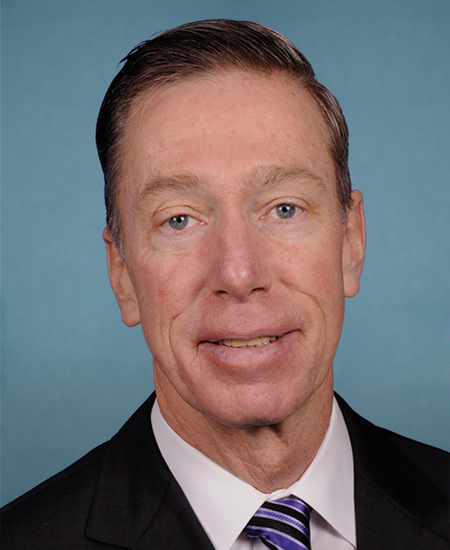
Rep. Stephen F. Lynch
Sponsored bills
ESP Family Leave Act This bill allows education support professionals to meet the hours of service requirements for family and medical leave if they have worked a number of hours equal to not less than 60% of the total monthly hours expected for their job descriptions and duties, as assigned for the previous school year. Education support professionals are employees within a public school or public institution of higher education which may include specified staff, such as paraeducators, administrative support staff, custodians, skilled trade workers, and nursing support staff. The Department of Labor may provide a method for calculating such leave for these professionals.
Two-State Solution Act This bill addresses U.S. policy and related activities to preserve conditions for a two-state solution to resolve territorial disputes between Israel and Palestine. The bill prohibits the United States from providing support for projects in geographic regions that came under Israeli control after June 5, 1967. It also prohibits the use of any U.S. security assistance, defense articles, or defense services provided to Israel for efforts to annex or exercise permanent control over any part of the West Bank or Gaza. Current law designates the Palestine Liberation Organization (PLO) as a terrorist organization and restricts its activities (e.g., prohibiting it from maintaining an office in the United States). The President may waive for up to six months some of these restrictions to serve U.S. national security or diplomatic interests. If the President certifies that the PLO has ceased supporting terrorist actions and met other conditions, the bill automatically terminates the terrorist organization designation. Goods produced in the West Bank or Gaza that are imported into the United States must indicate those areas as the country of origin on their labels. The bill expands the scope of certain foreign and development assistance to foster initiatives, including shared educational opportunities and youth activities, that connect Israelis and Palestinians. Additionally, the Department of State and the U.S. Agency for International Development may jointly award grants to private, nonprofit organizations to promote human rights and democracy, strengthen civil society, and otherwise address the needs of the Palestinian people.
Keeping Renters Safe Act of 2021 This bill expressly authorizes the Department of Health and Human Services (HHS) to place a moratorium on residential evictions to prevent the spread of communicable diseases. The bill also requires HHS to implement a moratorium nationwide to reduce the spread of COVID-19. This moratorium must remain in effect for at least 60 days following the termination of the COVID-19 public health emergency. Current law authorizes HHS to take measures to prevent the spread of communicable diseases. As part of the COVID-19 response, HHS delegated this authority to the Centers for Disease Control and Prevention (CDC), which then issued (and extended) several orders banning residential evictions. Whether these orders exceed the CDC's statutory and constitutional authority has been the subject of multiple legal challenges; the Supreme Court blocked enforcement of the most recent order on August 26, 2021.
This resolution expresses support for the designation of Rail Safety Week.
Every Veteran Counts Act of 2021 This bill requires the Department of Veterans Affairs (VA) to establish and maintain a database of specified demographics (e.g., age) of veterans. The data must be in a machine-readable format and anonymized to protect sensitive personal information. The VA must provide access to the database on a publicly accessible website that is updated at least once a year. Additionally, the VA must report on the progress, challenges, performance, and opportunities of implementing its data strategy. The report must be made available on the VA's open data website in a machine-readable format.
Expediting Assistance to Renters and Landlords Act of 2021 This bill modifies the Department of the Treasury's Emergency Rental Assistance program by extending time limits on payments, allowing landlords to seek rents and arrears from the program without renter consent, and allowing renters to prove eligibility through attestation. The program provides grants to state and local governments to assist eligible households in paying rent and utility costs and other expenses related to housing incurred due to the COVID-19 pandemic. The bill extends the availability of program assistance from 18 to 24 months for eligible households. The bill also relaxes requirements for proof of eligibility by requiring only that households attest that they meet eligibility requirements instead of requiring proof of eligibility. It also allows for direct payment of funds to eligible households where the landlord refuses direct payment. Additionally, the bill allows a landlord to apply for program funds without the consent of a renter if the landlord agrees to certain terms, including a 120-day bar on evicting the renter for nonpayment. This bill also expands the stable housing services available under the program to additional low-income households. Further, the bill requires Treasury and state and local governments to increase outreach to renters and landlords and allows for coordination with public entities to provide application assistance services.
John R. Lewis Voting Rights Advancement Act of 2021 This bill establishes new criteria for determining which states and political subdivisions must obtain preclearance before changes to voting practices may take effect. Preclearance is the process of receiving preapproval from the Department of Justice (DOJ) or the U.S. District Court for the District of Columbia before making legal changes that would affect voting rights. A state and all of its political subdivisions shall be subject to preclearance of voting practice changes for a 10-year period if 15 or more voting rights violations occurred in the state during the previous 25 years; 10 or more violations occurred during the previous 25 years, at least 1 of which was committed by the state itself; or 3 or more violations occurred during the previous 25 years and the state administers the elections. A political subdivision as a separate unit shall also be subject to preclearance for a 10-year period if three or more voting rights violations occurred there during the previous 25 years. States and political subdivisions that meet certain thresholds regarding minority groups must preclear covered practices before implementation, such as changes to methods of election and redistricting. Further, states and political subdivisions must notify the public of changes to voting practices. Next, the bill authorizes DOJ to require states or political subdivisions to provide certain documents or answers to questions for enforcing voting rights. The bill also outlines factors courts must consider when hearing challenges to voting practices, such as the extent of any history of official voting discrimination in the state or political subdivision.
This resolution calls on all Americans to observe the 20th anniversary of the September 11 attacks and honor those who lost their lives.
Federal Acquisition E-Commerce Fairness and Competition Act This bill requires the General Services Administration (GSA) to expand the testing program for e-commerce portal models. Specifically, the GSA must (1) expand the proof-of-concept testing program by testing at least three commercial e-commerce portal models, including the E-Commerce Model, the E-Procurement Model, and the E-Marketplace Model (as described in a GSA implementation plan published in March 2018), to ensure that such program is representative of available commercial e-commerce portal models that qualify for the program; and (2) report to Congress. The GSA must ensure that a commercial e-commerce portal provider awarded a contract that is owned or controlled by a person or entity with a market capitalization greater than $600 billion at any time in the two years preceding this bill's enactment (e.g., Amazon) does not sell products through the commercial e-commerce portal that compete with products sold by any third-party supplier through such portal.