

Maddy summaryHRES 793 is a resolution passed by the U.S. House of Representatives calling on Hamas to immediately release all 199 hostages taken during Hamas' October 7, 2023 attack on Israel. The resolution condemns Hamas for the attack, the taking of hostages, and threats against hostages, while stating that holding hostages violates international humanitarian law under the Geneva Conventions. It demands the immediate release of all hostages and expresses sympathy for victims and their families. As a symbolic resolution, it does not create legal obligations but formally expresses the House's position.
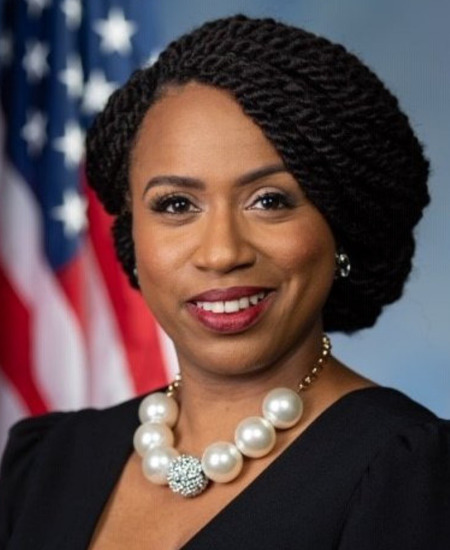
Rep. Ayanna Pressley
Sponsored bills
Maddy summaryHR 6451, the Mental Health Justice Act of 2023, provides $250 million in federal grants to states, tribes, and localities to hire mental health professionals as first responders for specific emergencies. It directs these professionals to replace police in situations involving mental health crises, substance use, or intellectual/developmental disabilities - such as when a 911 caller describes a mental health emergency or a first responder identifies someone needing mental health support. The bill requires grantees to train responders in de-escalation techniques, link individuals to community-based services (not incarceration), and report on outcomes like reduced arrests or use of force. It also mandates data collection on demographics and prevents funneling people into institutional settings, with annual reports to Congress on program effectiveness.
Maddy summaryHRES 886 is a non-binding House resolution supporting Transgender Day of Remembrance (TDoR) by recognizing the epidemic of violence against transgender people and memorializing those lost in the year ending September 30, 2023. It specifically acknowledges the disproportionate impact of violence on transgender women of color, citing 33 documented deaths in the U.S. during that period (with estimates suggesting the actual number is higher due to underreporting). The resolution calls for Congress to prioritize studying and preventing such violence while affirming that all transgender people deserve dignity and respect. As a symbolic resolution, it does not create new laws or allocate funding but serves to raise awareness and honor victims.
Maddy summaryThis symbolic resolution (HRES 879) expresses the U.S. House of Representatives' support for designating November 20-December 20, 2023, as "National Survivors of Homicide Victims Awareness Month." It aims to raise public awareness about the needs of individuals who have lost loved ones to homicide, particularly highlighting impacts on Black and Latinx communities and survivors of intimate partner violence. The resolution calls for supporting survivors through services, research, and community-based responses, while encouraging the public to promote healing and address gun violence. It does not create new laws or allocate funding, but serves as a formal recognition of survivors' experiences.
Maddy summaryThe Confronting Police Violence Against Children Act of 2023 requires the National Institute of Justice to study all incidents where children under 18 were seriously harmed or killed by law enforcement officers over the past 15 years. The report must analyze demographic details (like age, race, disability status), officer training, incident circumstances, and whether children were in mental health crises, while gathering input from legal experts, medical professionals, and community groups. It will provide recommendations for preventing excessive force, improving officer training for youth interactions, and ensuring children receive help from mental health professionals instead of police. The goal is to inform future policies and training practices, not to enact immediate legal changes.
Maddy summaryHCONRES 75 is a non-binding resolution expressing Congress's support for issuing a new commemorative postage stamp honoring the Buffalo Soldiers. It directly affects the U.S. Postal Service by urging the Citizens’ Stamp Advisory Committee to recommend such a stamp to the Postmaster General. The resolution highlights the historical significance of the Buffalo Soldiers - African American soldiers who served in all-Black regiments from 1866 to 1948 - and references a previous 1994 stamp that was discontinued. It does not create a new law but formally requests the Postal Service consider this commemoration.
This concurrent resolution recognizes the difficult challenges Black veterans faced when returning home after serving in the Armed Forces, their heroic military sacrifices, and their patriotism in fighting for equal rights and for the dignity of a people and a nation. The concurrent resolution also recognizes the need for the Department of Veterans Affairs to continue to work to eliminate any health and benefit disparities for minority veterans.
Veterans Service Organization Modernization Act of 202 3 This bill requires the Department of Housing and Urban Development to provide competitive grants to veterans service organizations for repairs or rehabilitation of existing facilities and for modernization of technologies.
Maddy summaryThe MOMMIES Act (HR 6004) extends Medicaid and CHIP coverage for pregnant and postpartum individuals from 60 days to 1 year after pregnancy (or longer, at state's election), ensuring continuous health coverage during this critical period. The bill requires states to provide full medical benefits, including oral health services, to pregnant and postpartum individuals for the entire coverage period. It establishes a 5-year demonstration project to fund maternity care home models in at least 10 states, focusing on improving care for underserved populations and reducing racial and health disparities in maternal outcomes. The legislation also includes requirements for states to maintain current coverage levels, enhanced federal funding for these services, and mandates reports on coverage gaps and access to services like doulas and telehealth.
Maddy summaryThe Counseling Not Criminalization in Schools Act prohibits federal funding for school police officers and establishes a $5 billion grant program to help schools replace law enforcement with mental health professionals like counselors, social workers, and psychologists. The bill directly affects schools serving marginalized students, particularly Black, Native American, Latino, and LGBTQI+ students, who disproportionately face school discipline and police involvement. Key provisions require schools to terminate police contracts within 30 days of receiving funds and use the money for trauma-informed services, restorative justice programs, and anti-bias training. The bill also prohibits using funds for surveillance technology, punitive discipline policies, or arming school staff, while requiring schools to report on disciplinary practices and demographic data. This legislation aims to address racial disparities in school discipline and shift school safety toward supportive, evidence-based approaches rather than criminalization.