

Maddy summaryThis bill would require U.S. companies to obtain both Commerce Department approval and a specific congressional joint resolution before exporting advanced AI semiconductors to China. The Commerce Secretary must first conduct an interagency review assessing national security risks, military applications, human rights concerns, and economic impacts. Congress would then need to pass a dedicated resolution approving each export, effectively giving lawmakers a veto over such transactions. The bill defines "advanced AI semiconductors" by technical thresholds (e.g., 2,400+ processing performance) and applies to all exports targeting China, including Hong Kong and Macau.
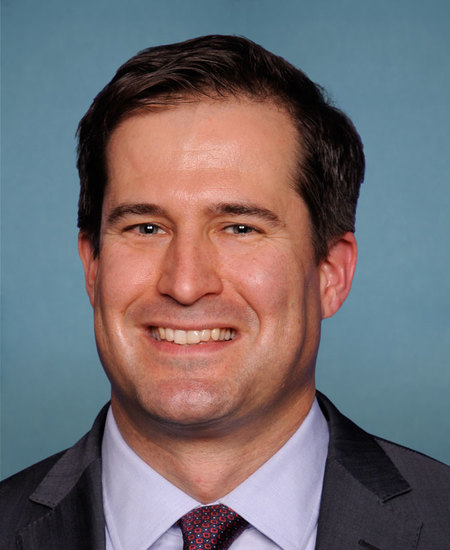
Rep. Seth Moulton
Sponsored bills
Maddy summaryThis bill permanently establishes the Coordinator for Afghan Relocation Efforts (CARE) within the State Department, expanding their role to prioritize family reunification for U.S. military personnel and veterans with Afghan allies. It mandates the Coordinator to collect detailed data on Afghan applicants (including special immigrant visa seekers, refugees, and parolees), vetting timelines, and pending family reunification cases into a centralized database. The Coordinator must report this data to Congress every 90 days to ensure transparency and inform policy decisions. The law directly affects Afghan allies and their families seeking U.S. relocation, particularly those connected to U.S. military service.
Maddy summaryThis bill (HJRES 115) terminates a presidential emergency declaration made on August 11, 2025, which claimed a "crime emergency" in Washington, D.C. It directly affects the District of Columbia by ending federal restrictions that prevented D.C. from using $1 billion in locally-raised funds for public safety, law enforcement, fire services, and schools. The resolution cites that the emergency declaration was legally flawed - section 740 of the DC Home Rule Act does not permit federalizing the Metropolitan Police Department - and notes that D.C. violent crime has reached a 30-year low. The bill formally ends the emergency under the DC Home Rule Act, restoring D.C.'s authority over its own budget and public safety resources.
Maddy summaryThis bill requires the removal of a statue honoring Albert Pike from its current location near Judiciary Square in Washington D.C. The National Park Service must take down the statue, which was erected in 1898. The Secretary of the Interior may donate the statue to a museum or similar institution for indoor display only, with the condition that if it is ever displayed outdoors, ownership reverts to the federal government. The bill directly affects the physical location of the statue and the National Park Service's management of it.
Maddy summaryHR 4917, the Expanding the VOTE Act, amends the Voting Rights Act to increase language access for voters. It expands the definition of "voting materials" to include digital formats and requires states to provide language assistance (both written and oral) for minority language groups, with special provisions for American Indian and Alaska Native languages when written translations aren't feasible. The bill creates grants to help jurisdictions provide voting materials in languages that don't currently trigger Section 203 coverage, and mandates a study on lowering population thresholds for language assistance requirements. This directly affects states, local election jurisdictions, and voters who speak minority languages, including those in communities not currently covered by existing language access rules.
Youth Voting Rights Act This bill expands voting access for youth. Specifically, the bill establishes a private right of action to enforce the Twenty-Sixth Amendment, which prohibits denying or abridging the right to vote based on age. Further, the bill authorizes the Department of Justice to enforce the Twenty-Sixth Amendment against age-based restrictions for voting by mail. Additionally, the bill directs each state to designate as voter registration agencies all offices within public institutions of higher education (IHEs) that provide assistance to students, implement a preregistration process to allow minors who are 16 years or older to register to vote in federal elections that take place when or after the preregistered individual turns age 18, and ensure the availability of polling places on campuses of IHEs (with the availability of waivers). The bill prohibits durational residency requirements for voting in all federal elections. Currently, this prohibition applies only to voting for the offices of President and Vice President. States and local jurisdictions with voter identification requirements must treat IHE-issued student identification cards as voter identification. The Election Assistance Commission (EAC) must make grants to states to increase the involvement of individuals under age 18 in public election activities. The Government Accountability Office must report to Congress on trends related to voter registration, absentee voting, and provisional voting. The EAC must also collect and make publicly available certain data from states.
Maddy summaryThe Election Mail Act (HR 4915) establishes new standards for handling voting-by-mail materials in Federal elections. It requires the Postal Service to process absentee ballots the same day received, add postmarks showing mailing dates, and treat election mail as first-class with free postage for completed ballots. States must provide ballot return envelopes with tracking barcodes and accept mailed ballots postmarked on election day if received within 7 days. These provisions apply to Federal elections starting in 2026, with some requirements taking effect sooner.
Maddy summaryThe Ending Trading and Holdings in Congressional Stocks (ETHICS) Act requires members of Congress, their spouses, and dependent children to divest or place most personal investments in qualified blind trusts. It bans the purchase of covered investments (including stocks, commodities, and derivatives) after enactment, with current members having 90 days to sell existing holdings and new members having 90 days after taking office to divest. The bill includes specific exceptions for diversified mutual funds, Treasury securities, and certain family business investments while establishing enforcement mechanisms including civil penalties of up to 10% of the value of noncompliant holdings. The law applies to members serving terms beginning after January 31, 2023, and mandates public online disclosure of financial information through updated government databases.
Maddy summaryHR 4895, the Afghan Adjustment Act, creates a pathway to conditional permanent resident status for Afghans who supported U.S. military or government efforts in Afghanistan. Eligible individuals include Afghan citizens or nationals who were employed by or on behalf of U.S. forces, worked with U.S. intelligence, or were part of specific Afghan security forces (including members of the Afghanistan National Defense and Security Forces), and who served for at least one year during the relevant period. The bill establishes a 4-year conditional period before full permanent residency is granted, requires security checks similar to refugee processing, prohibits fees for processing applications, and creates a referral system for processing applications from Afghans still in Afghanistan. It also provides eligibility for benefits available to refugees and establishes an Interagency Task Force to oversee implementation.
Maddy summaryHR 4894, the Deceptive Practices and Voter Intimidation Prevention Act of 2025, prohibits the intentional spread of false information about voting procedures, eligibility, or penalties within 60 days of an election. The bill specifically targets deceptive communications through social media, text messages, and AI-generated content designed to prevent voters from casting ballots, including false claims about voting locations, registration status, or legal consequences. It creates a private right of action for individuals harmed by these deceptive practices and authorizes the Attorney General to issue corrective information to counter false claims. The law directly affects voters, election officials, social media platforms, and anyone spreading false voting information, with penalties including fines and imprisonment for violations.