

Sickle Cell Disease Comprehensive Care Act This bill allows state Medicaid programs to establish health homes to provide coordinated care for individuals with sickle-cell disease. (Under current law, state Medicaid programs may establish health homes to provide coordinated care for individuals with specified chronic conditions.) States must ensure that such care includes dental and vision services. The Centers for Medicare & Medicaid Services must issue best practices for states on how to design and implement such health homes.
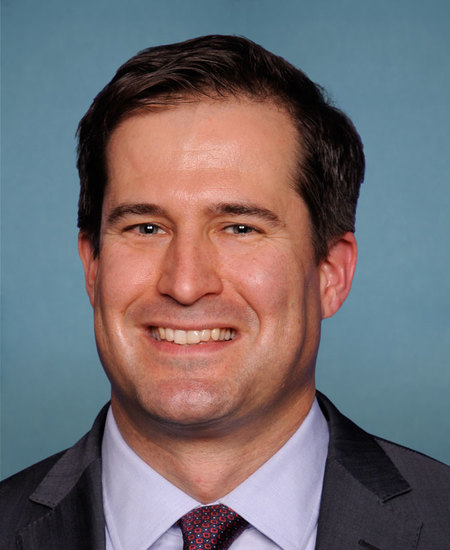
Rep. Seth Moulton
Sponsored bills
Maddy summaryThe Nationwide Right to Unionize Act (HR 5159) would repeal a federal provision allowing states to pass "right-to-work" laws, which currently prevent workers from being required to join a union or pay dues as a condition of employment. By removing this allowance, the bill would permit unions and employers to negotiate agreements requiring membership or dues in all states, including those with existing right-to-work laws. This change would directly affect workers and employers in the 27 states that currently have such laws. The bill focuses on eliminating state-level barriers to union security agreements without mandating union formation or membership.
Maddy summaryThis bill prohibits Members of Congress, their spouses, and dependent children from owning or trading certain investments, including stocks, commodities, and derivatives (referred to as "covered investments"). It requires affected individuals to divest these investments within 90-180 days, with specific exemptions for Treasury bonds, diversified mutual funds, small business interests, and family trusts meeting strict conditions. Violations incur penalties of 10% of the investment's value plus disgorgement of profits, paid directly to the U.S. Treasury. The law applies to all covered individuals during federal service, with exceptions for investments acquired through inheritance or occupational trading (e.g., a spouse’s finance job).
Maddy summaryHR 5085 exempts federal agencies from conducting environmental reviews under the National Environmental Policy Act (NEPA) for infill housing projects that meet specific criteria. These projects must be located on previously developed urban sites (under 20 acres, with 75% urban adjacency), pass required environmental assessments, and avoid high-risk wildfire/flood zones per FEMA data. The bill also shortens FEMA’s natural hazard risk assessment update cycle from every 5 to every 3 years. This directly affects federal agencies approving housing developments and developers seeking streamlined project approvals.
Maddy summaryHR 5073, the INFORM Act of 2025, requires immigration authorities to notify the immediate family of a detained individual within 24 hours if they are transferred to a different detention facility. This applies directly to immigrants held under U.S. immigration law and their immediate family members, defined as parents, children, spouses, and certain extended family like step-relatives or domestic partners. The law mandates that notifications include the reason for the transfer and full contact details (name, address, phone number, and point of contact) for the new facility. It establishes a specific timeline and content requirement for these notifications to improve transparency during detention transfers. The bill focuses on procedural changes for facility transfers, not on altering detention policies or immigration eligibility.
Maddy summaryThis bill would require U.S. companies to obtain both Commerce Department approval and a specific congressional joint resolution before exporting advanced AI semiconductors to China. The Commerce Secretary must first conduct an interagency review assessing national security risks, military applications, human rights concerns, and economic impacts. Congress would then need to pass a dedicated resolution approving each export, effectively giving lawmakers a veto over such transactions. The bill defines "advanced AI semiconductors" by technical thresholds (e.g., 2,400+ processing performance) and applies to all exports targeting China, including Hong Kong and Macau.
Maddy summaryThis bill permanently establishes the Coordinator for Afghan Relocation Efforts (CARE) within the State Department, expanding their role to prioritize family reunification for U.S. military personnel and veterans with Afghan allies. It mandates the Coordinator to collect detailed data on Afghan applicants (including special immigrant visa seekers, refugees, and parolees), vetting timelines, and pending family reunification cases into a centralized database. The Coordinator must report this data to Congress every 90 days to ensure transparency and inform policy decisions. The law directly affects Afghan allies and their families seeking U.S. relocation, particularly those connected to U.S. military service.
Maddy summaryThis bill (HJRES 115) terminates a presidential emergency declaration made on August 11, 2025, which claimed a "crime emergency" in Washington, D.C. It directly affects the District of Columbia by ending federal restrictions that prevented D.C. from using $1 billion in locally-raised funds for public safety, law enforcement, fire services, and schools. The resolution cites that the emergency declaration was legally flawed - section 740 of the DC Home Rule Act does not permit federalizing the Metropolitan Police Department - and notes that D.C. violent crime has reached a 30-year low. The bill formally ends the emergency under the DC Home Rule Act, restoring D.C.'s authority over its own budget and public safety resources.
Maddy summaryThis bill requires the removal of a statue honoring Albert Pike from its current location near Judiciary Square in Washington D.C. The National Park Service must take down the statue, which was erected in 1898. The Secretary of the Interior may donate the statue to a museum or similar institution for indoor display only, with the condition that if it is ever displayed outdoors, ownership reverts to the federal government. The bill directly affects the physical location of the statue and the National Park Service's management of it.
Maddy summaryHR 4917, the Expanding the VOTE Act, amends the Voting Rights Act to increase language access for voters. It expands the definition of "voting materials" to include digital formats and requires states to provide language assistance (both written and oral) for minority language groups, with special provisions for American Indian and Alaska Native languages when written translations aren't feasible. The bill creates grants to help jurisdictions provide voting materials in languages that don't currently trigger Section 203 coverage, and mandates a study on lowering population thresholds for language assistance requirements. This directly affects states, local election jurisdictions, and voters who speak minority languages, including those in communities not currently covered by existing language access rules.