

Maddy summaryHR 5220, the Congressional Power of the Purse Act, strengthens Congress's authority over federal spending by preventing the executive branch from withholding appropriated funds. The bill requires federal agencies to report on budget management, adds penalties for failing to comply with congressional oversight requirements, and establishes new procedures for congressional review of national emergencies. It directly affects federal agencies, the executive branch, and the balance of power between Congress and the President regarding budget authority. The law aims to increase transparency and accountability in how government funds are managed and spent.
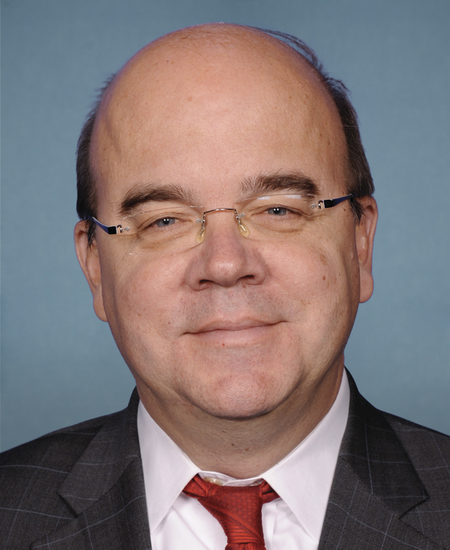
Rep. James P. McGovern
Sponsored bills
Maddy summaryThis bill modifies the Family and Medical Leave Act (FMLA) to extend eligibility to school support staff, including paraprofessionals, cafeteria workers, bus drivers, and clerical staff. It allows these employees to qualify for FMLA leave if they work 60% of their expected monthly hours (instead of the standard 1,250 hours), based on their school’s assigned schedule. Employers must maintain records of expected hours for each staff member. The change directly benefits part-time and seasonal education support staff who previously faced barriers to FMLA coverage.
Maddy summaryThis bill amends the Social Security Act to remove a payment limitation for certain Medicaid Home and Community-Based Services (HCBS) waivers. Specifically, it strikes a provision (subparagraph (C) of Section 1915(c)(11)) that restricted how states could fund these waivers under Medicaid. The change directly affects state Medicaid programs that use HCBS waivers to provide home and community care for people with disabilities or elderly individuals. By removing this restriction, states gain more flexibility in allocating Medicaid funds for these services, without altering eligibility or service requirements.
Maddy summaryHR 2181, the Protect Our Watchdogs Act of 2025, strengthens protections for federal Inspectors General (IGs) by requiring the President to have specific, documented reasons to remove them. The bill amends federal law to specify nine grounds for removal, including documented felony convictions, gross mismanagement, waste of funds, abuse of authority, or neglect of duty - each requiring written justification. This directly affects IGs who oversee federal agency accountability and investigations, as it prevents arbitrary removals and mandates transparency in the process. The law applies to all federal Inspectors General across agencies, ensuring their independence is maintained through clear, enforceable standards.
Maddy summaryThis resolution (HRES 677) is a formal statement by the House of Representatives affirming the Federal Reserve's independence from political influence. It specifically supports Chairman Jerome Powell and the Board of Governors in making monetary policy decisions based on economic data, not political pressure. The resolution urges the President and executive branch to respect the Fed's statutory independence and avoid actions or rhetoric that could undermine its credibility. It emphasizes that maintaining this independence is critical for economic stability, price control, and global confidence in U.S. financial markets.
Maddy summaryThe Nationwide Right to Unionize Act (HR 5159) would repeal a federal provision allowing states to pass "right-to-work" laws, which currently prevent workers from being required to join a union or pay dues as a condition of employment. By removing this allowance, the bill would permit unions and employers to negotiate agreements requiring membership or dues in all states, including those with existing right-to-work laws. This change would directly affect workers and employers in the 27 states that currently have such laws. The bill focuses on eliminating state-level barriers to union security agreements without mandating union formation or membership.
Maddy summaryThis bill prohibits Members of Congress, their spouses, and dependent children from owning or trading certain investments, including stocks, commodities, and derivatives (referred to as "covered investments"). It requires affected individuals to divest these investments within 90-180 days, with specific exemptions for Treasury bonds, diversified mutual funds, small business interests, and family trusts meeting strict conditions. Violations incur penalties of 10% of the investment's value plus disgorgement of profits, paid directly to the U.S. Treasury. The law applies to all covered individuals during federal service, with exceptions for investments acquired through inheritance or occupational trading (e.g., a spouse’s finance job).
Maddy summaryHR 5073, the INFORM Act of 2025, requires immigration authorities to notify the immediate family of a detained individual within 24 hours if they are transferred to a different detention facility. This applies directly to immigrants held under U.S. immigration law and their immediate family members, defined as parents, children, spouses, and certain extended family like step-relatives or domestic partners. The law mandates that notifications include the reason for the transfer and full contact details (name, address, phone number, and point of contact) for the new facility. It establishes a specific timeline and content requirement for these notifications to improve transparency during detention transfers. The bill focuses on procedural changes for facility transfers, not on altering detention policies or immigration eligibility.
Maddy summaryHR 5088, the "Union Participation for All Act," repeals a provision in the 1959 Labor-Management Reporting and Disclosure Act (LMRDA) that barred individuals convicted of certain crimes (like bribery or fraud) from holding union leadership positions. This change directly affects union members with specific criminal convictions who previously could not serve in union offices. The bill removes Section 504 of the LMRDA, eliminating the ban on their eligibility for union leadership roles. It does not alter other union governance rules or create new requirements.
Maddy summaryThis bill (HJRES 115) terminates a presidential emergency declaration made on August 11, 2025, which claimed a "crime emergency" in Washington, D.C. It directly affects the District of Columbia by ending federal restrictions that prevented D.C. from using $1 billion in locally-raised funds for public safety, law enforcement, fire services, and schools. The resolution cites that the emergency declaration was legally flawed - section 740 of the DC Home Rule Act does not permit federalizing the Metropolitan Police Department - and notes that D.C. violent crime has reached a 30-year low. The bill formally ends the emergency under the DC Home Rule Act, restoring D.C.'s authority over its own budget and public safety resources.