

Closing Loopholes for Oil and other Sources of Emissions Act or the CLOSE Act This bill amends the Clean Air Act to revise requirements for hazardous air pollutants. Specifically, the bill allows (1) emissions from oil or gas exploration or production wells and emissions from pipeline compressors or pump stations to be aggregated with emissions from other similar sources and regulated as a major source of toxic air pollutants, (2) emissions from those wells to be aggregated for purposes of emissions standards for hazardous air pollutants, and (3) emissions from oil or gas production wells to be regulated as an area source of toxic air pollutants. The Environmental Protection Agency must (1) issue a final rule adding hydrogen sulfide to the list of hazardous air pollutants; and (2) revise the list of air pollution sources within 365 days after issuing the rule to include categories and subcategories of major sources and area sources of hydrogen sulfide, including oil and gas wells.
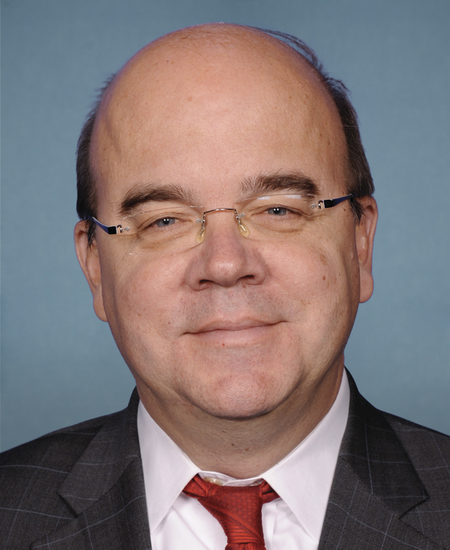
Rep. James P. McGovern
Sponsored bills
Maddy summaryHRES 884 is a procedural resolution that sets the rules for considering H.R. 6039 in the House of Representatives. It directs the House to immediately proceed to debate and vote on H.R. 6039, waives all objections to the bill's consideration, and establishes specific debate time (one hour equally divided between leadership) and amendment procedures. This resolution does not change the content of H.R. 6039 but governs how the House will handle its legislative process. The resolution is procedural and affects the House's internal workflow for advancing H.R. 6039 to a vote.
Maddy summaryHR 6049, the No Payola Act, repeals a requirement that Senate staff notify the Senate when legal process seeks to disclose Senate data. It also requires Senators who received funds from private lawsuits under the repealed provision to repay those funds to the Treasury. The bill directly affects Senators who might have been involved in legal cases related to the repealed notification rules. This is a procedural change eliminating specific reporting obligations and financial penalties for certain Senate-related legal actions.
Maddy summaryHR 6056, the International Human Rights Defense Act of 2025, establishes a permanent Special Envoy at the State Department to lead U.S. foreign policy efforts addressing discrimination and violence against LGBTQI+ people globally. The bill requires the U.S. government to develop and update a biannual global strategy to prevent criminalization and violence against LGBTQI+ individuals, mandate detailed reporting on such abuses in annual country reports, and ensure all U.S. foreign assistance programs include inclusive nondiscrimination policies. This legislation directly affects U.S. foreign policy implementation, federal agencies receiving funding, and LGBTQI+ communities facing persecution worldwide. The bill aims to coordinate U.S. government efforts across departments and with international partners to advance LGBTQI+ rights globally through concrete policy mechanisms.
Maddy summaryThis bill amends an existing law to require the Comptroller General to review the Department of Veterans Affairs' medical care budget requests for fiscal years 2026, 2027, and 2028. It mandates that the Comptroller General examine the President's budget submissions for VA medical care accounts (including Medical Services, Support, Facilities, and Community Care) and report the findings to relevant congressional committees. The bill does not change healthcare services or access but establishes a specific review process to increase transparency in how the VA budgets its medical care spending. This procedural requirement directly affects the VA's budget submission process and congressional oversight committees.
Maddy summaryHRES 876 is a non-binding House resolution calling on the U.S. government to formally recognize Israel's actions in Gaza as genocide under the Genocide Convention. It directs the U.S. to cease arms transfers to Israel where genocide is suspected, ensure Israel complies with International Court of Justice orders, investigate potential genocide-related crimes, and support UNRWA funding. The resolution specifically cites findings from the UN Commission of Inquiry, the International Association of Genocide Scholars, and major human rights organizations regarding Israel's conduct. It affects U.S. foreign policy and military aid decisions toward Israel, requiring the administration to take concrete steps to fulfill U.S. legal obligations under the Genocide Convention. The resolution does not alter U.S. law but sets a policy stance for congressional action.
Maddy summaryHR 5940, the Seniors Deserve SMARTER Care Act of 2025, prohibits the implementation of the Medicare WISeR model (described in a July 2025 federal notice). The bill specifically blocks the Secretary of Health and Human Services from using the WISeR model, which would have required prior authorization for certain medical services under Medicare. This directly affects Medicare beneficiaries and healthcare providers who would have been subject to the model's requirements. The key provision is a clear ban on implementing WISeR or any substantially similar payment model, preventing changes to Medicare's service authorization process. The bill does not create new programs but stops a specific proposed Medicare policy change.
Maddy summaryThis bill ensures continuous funding for SNAP (food assistance) and WIC (nutrition program for mothers/children) during government funding gaps. It authorizes emergency Treasury funds to cover SNAP/WIC benefits and reimburse states for costs if Congress fails to pass regular appropriations for the Department of Agriculture by September 30, 2025. The funding covers missed payments retroactively from September 30, 2025, through the bill’s enactment date, and continues until either regular appropriations pass or September 30, 2026. It directly affects low-income households relying on these programs and state agencies administering them during funding lapses.
Maddy summaryThe Grandfamily Housing Act of 2025 creates a federal grant program to support housing where grandparents or other relatives raise children (intergenerational homes). It provides funds to property owners to hire service coordinators who offer on-site services like tutoring, healthcare, and after-school care for children, while coordinating with local kinship support programs. Grants also cover outreach to families in the community, planning services, and retrofitting spaces for these programs. The program requires a report to Congress within two years evaluating its effectiveness and suggesting improvements.
Maddy summaryHRES 854 is a non-binding House resolution commemorating the seventh anniversary of Jamal Khashoggi's murder in 2018 and calling for accountability. It acknowledges U.S. sanctions against 17 Saudi officials involved in his killing and urges Saudi Arabia to: (1) ensure accountability for those responsible, (2) release wrongfully detained individuals like Nourah al-Qahtani and Abdulrahman Alsadhan, and (3) respect freedoms of press and assembly. The resolution directly addresses the Saudi government and indirectly supports Saudi dissidents in the U.S. facing transnational repression. As a commemorative measure, it does not create new laws but formally expresses congressional concern over ongoing human rights abuses.