

Maddy summaryHR 5731, the School Food Modernization Act, provides funding to help schools upgrade facilities and equipment for healthier meal programs. It authorizes $300 million in loan guarantees (covering up to 80% of costs) and $35 million annually for grants to support kitchen renovations, equipment purchases, and food safety improvements for local schools and tribal organizations. The bill also allocates $10 million yearly to fund training programs for school food service staff, developed by third-party organizations, to meet nutrition standards. These provisions directly affect public school districts, tribal schools, and their food service operations by enabling infrastructure upgrades and staff training.
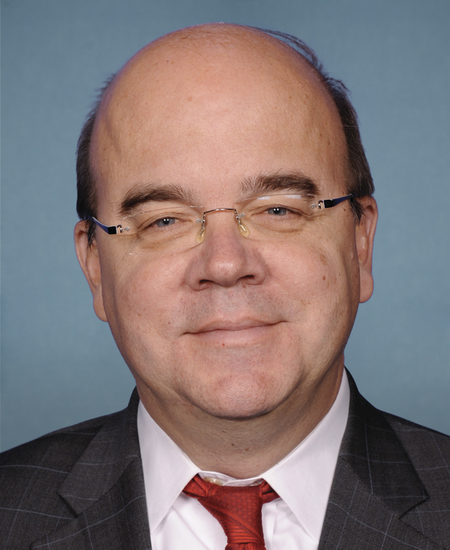
Rep. James P. McGovern
Sponsored bills
Give Kids a Chance Act of 2025 This bill expands the Food and Drug Administration’s (FDA’s) authority with respect to research on rare pediatric diseases, including by permitting the FDA to take enforcement action against drug sponsors that fail to satisfy pediatric study requirements and by reauthorizing programs that support pediatric research. Specifically, the bill modifies requirements relating to molecularly targeted pediatric cancer investigations to permit research on new drugs in combination with active ingredients that have already been approved, provided certain conditions are met; permits the FDA to take enforcement action against drug sponsors that fail to comply with pediatric study requirements, if such sponsors demonstrated a lack of due diligence in satisfying the requirement; renews the FDA’s authority to award priority review vouchers to sponsors of new products intended to treat rare pediatric diseases through September 30, 2029; and reauthorizes through FY2027 certain funding for the National Institutes of Health to support priority pediatric research. The bill also provides statutory authority for the FDA’s interpretation of the orphan drug exclusivity period. The bill specifies, consistent with FDA regulations, that the seven-year market exclusivity period for drugs for rare diseases or conditions (i.e., orphan drugs) prohibits the approval of the same drug for the same approved use or indication with respect to the disease or condition. (In Catalyst Pharmaceuticals, Inc. v. Becerra , a court rejected the FDA’s interpretation and held that orphan drug exclusivity extends to all uses or indications for the disease or condition.)
Maddy summaryThe FRESHER Act of 2025 requires the Secretary of the Interior to study stormwater runoff impacts from oil, gas, and mining operations on groundwater and aquifers. It mandates a specific analysis of measurable contamination, groundwater resources, and aquifer susceptibility to contamination in affected areas. The study must be completed within one year of the bill's enactment, with results reported to Congress. This bill directly affects oil, gas, and mining operations by establishing new federal study requirements for their stormwater runoff.
Maddy summaryHR 6318, the No GOUGE Act, prohibits large businesses from excessively raising prices on goods affected by tariffs or planned tariffs (e.g., imports subject to new tariffs) for five years after the tariff takes effect. It specifically targets companies with over $100 million in U.S. revenue, banning price hikes that exceed the actual cost of the tariff plus legitimate operational expenses (excluding executive pay or stock buybacks). The Federal Trade Commission (FTC) enforces this by presuming violations if large firms (over $1 billion revenue) raise prices beyond pre-tariff averages during "tariff shock" periods, though companies can rebut this by proving costs were genuinely tied to the tariff. The law aims to prevent price gouging by ensuring tariff costs - not profit motives - drive price changes for consumers.
Maddy summaryThe ROTOR Act narrows the definition of "sensitive government mission" for aircraft operations, excluding training flights and flights by officials below Cabinet rank. It requires regular reporting to Congress about exceptions to ADS-B Out requirements, establishes deadlines for requiring ADS-B In equipment on most aircraft, and mandates safety reviews for airports with military operations. The bill also improves coordination between the FAA and Department of Defense on airspace management and safety information sharing. These changes increase transparency around aircraft operations that don't broadcast their location while enhancing safety oversight. The bill directly affects Federal agencies operating aircraft, the FAA, and aircraft operators required to equip with ADS-B technology.
Maddy summaryHRES 899 is a symbolic House resolution recognizing the Transgender Day of Remembrance and memorializing transgender people killed by violence in 2024-2025. It directly affects transgender individuals, particularly transgender women of color, by acknowledging the epidemic of violence against them - citing 27 U.S. victims (including names like Rick Alastor Newman and Kyla Jane Walker) and 241 global cases in 2025. The resolution’s key provisions include formally recognizing the violence epidemic, memorializing specific lives lost, and affirming the need for solutions to protect transgender people. It does not create new laws but expresses congressional support for addressing systemic violence and discrimination faced by transgender communities.
Maddy summaryHR 6181, the John Lewis Every Child Deserves a Family Act, prohibits child welfare agencies receiving federal funds from discriminating against children, youth, or prospective foster/adoptive parents based on religion, sex (including sexual orientation and gender identity), or marital status. It directly affects LGBTQ youth in foster care - overrepresented at 30% of the system - who face higher risks of trauma, group home placements, and suicide attempts compared to non-LGBTQ peers. Key provisions require agencies to collect data on sexual orientation and gender identity, establish a National Resource Center for LGBTQ youth support, provide cultural competency training, and eliminate discriminatory practices. The law aims to improve safety, permanency, and placement stability by expanding access to family-based care and ensuring equitable services for all children in the system.
Maddy summaryThe Commonsense Legislating Act (HR 6039) makes several significant changes to federal programs. It extends the FAST Program through 2030, requires enhanced outreach to minority and Hispanic-serving institutions for small business grants, and expands the work opportunity tax credit to include military spouses. The bill establishes a Working Families Task Force to address challenges like affordability and childcare, and mandates annual mental health consultations for veterans with service-connected mental health disabilities. Additionally, it creates Native American tourism grant programs with $35 million in funding for 2026-2030 and establishes a Fentanyl Disruption Steering Group within the National Security Council.
Maddy summaryThis bill (HR 6015) ensures existing labor agreements between the Department of Veterans Affairs (VA) and employee unions remain in full effect through their scheduled terms. It also cancels two executive orders (14251 and 14343) that previously excluded VA from standard federal labor-management programs. The bill directly affects VA employees and their unions by preserving current collective bargaining rights and requiring VA to follow standard federal labor rules. It does not change veterans' benefits or healthcare access; it only modifies VA's internal labor relations procedures. This is a procedural bill focused on labor-management processes, not direct policy changes for veterans.
Maddy summaryThis bill allows Inspector General (IG) offices to continue operating during government funding gaps. It permits IGs to spend funds at the previous year's funding rate to cover basic operations and oversee programs that remain active when Congress hasn't passed new appropriations. The law directly affects federal IGs and the agencies they monitor, ensuring oversight continues without interruption during shutdowns. It amends existing law to provide this authority without requiring new appropriations.