

Maddy summaryThis bill establishes a new Transnational Repression Office within Homeland Security Investigations to analyze and monitor threats where foreign governments or their agents target U.S. people through harassment, threats, coercion, or intimidation - such as stalking, surveillance, or efforts to silence dissent. The office must issue annual reports to Congress detailing incidents, perpetrators, and U.S. government responses, while sharing threat information with state and local law enforcement. It directly affects U.S. citizens and residents targeted by foreign actors engaging in transnational repression, including those facing threats to their First Amendment rights or physical safety. The office will operate for 10 years before sunset, with no new funding or personnel required beyond existing DHS resources.
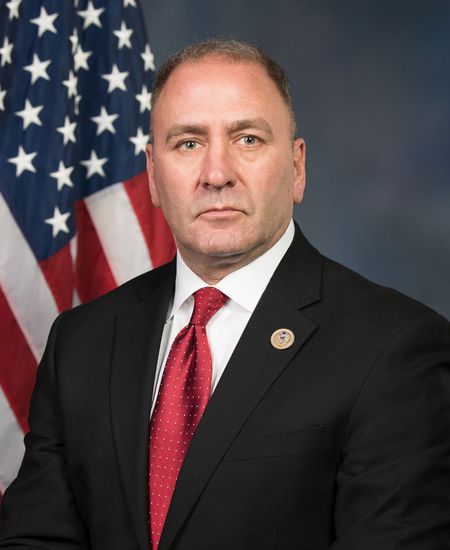
Rep. Clay Higgins
Sponsored bills
Maddy summaryHR 7433, the Law Enforcement Support and Transnational Repression Hotline Act, creates a new hotline for U.S. citizens and residents who believe they are victims of transnational repression by foreign governments or their agents - such as threats, harassment, or coercion for exercising First Amendment rights. The Department of Homeland Security must establish this anonymous hotline and run a public service campaign in multiple languages (including Spanish, Arabic, Mandarin, and Russian) to educate the public about transnational repression and available resources. The bill also requires research into new technologies to help law enforcement combat such threats while protecting privacy and civil liberties. This legislation directly supports victims of foreign government intimidation and enhances federal coordination to address cross-border repression tactics.
Maddy summaryHR 7873, the Firearm Due Process Protection Act, directly affects individuals denied firearm purchases through the National Instant Criminal Background Check System (NICS). The bill requires courts to hold hearings on challenges to NICS denials within 30 days and shifts the burden to the government to prove eligibility by "clear and convincing evidence." It also mandates annual FBI reports to Congress detailing the number of challenges processed, reversals of denials, and processing times. These provisions aim to expedite due process for people seeking to correct inaccurate NICS records affecting their firearm rights.
Maddy summaryHR 661, "Sarah’s Law," requires U.S. immigration authorities to detain certain immigrants charged with crimes causing death or serious injury. It applies to immigrants who entered without proper inspection, held revoked temporary visas, or fall under specific deportation categories, and who face charges for violent crimes. The bill mandates that immigration officials notify victims or their families (like parents or spouses) about the immigrant’s identity, immigration status, custody details, and removal efforts. This law does not change existing victim rights but adds specific notification requirements for these cases.
Maddy summaryHR 7322, the SUE for Immigration Enforcement Act of 2024, allows state attorneys general or authorized state officials to sue the federal government in federal court. The bill specifically enables states to file lawsuits against the Secretary of Homeland Security or other federal officials when immigration enforcement actions (like releasing detained immigrants or granting parole) cause the state or its residents financial harm exceeding $100. It adds new legal standing for states to challenge specific immigration policies under several sections of the Immigration and Nationality Act, including detention requirements, visa restrictions, and parole decisions. The bill requires federal courts to prioritize these cases for faster resolution. This law directly affects states seeking to challenge federal immigration enforcement policies through legal action.
Maddy summaryHRES 987 is a symbolic resolution introduced in the U.S. House of Representatives on January 31, 2024, by multiple Republican members. It formally denounces the Biden administration’s energy policies as "harmful" and "anti-American," citing specific actions like canceling the Keystone XL pipeline, restricting federal land leasing for oil and gas, blocking LNG exports, and implementing mineral extraction rules. The resolution does not create new laws or affect any group directly; it serves only as a formal expression of disapproval by the House. It has no legal effect and is intended to convey political opposition to the administration’s approach to energy development.
Maddy summaryHR 6009, the Restoring American Energy Dominance Act, requires the Bureau of Land Management (BLM) to withdraw a specific proposed rule (88 Fed. Reg. 47562, July 24, 2023) concerning fluid mineral leases and leasing processes on public lands. The bill directly affects the BLM’s regulatory authority over oil and gas leasing by prohibiting the agency from finalizing, implementing, or enforcing that rule or any substantially similar rule. This is a procedural bill focused solely on reversing a specific regulatory action, with no new policy provisions or direct impact on energy producers beyond halting the proposed rule.
Maddy summaryHR 6610, the Passport System Reform and Backlog Prevention Act, aims to reduce delays in U.S. passport processing for citizens applying for routine new or renewal passports. It mandates a 30-day processing standard from document submission to mailing, requires technology upgrades like digital tracking dashboards and mobile apps for applicant updates, and authorizes hiring up to 100 temporary staff annually for passport offices. The bill also sets cybersecurity standards, maintains affordable fees, and requires regular progress reports to Congress on implementation. These changes directly affect U.S. citizens seeking passports, particularly those in remote areas with limited access to processing centers.
Maddy summaryHR 7725 would block federal funding for graduate medical schools that require students or staff to adopt specific statements about race, gender, or identity (like claiming systemic racism or collective guilt), use race-based distinctions in admissions or programs, maintain DEI offices, or mandate "diversity statements" for admission. It directly affects graduate medical schools at colleges/universities receiving federal financial aid, including student loans. The bill exempts medical education about race-related health needs, demographic data collection for reporting, and religious institutions from adhering to policies conflicting with their beliefs. Schools violating these rules would lose eligibility for federal funds, though they could still comply with anti-discrimination laws and provide general academic instruction.
Maddy summaryHR 7694, the "No AI Audits Act," restricts the IRS from using artificial intelligence to select or initiate tax audits or investigations without meeting specific requirements. The bill requires any AI system used for audits to comply with NIST's explainability standards and mandates that IRS audits must be initiated by a human investigator whose name and contact information are documented. It also directs the Government Accountability Office (GAO) to audit the IRS's use of AI and assess its impact on taxpayer rights. This bill directly affects the IRS's audit procedures and taxpayers whose cases might be selected through AI systems.