

Maddy summaryHJRES 98 is a congressional resolution seeking to block a National Labor Relations Board (NLRB) rule that defined how businesses are considered "joint employers" for labor law purposes. The bill targets the NLRB's October 2023 rule (88 Fed. Reg. 73946), which would have changed how companies like franchisors or staffing agencies are held responsible for workers' rights. If passed, this resolution would cancel the rule, directly affecting businesses managing multiple employer relationships and labor organizations enforcing workplace standards. The measure uses a standard process under federal law to disapprove an agency rule, not creating new policy but reversing an existing regulation.
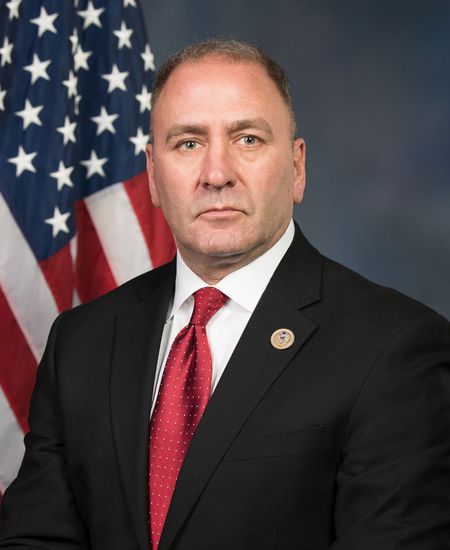
Rep. Clay Higgins
Sponsored bills
Maddy summaryThis bill (HR 996, Public Law 118-53) renames a U.S. Postal Service facility at 3901 MacArthur Blvd. in New Orleans, Louisiana, as the "Dr. Rudy Lombard Post Office." It has no policy impact beyond changing the official name of the building and updating references to it in federal records. The designation honors Dr. Rudy Lombard, with no changes to postal services, operations, or affected communities. The bill was enacted on May 7, 2024, after passing the House and Senate in 2023-2024.
Maddy summaryHR 8224, the "No Subsidies for Wealthy Universities Act," limits federal funding for administrative costs at research universities based on their endowment size. It prohibits institutions with endowments over $5 billion from using federal research funds for indirect costs (like administrative overhead), caps indirect costs at 8% for universities with endowments between $2 billion and $5 billion, and sets a 15% cap for others. Universities must annually report endowment values to the Education Statistics Commissioner, and the government will track how indirect costs are spent on administrative staff and diversity initiatives. The bill takes effect one year after enactment and applies to new federal research awards.
Maddy summaryThis joint resolution seeks congressional disapproval of a Department of Labor rule designed to improve protections for temporary agricultural workers. It invokes a specific federal process under Title 5 to block the rule from taking effect, preventing the proposed changes from being implemented. The rule, published April 29, 2024, would have affected temporary farmworkers’ rights and working conditions. If passed, the resolution would nullify the rule, meaning the Department of Labor’s proposed protections would not be enforced.
Maddy summaryHR 8208, the Stop the BIS Rule Act, blocks federal funding for the Bureau of Industry and Security (BIS) to finalize, implement, or enforce a proposed rule on firearms export controls. The rule, issued April 26, 2024 (89 Fed. Reg. 34680), aimed to enhance controls for firearms and related items. By prohibiting funds for this specific rule, the bill prevents the government from moving forward with the proposed regulations, which would have affected firearms exporters. The bill directly targets the BIS's ability to act on the rule, not the rule's content.
Maddy summaryThis bill updates legal definitions in customs law to replace the outdated "four leagues" standard with current international law boundaries. It clarifies that U.S. customs enforcement applies to waters within the U.S. territorial sea (up to 12 nautical miles, as defined in Presidential Proclamation 5928) and contiguous zone (up to 24 nautical miles, as defined in Proclamation 7219). The change directly affects U.S. Customs and Border Protection's maritime enforcement operations but does not alter the actual geographic scope of enforcement areas. The bill amends the Tariff Act of 1930 and the Anti-Smuggling Act to align their language with existing international law standards.
Maddy summaryHJRES 132 is a congressional disapproval resolution targeting a specific federal rule. It seeks to block a rule issued by the Department of Defense, General Services Administration, and NASA that would have required federal construction projects to use Project Labor Agreements (PLAs) - pre-hire agreements between contractors and labor unions. If passed, this resolution would nullify the rule (88 Fed. Reg. 88708, Dec. 22, 2023), preventing it from taking effect. The bill directly affects federal construction projects covered by the Federal Acquisition Regulation, as it would remove a requirement for contractors to negotiate PLAs with unions. This is a procedural measure focused on reversing an agency rule, not creating new policy.
Maddy summaryHR 8147 repeals the Corporate Transparency Act, which required certain businesses (typically those with more than 20 employees) to report beneficial ownership details to the Treasury Department. This bill eliminates the requirement for companies to disclose who ultimately owns or controls them, directly affecting business owners and financial institutions that previously submitted this information. The bill also makes minor technical changes to Title 31 of the U.S. Code to remove references to the repealed provisions. The repeal would end the existing financial transparency reporting obligation for covered entities.
Maddy summaryHRES 1170 prohibits U.S. House Members, Delegates, and Resident Commissioners from bringing or displaying any foreign nation's flag on the House floor during sessions, except for lapel pins or flags shown during speeches under House rules. The resolution applies to all flag sizes and is enforced by the House Sergeant-at-Arms. It directly affects House members' conduct during floor proceedings but allows limited exceptions for personal accessories and official speeches. This is a procedural rule change, not a substantive policy.
Maddy summaryThe SERVICE Act of 2024 establishes a 5-year pilot program to create specialized veterans response teams within law enforcement agencies. These teams, funded through federal grants, directly assist veterans in crisis by connecting law enforcement with VA resources, providing mental health training for officers, and organizing 24/7 volunteer response teams. Key provisions include identifying veteran officers to wear service pins, coordinating with VA and community agencies, and developing crisis response plans. The program requires participating agencies to track outcomes and report grant data to Congress annually.