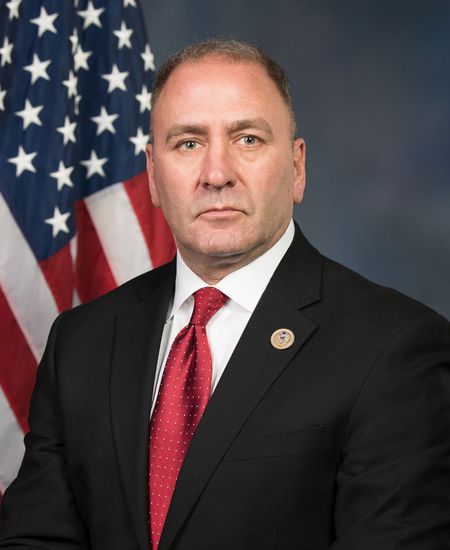
Photo of Clay Higgins
R United States House · District 3 · Louisiana On the 2026 ballot

Rep. Clay Higgins

Compare
Total votes
2,837
all sessions
Attendance
94%
180 missed
Near the chamber average
With party
87%
of cast votes
Lower than 93% of chamber peers
Bipartisan score
7%
crosses aisle rarely
Higher than 92% of chamber peers
Sponsored
915
bills & resolutions
Near the chamber average
Committees
6
assignments
915 bills and resolutions

Sponsored bills

Total
915
Primary
114
Co-sponsor
801
This page
915
matching current filters
Co-sponsor HR 54
In committee · Indiana House · Co-sponsor
WHO Withdrawal Act

Maddy summaryHR 54, the WHO Withdrawal Act, directs the U.S. President to withdraw the United States from the World Health Organization (WHO) Constitution upon enactment and prohibits all federal funding for U.S. participation in the WHO or any successor organization. The bill repeals the 1948 law that established U.S. membership and funding for WHO participation. This legislation directly affects all federal departments and agencies that handle international health funding and diplomatic engagement, ending U.S. financial and legal ties to the WHO.

In committee Jan 3, 2025 1 co-sponsor
Primary HR 163
In committee · Indiana House · Lead sponsor
Finish the Wall Act

Maddy summaryHR 163, the "Finish the Wall Act," mandates the immediate resumption of border wall construction along the U.S.-Mexico border within 24 hours of enactment. It requires the Department of Homeland Security to use all existing funds appropriated since 2016 for this purpose, prohibits canceling pre-January 2021 contracts, and sets a deadline of September 30, 2026, to complete the wall system. The bill directly affects the Department of Homeland Security, contractors with prior wall contracts, and border facilities, which must also comply with DNA collection requirements under federal law. It focuses on concrete policy actions - resuming construction, using existing funds, and meeting a specific timeline - without addressing broader policy impacts.

In committee Jan 3, 2025 0 co-sponsors
Co-sponsor HR 45
In committee · Indiana House · Co-sponsor
FIND Act

Maddy summaryHR 45 (FIND Act) requires federal government contractors to certify they do not discriminate against firearm businesses (including manufacturers, dealers, and trade associations) in their policies or practices. The bill mandates that contractors and subcontractors (for contracts over 10% of the prime contract value) certify they have no discriminatory policies and will not adopt them during the contract term. Violations could lead to contract termination and potential debarment. This applies to all federal procurement contracts awarded after the bill's enactment, excluding sole-source contracts. The law aims to ensure firearm businesses are treated equally in government contracting without restricting legitimate business criteria like creditworthiness or legal compliance.

In committee Jan 3, 2025 1 co-sponsor
Co-sponsor HR 142
In committee · Indiana House · Co-sponsor
Regulations from the Executive in Need of Scrutiny Act of 2025

Maddy summaryThis bill requires Congress to approve major federal regulations before they take effect. It would mandate that agencies submit detailed reports including cost-benefit analyses, economic impact assessments, and other information to Congress before implementing significant regulations. Major rules - defined as those with at least $100 million annual economic impact or significant effects on costs, competition, or employment - would need a joint resolution of approval from Congress within 70 session days. Nonmajor rules would follow a less stringent disapproval process. The bill aims to increase legislative oversight of the regulatory process, requiring Congress to formally review and approve rules that significantly impact the economy or public regulations.

In committee Jan 3, 2025 1 co-sponsor
Co-sponsor HR 196
In committee · Indiana House · Co-sponsor
Family and Small Business Taxpayer Protection Act

Maddy summaryHR 196, the Family and Small Business Taxpayer Protection Act, rescinds unobligated funds previously allocated to the Internal Revenue Service (IRS) under the Inflation Reduction Act of 2022. Specifically, it directs the cancellation of unused balances from six specific funding categories within the IRS's budget as of the bill's enactment date. This action reduces the IRS's available funding without creating new tax policies or altering taxpayer obligations. The bill is procedural, focusing solely on redirecting existing, unspent government funds rather than changing tax laws or affecting individual taxpayers directly.

In committee Jan 3, 2025 1 co-sponsor
Co-sponsor HR 562
In committee · Indiana House · Co-sponsor
Improving Veterans Access to Congressional Services Act of 2023

Maddy summaryThis bill allows Members of Congress to use Department of Veterans Affairs (VA) facilities for meetings with veterans who are their constituents. It requires the VA Secretary to create regulations within 90 days, ensuring spaces are visible, accessible during business hours, and rented at rates similar to standard office space in the area. The regulations prohibit campaigning, political discussions, photographing patients without consent, and meetings during the 60 days before federal elections. It directly affects veterans seeking congressional assistance and Members of Congress who can now hold constituent meetings at VA locations. The bill does not change VA benefits or services but streamlines access to representatives for veterans.

In committee Dec 24, 2024 1 co-sponsor
Co-sponsor HR 6843
Signed into law · Indiana House · Co-sponsor
To expand the boundaries of the Atchafalaya National Heritage Area to include Lafourche Parish, Louisiana.

Maddy summaryHR 6843 amends the Atchafalaya National Heritage Area Act to add Lafourche Parish, Louisiana, to the designated area. This procedural bill expands the existing heritage area boundaries, which already include several parishes, to include Lafourche Parish specifically. The Atchafalaya National Heritage Area preserves cultural, historical, and natural resources in the region. The bill was passed by Congress in December 2024 with no substantive policy changes beyond the boundary adjustment.

Signed into law Dec 23, 2024 1 co-sponsor
Primary HR 10549
In committee · Indiana House · Lead sponsor
Sovereign State Environmental Quality Assurance Act

Maddy summaryHR 10549, the Sovereign State Environmental Quality Assurance Act, would abolish the Environmental Protection Agency (EPA) 270 days after enactment, requiring the EPA Administrator to wind up operations and submit a progress report within 90 days. It redirects $4.4 billion annually (2026-2029) to state environmental departments based on population, plus $880 million yearly for Treasury oversight. The Congressional Budget Office must also conduct annual efficacy studies and reports on the Act during the same funding period. This bill directly affects all 50 states, the District of Columbia, Puerto Rico, and U.S. territories by shifting federal environmental funding and oversight authority to state-level agencies.

In committee Dec 20, 2024 0 co-sponsors
Primary HR 10529
In committee · Indiana House · Lead sponsor
Prioritizing American Farmers and Agricultural Industry Over Bureaucracy Act

Maddy summary# Summary of Agricultural Conservation Program Amendments This document outlines significant revisions to U.S. agricultural conservation programs, primarily contained within Title III of what appears to be the "Prioritizing American Farmers and Agricultural Industry Over Bureaucracy Act" (a placeholder title for this legislative text). ## Key Changes and Provisions 1. **Forest Conservation Easement Program**: Established as a new program (Subtitle I) to protect working forests through: - Forest land easements (allowing continued forest production) - Forest reserve easements (focused on habitat conservation for endangered species) - Specific provisions for socially disadvantaged forest landowners 2. **Agricultural Conservation Easement Program (ACEP) Revisions**: - Updated cost-share assistance levels (65% Federal share for most cases, with exceptions for socially disadvantaged farmers and grasslands) - Added provisions for pooling applications from socially disadvantaged farmers - Modified terms and conditions for easements - Added certification requirements for eligible entities 3. **Conservation Reserve Program (CRP) Modifications**: - Updated acreage limitations - Revised evaluation criteria for applications - Added provisions for habitat connectivity and wildlife corridors 4. **Regional Conservation Partnership Program (RCPP) Enhancements**: - Streamlined partnership agreement process (180-day timeline) - Added requirements for faster payments to eligible partners - Expanded provisions for waivers and adjustments to covered program requirements 5. **Repeals and Transitional Provisions**: - Repealed the Farmable Wetland Program (Section 1231B) and Pilot Programs (Section 1231C) - Repealed the Healthy Forests Reserve Program (Title V of Healthy Forests Restoration Act of 2003) - Included detailed transitional provisions to maintain existing contracts and agreements 6. **Administrative Improvements**: - Created an Office of Conservation Innovation within NRCS - Established new processes for conservation practice standard reviews - Added provisions for third-party technical service providers - Streamlined reporting and public information requirements The document emphasizes reducing bureaucracy, improving program efficiency, enhancing conservation outcomes, and providing greater flexibility for landowners while maintaining strong conservation protections. It contains numerous technical changes to funding mechanisms, eligibility requirements, and program administration across multiple conservation programs.


In committee Dec 19, 2024 0 co-sponsors
Co-sponsor HR 9596
Passed · Indiana House · Co-sponsor
Value Over Cost Act

Maddy summaryHR 9596, the Value Over Cost Act, amends federal procurement rules to allow agencies to select "best value" instead of strictly the lowest cost when awarding multiple-award schedule contracts. It requires agencies to choose the lowest cost alternative unless the General Services Administration (GSA) Administrator determines that "best value" (as defined in standard federal procurement guidelines) better serves government needs. This change directly affects federal agencies using the multiple-award schedule program for purchasing goods and services, giving the GSA discretion to prioritize broader value - like quality or innovation - over minimal price in specific cases. The bill does not alter existing "best value" standards but formally incorporates them into the procurement framework.

Passed Dec 19, 2024 1 co-sponsor
Showing 291 to 300 of 915 bills
Previous 1 … 29 30 31 … 92 Next