

Maddy summaryThe IDEA Full Funding Act (HR 2598) mandates specific annual federal funding levels for the Individuals with Disabilities Education Act (IDEA), directly affecting schools and students with disabilities nationwide. It requires the federal government to appropriate either a fixed dollar amount or a specified percentage (increasing annually from 4.5% to 40%) of a calculated total - based on the number of eligible students and average per-pupil costs - starting in fiscal year 2026 through 2035. The bill sets clear, escalating funding targets, with the higher of two calculated amounts (dollar figure or percentage) becoming available for obligation each fiscal year. This establishes a binding financial commitment to address long-standing underfunding of special education services under IDEA.
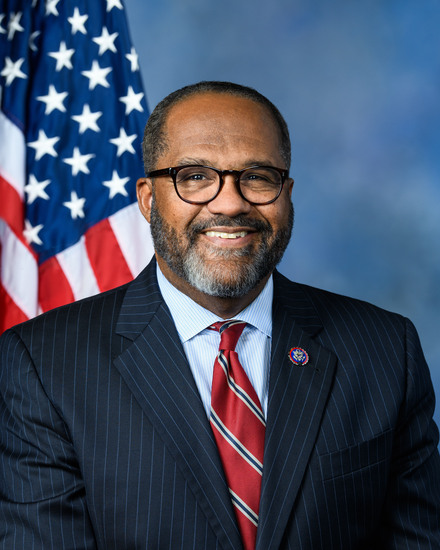
Rep. Troy A. Carter
Sponsored bills
Maddy summaryThe Building Child Care for a Better Future Act (HR 2595) increases federal child care funding to $20 billion for fiscal year 2026 with annual inflation-based increases, plus an additional $5 billion annually for targeted improvements in child care access and quality. It allocates specific portions of funds to Indian tribes (5%) and territories (4%), requiring states and tribes to identify areas with particular child care needs and develop plans to improve workforce, supply, quality, and access through activities like provider training, facility upgrades, and higher wages. The bill mandates regular reporting and evaluations to track how funds improve child care services for low-income families, children with disabilities, dual language learners, and those in rural or high-poverty areas. This legislation directly affects child care providers, low-income families seeking care, and tribal organizations by providing concrete funding mechanisms to address specific child care shortages.
Maddy summaryThis bill requires the State Department to obtain specific congressional authorization and submit a detailed reorganization plan before making any structural changes. The plan must cover impacts on diplomatic operations, consular services, workforce transitions, and risks to U.S. foreign policy interests. If the department bypasses these requirements, federal funds cannot be used for State Department efficiency activities or official travel by politically appointed officials. The bill directly affects State Department leadership and congressional committees, mandating strict oversight before any reorganization takes effect.
Workplace Violence Prevention for Health Care and Social Service Workers Act This bill requires the Department of Labor to address workplace violence in health care, social service, and similar sectors. Specifically, Labor must issue an occupational safety and health standard that requires certain employers to take actions to protect workers and other personnel from workplace violence. The standard applies to employers in the health care sector, in the social service sector, and in sectors that conduct activities similar to those in the health care and social service sectors. Among other elements, the standard must require each employer to (1) develop a workplace violence prevention plan, (2) promptly investigate incidents of workplace violence, and (3) provide relevant training and education to employees. The bill requires certain hospitals and skilled nursing facilities to comply with this standard as a condition of Medicare participation.
Maddy summaryThis bill (HR 2532) blocks federal funding for large-scale layoffs at the Department of Health and Human Services (HHS) and its sub-agencies. It prohibits using federal funds to remove 3% or more of all HHS employees, or 3% or more at any single sub-agency, within a 60-day period. This applies to actions like layoffs under federal workforce rules (Title 5) or agency reorganizations. The bill directly affects HHS employees and its operating divisions by preventing rapid, widespread workforce reductions. It does not change HHS policies but restricts how personnel actions can be funded.
Freedom in School Cafeterias and Lunches Act or the FISCAL Act This bill revises requirements for milk provided by the National School Lunch Program of the Department of Agriculture (USDA) to require that schools offer plant-based milk. Under current law, schools must provide a substitute for fluid milk for students whose disability restricts their diet (on receipt of a written statement from a licensed physician). Schools may also substitute a nondairy beverage for fluid milk for students who have an identified medical or other special dietary need (on receipt of a written statement from a medical authority or a student's parent or legal guardian). The bill eliminates the exceptions and documentation requirements. Instead, schools participating in the school lunch program must offer all students a plant-based milk option that is consistent with (1) the most recent U.S. Dietary Guidelines, or (2) USDA-established nutritional standards if the milk is not included under those guidelines.
Sanctioning Russia Act of 2025 This bill imposes penalties on certain persons (individuals and entities) if the President determines that the Russian government or a person acting at Russia's direction is involved with (1) refusing to negotiate a peace agreement with Ukraine; (2) violating a negotiated peace agreement; (3) initiating another invasion of Ukraine; or (4) overthrowing, dismantling, or seeking to subvert the Ukrainian government. If the President makes such a determination, the bill requires certain actions including the President must impose visa- and property-blocking sanctions on specified persons such as the Russian president, certain Russian military commanders, and any foreign person that knowingly provides defense items to the Russian armed forces; the President must increase the rate of duty on all goods and services imported from Russia into the United States to at least 500% relative to the value of such goods and services; the President must increase the rate of duty on all goods and services imported into the United States from countries that knowingly engage in the exchange of Russian-origin uranium and petroleum products to at least 500% relative to the value of such goods and services; the Department of the Treasury must impose property-blocking sanctions on any financial institution organized under Russian law and owned wholly or partly by Russia, and any financial institution that engages in transactions with those entities; and the Department of Commerce must prohibit the export, reexport, or in-country transfer to or in Russia of any U.S.-produced energy or energy product.
Maddy summaryHR 2587, the Youth Mental Health Research Act, establishes a new NIH research initiative to coordinate studies on youth mental health across federal health institutes. It focuses on two key areas: researching community resilience and early intervention strategies for at-risk youth, and improving how mental health services are delivered in schools, communities, and other settings where young people spend time. The bill authorizes $100 million annually for fiscal years 2025 through 2030 to fund this research. This initiative directly supports future evidence-based approaches to youth mental health, without altering current services or directly affecting individuals.
Maddy summaryThis symbolic resolution (HCONRES 23) expresses Congress's support for International Transgender Day of Visibility, observed annually on March 31. It encourages Americans to recognize and celebrate transgender community achievements while acknowledging ongoing challenges like discrimination in employment, healthcare, and public accommodations. The resolution does not create new laws or policies but formally endorses the day's purpose through non-binding statements of support and recognition. It directly affects the broader public by promoting awareness and respect for transgender individuals' rights and contributions.
Maddy summaryHRES 280 is a non-binding House resolution supporting National Women’s History Month in March 2025. It formally recognizes the month-long observance and honors individuals and organizations that have advanced women’s history education and the women’s suffrage movement. The resolution does not create new laws, funding, or obligations - it is a symbolic statement of support. It directly affects no specific group but aims to raise public awareness of women’s historical contributions. The resolution aligns with longstanding congressional practice of recognizing national observances.