

Maddy summaryThis bill establishes a federal task force to address maternal health disparities by coordinating efforts across multiple government agencies and community stakeholders to reduce preventable maternal deaths and serious health complications. The task force will include representatives from various departments such as Health and Human Services, Housing and Urban Development, and Transportation, along with community leaders, patients, and healthcare providers focused on maternal health. Additionally, the bill authorizes $100 million over five years to provide grants to community organizations for addressing social determinants of maternal health including housing, transportation, nutrition, employment, and environmental conditions. These grants prioritize areas with high rates of maternal mortality and poverty, and recipients must submit annual reports on their activities and outcomes. The legislation defines key terms such as maternal mortality and social determinants of maternal health to guide implementation and reporting requirements.
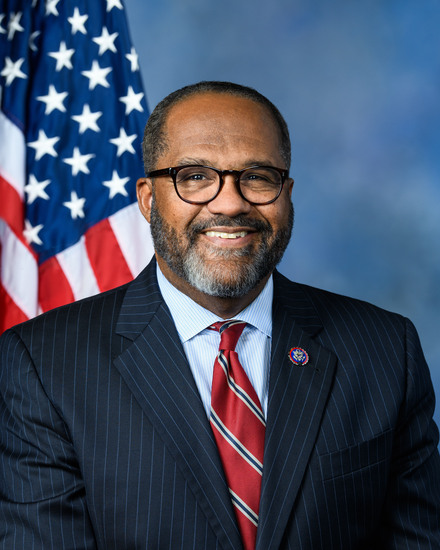
Rep. Troy A. Carter
Sponsored bills
Maddy summaryThis bill would allow businesses and financial institutions to provide services to cannabis companies without fear of federal penalties, even though cannabis remains illegal under federal law. It prohibits federal agencies from taking adverse actions against anyone who offers financial products, insurance, legal services, or other business assistance to cannabis-related legitimate businesses operating in states where it is legal. Additionally, the bill would permit national stock exchanges to list and trade securities from cannabis companies by creating a legal safe harbor that protects exchanges and market participants from federal prosecution. The law would take effect 180 days after it is signed into legislation.
Maddy summaryThe Feeding Families Not Fear Act of 2026 reverses specific provisions from the One Big Beautiful Bill Act of 2025 by restoring funding and benefits that were previously cut. It directly affects low-income families and individuals who rely on the Supplemental Nutrition Assistance Program (SNAP) by reinstating benefits that were reduced under earlier legislation. The bill achieves this by repealing two sections that increased funding for immigration and customs enforcement and another section that modified SNAP benefits under the Food and Nutrition Act of 2008. By removing these changes, the legislation returns SNAP provisions to their previous state as if the 2025 law had not been enacted.
Governing Unaccredited Representatives Defrauding VA Benefits Act or the GUARD VA Benefits Act This bill imposes fines on individuals for soliciting, contracting for, charging, or receiving any unauthorized fee or compensation with respect to the preparation, presentation, or prosecution of any claim for Department of Veterans Affairs benefits. The attempted commission of such offenses is also punishable by fine.
Maddy summaryThis bill reauthorizes funding for the State Offices of Rural Health Program, which supports state-level efforts to improve healthcare access in rural areas. It authorizes $12.5 million annually for fiscal years 2023 through 2027 and increases funding to $13.5 million per year for fiscal years 2028 through 2032. The money will be distributed through grants to states that operate offices focused on rural health initiatives. This legislation directly affects state health departments and organizations working to address healthcare disparities in rural communities. The bill makes no changes to eligibility requirements or program goals, only extending and adjusting the funding levels.
Maddy summaryThis bill establishes a new advisory group called the Communications Equity and Diversity Council within the Federal Communications Commission (FCC). The Council would consist of 30 to 35 members representing historically underserved individuals, consumers, civil rights organizations, and industry stakeholders, all appointed by the FCC Chair. Its main responsibilities include making recommendations on improving access to communication services, reducing barriers to infrastructure investment, helping small businesses enter the communications industry, and promoting diversity of voices in communications. The Council would meet at least three times per year with public meetings, develop data on industry trends, and receive $450,000 in funding for fiscal year 2027 to carry out its duties.
Maddy summaryThis bill establishes a federal grant program to help States, Indian Tribes, and Tribal organizations provide services to people struggling with gambling addiction. The program would fund prevention efforts, screening, treatment, and support services including training for healthcare providers, public awareness campaigns, and access to help lines and peer support groups. Grants would be awarded competitively, with priority given to programs serving vulnerable populations such as Native Americans, veterans, youth, and those in rural or underserved areas. Funding would come from a portion of the federal excise tax on gambling, with amounts adjusted annually for inflation.
Maddy summaryThis bill, titled the Disaster Aid Without Delay Act of 2026, would prevent the Secretary of Homeland Security from using policies that set fixed dollar limits on how quickly disaster relief money can be spent. It directly affects the Federal Emergency Management Agency by stopping it from requiring additional approvals or delaying payments when spending reaches certain arbitrary amounts. The law defines monetary thresholds as any fixed dollar requirement that conditions or delays fund disbursement, ensuring disaster assistance can be released without artificial spending caps.
This concurrent resolution directs the President to terminate the use of U.S. Armed Forces from hostilities against Iran or any part of the Iranian government or military unless a declaration of war or authorization to use military force for such purpose has been enacted. The resolution specifies that it shall not be construed to prevent the United States from defending itself from imminent attack.
Maddy summaryHRES 1107 is a House resolution urging the President to issue a proclamation flying the U.S. flag at half-staff to honor Rev. Jesse Jackson. The resolution recognizes his civil rights leadership, including founding the Rainbow PUSH Coalition and his presidential campaigns in 1984 and 1988, which advanced racial equality and economic justice. This symbolic gesture directly affects the President (as the one who would issue the proclamation) and the public, who would observe the flag at half-staff.