

Maddy summaryHR 1269, the Honoring Our Fallen Heroes Act of 2025, expands benefits for public safety officers (like police and firefighters) who develop certain cancers linked to their work. It adds 22 specific cancers - including lung, mesothelioma, and breast cancer - to the list of conditions presumed to be "exposure-related" and sustained in the line of duty. This presumption applies if the officer served at least 5 years, was diagnosed with the cancer within 15 years after last active duty, and the cancer directly caused death or permanent disability. The bill also establishes a process for adding new cancers every 3 years based on medical evidence from agencies like NIOSH, and allows claims to be filed within 3 years of the law's enactment.
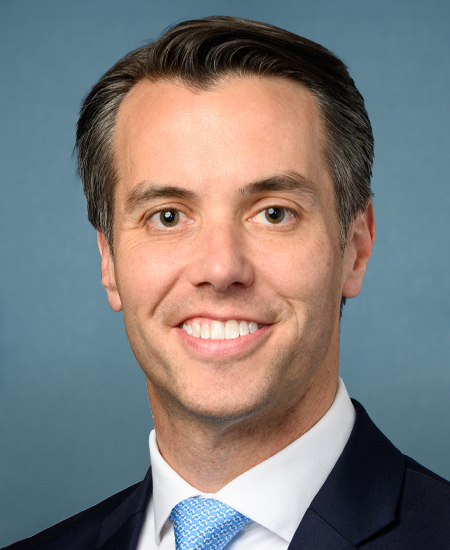
Rep. Morgan McGarvey
Sponsored bills
Maddy summaryThis bill expands eligibility for death and disability benefits under the public safety officers' death benefits program to include retired law enforcement officers who die or become permanently disabled from targeted attacks directly related to their past service. It specifically covers officers who retired in good standing from public agencies, including those who served without compensation. The policy change applies retroactively to cases occurring since August 28, 2012, and amends the Omnibus Crime Control and Safe Streets Act of 1968. This provides financial support to retired officers and their families affected by violence targeting their law enforcement careers.
Maddy summaryHR 1189, the National Plan for Epilepsy Act, creates a coordinated federal strategy to address epilepsy through a National Plan for Epilepsy. The plan requires the Secretary of Health and Human Services to establish an annual assessment, maintain a diverse Advisory Council (including people with epilepsy, caregivers, and experts), and coordinate research and care across federal agencies. Key provisions include annual progress reports to Congress, data sharing between agencies, and recommendations to improve diagnosis, treatment access, and reduce epilepsy-related disparities. The plan expires December 31, 2035, and directly affects the estimated 3.4 million people in the U.S. living with epilepsy and their caregivers.
Maddy summaryThis bill restricts access to Treasury payment systems (including the Bureau of the Fiscal Service) to only Treasury employees with a "fully successful" performance rating and at least one year of civil service, or contractors/outsiders with security clearances, required privacy/cybersecurity training, ethics agreements, and no conflicts of interest. It treats non-government users accessing these systems as government employees for ethics rules and defines specific actions (like stopping payments) as "personal and substantial participation" in government matters. The Treasury Inspector General must investigate any unauthorized access within 30 days and report to Congress, detailing the breach, security risks, and any halted payments. The bill directly affects Treasury staff, contractors, and any external entities accessing federal payment systems.
Maddy summaryThis proposed bill (HR 220) would expand VA healthcare benefits to cover infertility treatments like in vitro fertilization (IVF) and fertility preservation services for veterans with infertility or at risk of infertility (e.g., due to medical treatments), and their partners. It limits VA coverage to three successful IVF cycles or ten attempts, requires consent from veterans, partners, and donors, and allows use of donated eggs or embryos. Partners would receive travel reimbursement as if they were veterans, and temporary rules during implementation will immediately allow partners to access care without marriage requirements. The bill clarifies VA isn’t required to cover maternity care beyond existing rules and defers full implementation until VA issues final regulations within one year of enactment.
Maddy summaryThis bill requires the Comptroller General to study and report on menopause care provided by the Department of Veterans Affairs (VA) to women veterans experiencing perimenopause, menopause, or genitourinary syndrome of menopause. The study will examine current VA protocols for diagnosis, treatment, provider training, veteran access to care, outreach efforts, and quality of care, including veteran feedback. The VA Secretary must then develop a strategic plan within six months of the report's release to improve menopause care access and quality for women veterans under VA healthcare programs.
Maddy summaryThe Race Horse Cost Recovery Act of 2025 would amend the tax code to allow owners of race horses to deduct the full cost of their horses over a three-year period for tax purposes, instead of the standard longer depreciation schedule. This change would directly affect race horse owners, breeders, and trainers in the horse racing industry by accelerating their tax deductions for horse purchases. The bill specifically adds "race horse" to the list of property eligible for this accelerated depreciation under the Internal Revenue Code. The provision applies to race horses placed in service after December 31, 2022.
Maddy summaryThe Racehorse Tax Parity Act (HR 1112) changes tax rules for racehorses by reducing the required holding period from 24 months to 12 months for horses to qualify as "section 1231 assets" under federal tax law. This directly affects racehorse owners, breeders, and businesses that buy/sell horses, as it allows them to treat horses as business assets sooner for tax purposes. The bill amends the Internal Revenue Code to remove horses from the list of assets requiring a longer holding period, aligning their tax treatment with other livestock. The change applies to taxable years beginning after December 31, 2024.
Protecting Sensitive Locations Act This bill prohibits immigration enforcement actions within 1,000 feet of a sensitive location except in exigent circumstances, such as the imminent risk of death, violence, or physical harm to any person. Sensitive locations include health care facilities; schools and school bus stops; places that provide assistance for people such as children, pregnant women, and abuse victims; child care facilities; places that provide disaster or emergency services; places of worship; courthouses and lawyers’ offices; facilities used as polling places; certain labor union facilities; and public assistance offices. The prohibition shall apply to Department of Homeland Security officers and agents, as well as state employees pursuing immigration enforcement actions. If an enforcement action is carried out in violation of this prohibition (1) no information resulting from the action may be entered into the record in a resulting removal proceeding, and (2) the affected individual may move to immediately terminate such a proceeding. U.S. Immigration and Customs Enforcement and U.S. Customs and Border Protection shall annually report to Congress about enforcement actions taken at sensitive locations in the preceding year.
Protect Our Letter Carriers Act of 2025 This bill requires or authorizes certain actions related to the U.S. Postal Service (USPS). The bill requires the Department of Justice to appoint an assistant U.S. attorney in each judicial district to coordinate and supervise the investigation and prosecution of various crimes related to postal services (for example, assault on a postal service employee, breaking into a post office, or obstruction of mails). The bill also requires the U.S. Sentencing Commission to amend sentencing guidelines to provide that the assault or robbery of a postal employee shall be treated the same as the assault of a law enforcement officer. Additionally, the bill authorizes appropriations for the USPS to install high security collection boxes and replace older versions of the universal mailbox key with electronic versions.