

Give Kids a Chance Act of 2025 This bill expands the Food and Drug Administration’s (FDA’s) authority with respect to research on rare pediatric diseases, including by permitting the FDA to take enforcement action against drug sponsors that fail to satisfy pediatric study requirements and by reauthorizing programs that support pediatric research. Specifically, the bill modifies requirements relating to molecularly targeted pediatric cancer investigations to permit research on new drugs in combination with active ingredients that have already been approved, provided certain conditions are met; permits the FDA to take enforcement action against drug sponsors that fail to comply with pediatric study requirements, if such sponsors demonstrated a lack of due diligence in satisfying the requirement; renews the FDA’s authority to award priority review vouchers to sponsors of new products intended to treat rare pediatric diseases through September 30, 2029; and reauthorizes through FY2027 certain funding for the National Institutes of Health to support priority pediatric research. The bill also provides statutory authority for the FDA’s interpretation of the orphan drug exclusivity period. The bill specifies, consistent with FDA regulations, that the seven-year market exclusivity period for drugs for rare diseases or conditions (i.e., orphan drugs) prohibits the approval of the same drug for the same approved use or indication with respect to the disease or condition. (In Catalyst Pharmaceuticals, Inc. v. Becerra , a court rejected the FDA’s interpretation and held that orphan drug exclusivity extends to all uses or indications for the disease or condition.)
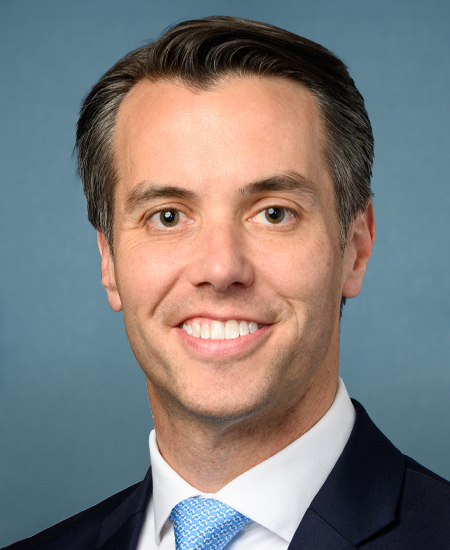
Rep. Morgan McGarvey
Sponsored bills
Maddy summaryThis bill requires military child and youth programs - including military child development centers, Department of Defense youth programs, and family home day care providers receiving DoD funding - to notify parents or guardians within 24 hours of suspecting child abuse or neglect. It also mandates that these programs report such incidents to the Senate and House Committees on Armed Services, state senators representing the location, and the local House representative within 72 hours. The law directly affects military-connected families and child care providers operating under DoD programs, ensuring faster transparency for both families and oversight bodies. The policy creates a clear timeline for reporting suspected abuse, aiming to improve responsiveness without altering existing child welfare protocols.
Maddy summaryHRES 905 is a non-binding House resolution supporting the designation of November 2025 as "National Homeless Children and Youth Awareness Month." It does not create new programs or funding but formally encourages businesses, governments, schools, and organizations to raise awareness about homelessness affecting children and youth during that month. The resolution cites statistics on homelessness rates among students and youth (e.g., 1.4 million enrolled homeless children in 2022-2023) to underscore the need for greater public attention. It urges these groups to highlight causes, solutions, and prevention efforts during the designated month.
Maddy summaryHRES 900 is a symbolic resolution expressing condolences to the families and loved ones of the 14 victims (3 on board and 11 in the Louisville community) of the UPS Airlines flight 2976 crash that occurred on November 4, 2025, at Louisville Muhammad Ali International Airport. It specifically names the victims, honors their lives, and commends the first responders who assisted during the tragedy. This resolution has no policy or funding impact - it serves only as a formal expression of sympathy from the House of Representatives.
Maddy summaryThe Revitalize Our Neighborhoods Act of 2025 creates a competitive grant program administered by the Department of Housing and Urban Development (HUD) to eliminate blight and revitalize neighborhoods. It provides funding specifically for states, local governments, or multi-jurisdictional entities to carry out activities like demolishing deteriorated structures, boarding vacant properties, renovating abandoned buildings, and constructing affordable housing - all limited to low-income communities. Recipients must contribute at least 15% in matching funds (from federal programs, local sources, or property sales) and submit detailed 5-year plans for how the funds will be used. The bill prohibits using funds to acquire occupied homes and requires annual reports on project outcomes, geographic distribution, and populations assisted.
Maddy summaryHR 6181, the John Lewis Every Child Deserves a Family Act, prohibits child welfare agencies receiving federal funds from discriminating against children, youth, or prospective foster/adoptive parents based on religion, sex (including sexual orientation and gender identity), or marital status. It directly affects LGBTQ youth in foster care - overrepresented at 30% of the system - who face higher risks of trauma, group home placements, and suicide attempts compared to non-LGBTQ peers. Key provisions require agencies to collect data on sexual orientation and gender identity, establish a National Resource Center for LGBTQ youth support, provide cultural competency training, and eliminate discriminatory practices. The law aims to improve safety, permanency, and placement stability by expanding access to family-based care and ensuring equitable services for all children in the system.
Maddy summaryThis bill (HR 6015) ensures existing labor agreements between the Department of Veterans Affairs (VA) and employee unions remain in full effect through their scheduled terms. It also cancels two executive orders (14251 and 14343) that previously excluded VA from standard federal labor-management programs. The bill directly affects VA employees and their unions by preserving current collective bargaining rights and requiring VA to follow standard federal labor rules. It does not change veterans' benefits or healthcare access; it only modifies VA's internal labor relations procedures. This is a procedural bill focused on labor-management processes, not direct policy changes for veterans.
Maddy summaryThe Global Respect Act (HR 6151) requires the U.S. President to publicly list foreign officials responsible for severe human rights violations against LGBTQI individuals, including torture, prolonged detention, or violence based on sexual orientation or gender identity. It mandates denying visas and entry to listed individuals and requires annual reports on the list's updates and impacts. The bill also directs the State Department to track global violence against LGBTQI people and update annual human rights reports to include discrimination based on sexual orientation or gender identity. These provisions directly affect foreign government officials and entities implicated in such abuses, aiming to increase accountability through U.S. visa restrictions.
Maddy summaryHRES 877 is a non-binding resolution expressing the U.S. House of Representatives' support for designating November as "Prematurity Awareness Month." It does not create new laws or allocate funds but calls on the public, interest groups, and communities to observe the month through events, promote awareness, and support preterm birth prevention programs. The resolution references statistics on preterm birth rates (over 370,000 babies born preterm in 2022) and health disparities, but its core action is symbolic advocacy. It directly affects the public by encouraging community engagement in awareness efforts during November. This resolution is procedural, focusing solely on recognition, not policy change.
Maddy summaryHR 6056, the International Human Rights Defense Act of 2025, establishes a permanent Special Envoy at the State Department to lead U.S. foreign policy efforts addressing discrimination and violence against LGBTQI+ people globally. The bill requires the U.S. government to develop and update a biannual global strategy to prevent criminalization and violence against LGBTQI+ individuals, mandate detailed reporting on such abuses in annual country reports, and ensure all U.S. foreign assistance programs include inclusive nondiscrimination policies. This legislation directly affects U.S. foreign policy implementation, federal agencies receiving funding, and LGBTQI+ communities facing persecution worldwide. The bill aims to coordinate U.S. government efforts across departments and with international partners to advance LGBTQI+ rights globally through concrete policy mechanisms.