

Maddy summaryHR 4723 requires the U.S. President to impose sanctions on foreign individuals and entities that threaten Bosnia and Herzegovina's territorial integrity, democratic institutions, or the Dayton Peace Agreement. The President must submit a list of such persons every 90 days, triggering sanctions that block their U.S. assets and ban entry into the United States. The bill codifies existing sanctions from two executive orders and allows limited national security waivers (up to 180 days each, expiring after two years). It specifically targets actions like forming unauthorized government structures that disrupt Bosnia's central authority, violating court rulings, or engaging in government corruption.
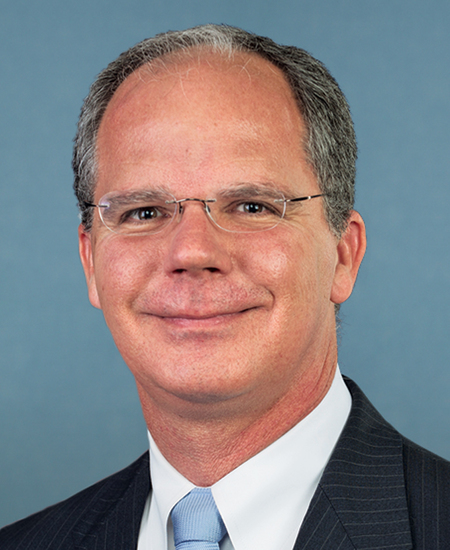
Rep. Brett Guthrie
Sponsored bills
Maddy summaryThis bill amends budget scoring rules to require the Congressional Budget Office to account for long-term savings from preventive health programs when evaluating legislation. It directs the CBO to assess if a bill reduces future government costs through evidence-based preventive health services (like screenings or vaccinations) and include those savings in budget projections. The change affects how Congress scores the fiscal impact of health-related bills, requiring them to consider savings over 20 years (not just the current budget cycle). It does not create new programs but changes the budget analysis process for preventive health measures.
Maddy summaryThe Laken Riley Act (HR 7511) would require federal authorities to detain non-citizens charged with or convicted of burglary, theft, larceny, or shoplifting offenses. It also creates new legal standing for state attorneys general to sue federal immigration officials in federal court if they believe immigration enforcement decisions (like releasing aliens or granting parole) cause financial harm exceeding $100 to the state or its residents. The bill amends immigration laws to expand detention requirements for certain property crimes and allows states to seek court orders to enforce immigration policies. It does not create new criminal penalties but modifies existing immigration enforcement procedures. The bill’s findings and political language about the Laken Riley case are not part of its policy provisions.
Maddy summaryThe Farm to Fly Act of 2023 amends USDA programs to include sustainable aviation fuel (SAF) as a qualifying product for financial assistance, directly affecting farmers, biorefineries, and agricultural producers. It defines SAF as liquid fuel meeting strict environmental standards - requiring at least a 50% reduction in lifecycle greenhouse gas emissions compared to jet fuel and excluding sources like palm oil or petroleum. The bill mandates the Secretary of Agriculture to lead a cross-agency initiative focused on advancing SAF development, leveraging agricultural resources, and fostering public-private partnerships to expand the domestic SAF market. This aims to support rural economic growth, strengthen U.S. energy security, and align with national clean energy goals in aviation.
Maddy summaryThis bill designates the U.S. Postal Service facility at 835 South 7th Street in Louisville, Kentucky, as the "Alberta Odell Jones Post Office Building." All official references in laws, maps, regulations, or documents to this location will now use the new name. The bill directly affects the Louisville post office and any government records referencing it.
Maddy summaryHR 7455, the Sunset Act of 2024, requires federal agencies to automatically expire significant rules after 10 years unless Congress passes a new law extending them. Agencies must submit reports 180 days before expiration, and Congress can extend rules via joint resolution within 3 legislative days of receiving the report. The bill also mandates annual reviews of 10% of active agency rules for 9 years, with rules not extended by Congress after the 10-year period expiring. It applies to all major agency rules (e.g., environmental or safety regulations) and includes limited presidential exemptions for emergencies, but does not affect existing rules already in effect.
Maddy summaryHR 7450, the Protecting Privacy in Purchases Act, prohibits payment card networks and covered entities (like payment processors) from requiring or assigning merchant category codes that specifically identify firearms retailers as different from general stores or sporting goods retailers. This directly affects firearms retailers and payment networks by preventing them from using business classification codes that could flag firearm sales. The bill establishes an enforcement process where the Attorney General investigates complaints, issues remediation notices, and can seek court injunctions for non-compliance, while preempting state or local laws on this issue. It does not create private lawsuits for individuals.
Maddy summaryHRES 1022 is a symbolic resolution expressing the House of Representatives' support for designating March 2024 as "National March into Literacy Month." It encourages schools, parents, and communities to promote literacy through events and awareness activities during March, without creating new laws or allocating funds. The resolution highlights literacy's importance for children's success and adult workforce participation, citing research on reading skills. As a procedural measure, it has no direct impact on individuals or policy implementation.
Maddy summaryH.J.Res. 113 proposes a constitutional amendment requiring the federal government to balance its annual budget. It would limit total annual spending to the average revenue from the previous three years (adjusted for population and inflation), excluding debt payments and borrowing. Congress could temporarily exceed this limit for one year with a two-thirds vote if declaring a specific emergency. The amendment would take effect after ratification by 38 states (three-fourths of states), with a phased reduction in excess spending over nine years. This would directly affect all federal spending decisions made by Congress and the executive branch.
Maddy summaryThis bill appropriates over $15 billion in supplemental funding for U.S. security assistance to Israel following attacks in Israel. It includes specific allocations such as $5.2 billion for Israel's Iron Dome, David's Sling, and Iron Beam defense systems, as well as funds for military personnel, operations, and equipment across all branches of the military. The bill requires the Secretary of Defense and Secretary of State to submit regular reports to Congress detailing security assistance provided to Israel and designates all funding as "emergency requirements" under federal law. This funding directly supports U.S. security assistance programs with Israel to respond to regional security threats.