

Maddy summaryThis bill extends funding for the existing Public Health Service Act program focused on raising public awareness about Alzheimer's disease and related dementias. It authorizes $33 million annually for fiscal years 2025 through 2029 to support public health education and outreach initiatives. The program directly affects public health organizations and community groups that develop and distribute educational materials about Alzheimer's prevention, diagnosis, and care. The key provision is the multi-year funding extension, ensuring continued support for nationwide awareness efforts without altering the program's core structure.
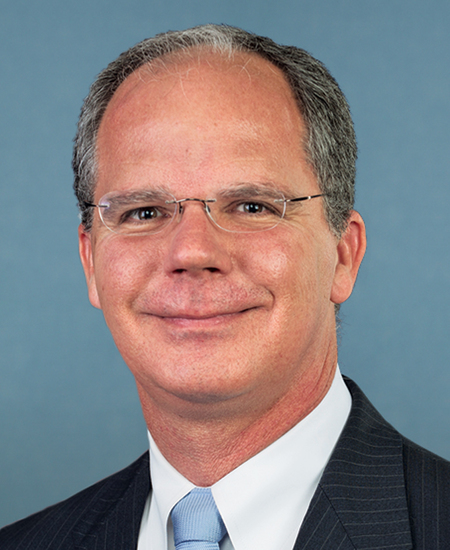
Rep. Brett Guthrie
Sponsored bills
Maddy summaryThis bill allows livestock producers and their employees to take black vultures (Coragyps atratus) that are harming or threatening livestock, bypassing the usual protections under the Migratory Bird Treaty Act. It directly affects ranchers and farm workers in areas where black vultures cause livestock deaths or injuries. The key provision requires annual reporting to the U.S. Fish and Wildlife Service about any vultures taken, using a simplified form similar to existing reporting for permitted bird take. This creates a specific, limited exception to federal bird protections for livestock protection, with no new restrictions on vulture populations.
Maddy summaryHR 6751 authorizes the U.S. Mint to produce commemorative coins honoring Roberto Clemente, a Hall of Fame baseball player and humanitarian, including 50,000 $5 gold coins, 400,000 $1 silver coins, and 750,000 half-dollar coins. The coins must feature Clemente's image and inscriptions like "Roberto Clemente" and "2027," with all sales including a surcharge ($5-$35 per coin) paid to the Roberto Clemente Foundation. The foundation, which supports youth sports, education, and disaster relief programs, will use these funds for its mission, while the U.S. Treasury must recover all production costs. The coins will be sold exclusively in 2027, with no net cost to the government.
Maddy summaryThe Working Dog Commemorative Coin Act (HR 807) directs the U.S. Treasury to mint three types of commemorative coins honoring working dogs' service: $5 gold coins, $1 silver coins, and half-dollar coins with specific weight and composition requirements. Each coin will carry a surcharge ($35 for $5 coins, $10 for $1 coins, $5 for half-dollars) that will be paid directly to America's VetDogs to support their programs providing service dogs for veterans, the disabled, and others. The coins will be issued in 2027 with designs reflecting working dogs' roles in military, detection, therapy, and assistance work. The legislation specifies that all surcharge revenue must fund America's VetDogs' operations without creating new government programs. This is a commemorative measure focused on honoring working dogs' contributions through coin sales, with all surcharge funds going to a specific nonprofit organization.
Maddy summary# Summary of Proposed Higher Education Act Amendments This document outlines significant proposed amendments to the Higher Education Act of 1965, primarily as part of the "College Cost Reduction Act." The key elements include: ## Accreditation Reform - Major overhaul of accreditation standards, requiring accrediting agencies to demonstrate independence from trade associations - New requirements for accrediting agencies to assess student achievement outcomes, including median value-added earnings relative to median total price charged - Introduction of an "Alternative Quality Assurance Experimental Site Initiative" to test non-accredited institutions - Protections for religious institutions, including a new process for appealing accreditation decisions related to religious mission - Removal of "litmus tests" that would require institutions to support specific political viewpoints ## Student Success Initiatives - Establishment of "Postsecondary Student Success Grants" to increase participation, retention, and completion rates for high-need students - Focus on evidence-based practices, with tiered requirements (tier 1, 2, and 3 reforms) - Mandatory inclusion of high-need student populations (low-income, first-generation, military-connected, etc.) - Requirements for institutions to report on completion rates, retention rates, and student demographics ## Regulatory Changes - Repeal of numerous existing regulations including: * Closed school discharges * Borrower defense to repayment * Pre-dispute arbitration * False certification requirements * Ability-to-benefit rules * Financial responsibility regulations - New restrictions on incentive compensation for recruiters - Changes to third-party servicer definitions and regulations ## Transfer and Credit Policies - New requirement that institutions cannot deny transfer credit based solely on the source of accreditation - Requirements for transparent transfer policies - Changes to reverse transfer policies ## Other Key Provisions - Modifications to the National Advisory Committee on Institutional Quality and Integrity (NACIQI) - New definitions for "total price" and "value-added earnings" - Changes to the process for institutions to change accrediting agencies - New requirements for institutions to report on student outcomes The overall focus of these proposed amendments is to reduce regulatory burden on institutions, promote transparency, improve student outcomes (particularly for high-need students), modernize accreditation processes, and protect religious institutions' rights in accreditation decisions.
Maddy summaryThis bill would change how Social Security benefits are calculated for public servants who worked in jobs not covered by Social Security (such as many state and local government positions). It replaces the current Windfall Elimination Provision with a new formula that accounts for both covered and noncovered earnings when calculating benefits, rather than reducing benefits based on noncovered employment. The bill would provide additional monthly payments of $100 for some affected individuals and $50 for others, starting 270 days after enactment. It also requires Social Security account statements to show noncovered earnings and directs the Social Security Administration to study ways to improve information sharing with state pension systems about noncovered pensions. The changes would apply to benefits payable starting January 1, 2025.
Maddy summaryHRES 1566 is a symbolic House resolution honoring all U.S. veterans on Veterans Day 2024. It recognizes the service and sacrifice of the estimated 15.8 million veterans living in the U.S. as of 2023, including those who served in conflicts from World War II to post-9/11. The resolution calls on the American public to observe Veterans Day to acknowledge veterans' role in preserving national freedom. As a non-binding resolution, it has no direct policy impact but formally expresses congressional recognition of veterans' contributions.
Maddy summaryThis non-binding resolution (HRES 1533) expresses the U.S. House of Representatives' continued support for Israel one year after the October 7, 2023, attacks. It condemns Hamas' attacks against Israel and calls on Hamas to immediately cease violence, release all living hostages, and return the bodies of deceased hostages. The resolution does not create new laws or policies but formally reaffirms congressional sentiment toward U.S.-Israel relations and the response to the Hamas attacks. It was introduced by 13 House members on October 4, 2024, and referred to the Foreign Affairs Committee.
Maddy summaryHR 9898 requires the Department of Energy to lead a federal task force that will analyze U.S. critical materials processing capacity and report to Congress within one year. The report must identify supply chain gaps, assess regulatory barriers (like Clean Air Act compliance), and evaluate opportunities for foreign investment from allied nations. It also mandates a GAO review of how current policies and permitting processes hinder domestic investment in processing critical minerals used in clean energy and technology. The bill directly affects federal agencies, domestic processing industries, and potential foreign investors seeking to build U.S. facilities.
Maddy summaryHRES 1493 is a symbolic congressional resolution condemning Vice President Kamala Harris for her past support of climate policies as a senator. It specifically references her 2019 cosponsorship of the Green New Deal resolution and her 2020 climate plan proposals, which the resolution claims would increase national debt and harm energy independence. The resolution does not create new laws or affect any policies - it only expresses disapproval of these historical positions. It has no legal effect or direct impact on current legislation or constituents.