

Maddy summaryThis bill reauthorizes the Office of National Drug Control Policy through 2031 with updated definitions and expanded focus on harm reduction. Key provisions include requiring the Director to submit a report on opioid overdose reversal medications like naloxone, increasing funding for fentanyl interdiction activities ($5 million minimum annually), and expanding data collection requirements on drug use patterns and treatment effectiveness. The bill updates definitions to better address emerging drug threats and precursor chemicals, and mandates a Caribbean Border Counternarcotics Strategy to address drug trafficking through the Caribbean region. It affects federal agencies involved in drug control, law enforcement, and public health, requiring coordinated efforts to reduce drug use and improve access to life-saving treatments.
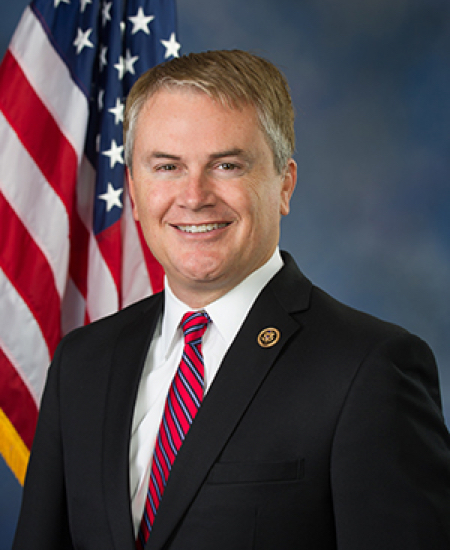
Rep. James Comer
Sponsored bills
Maddy summaryThe Working Dog Commemorative Coin Act (HR 807) directs the U.S. Treasury to mint three types of commemorative coins honoring working dogs' service: $5 gold coins, $1 silver coins, and half-dollar coins with specific weight and composition requirements. Each coin will carry a surcharge ($35 for $5 coins, $10 for $1 coins, $5 for half-dollars) that will be paid directly to America's VetDogs to support their programs providing service dogs for veterans, the disabled, and others. The coins will be issued in 2027 with designs reflecting working dogs' roles in military, detection, therapy, and assistance work. The legislation specifies that all surcharge revenue must fund America's VetDogs' operations without creating new government programs. This is a commemorative measure focused on honoring working dogs' contributions through coin sales, with all surcharge funds going to a specific nonprofit organization.
Maddy summaryHR 5658, the Vote by Mail Tracking Act, requires that all mail-in ballots for federal elections be sent in envelopes containing a Postal Service barcode for tracking. This applies to every ballot mailed for federal office elections after the bill becomes law. The envelope must also meet Postal Service design standards for ballot envelopes, be machineable, and display the Official Election Mail Logo. The bill directly affects voters using mail-in ballots for federal races and mandates this tracking system to be implemented by the Postal Service.
Maddy summary# Summary of Proposed Higher Education Act Amendments This document outlines significant proposed amendments to the Higher Education Act of 1965, primarily as part of the "College Cost Reduction Act." The key elements include: ## Accreditation Reform - Major overhaul of accreditation standards, requiring accrediting agencies to demonstrate independence from trade associations - New requirements for accrediting agencies to assess student achievement outcomes, including median value-added earnings relative to median total price charged - Introduction of an "Alternative Quality Assurance Experimental Site Initiative" to test non-accredited institutions - Protections for religious institutions, including a new process for appealing accreditation decisions related to religious mission - Removal of "litmus tests" that would require institutions to support specific political viewpoints ## Student Success Initiatives - Establishment of "Postsecondary Student Success Grants" to increase participation, retention, and completion rates for high-need students - Focus on evidence-based practices, with tiered requirements (tier 1, 2, and 3 reforms) - Mandatory inclusion of high-need student populations (low-income, first-generation, military-connected, etc.) - Requirements for institutions to report on completion rates, retention rates, and student demographics ## Regulatory Changes - Repeal of numerous existing regulations including: * Closed school discharges * Borrower defense to repayment * Pre-dispute arbitration * False certification requirements * Ability-to-benefit rules * Financial responsibility regulations - New restrictions on incentive compensation for recruiters - Changes to third-party servicer definitions and regulations ## Transfer and Credit Policies - New requirement that institutions cannot deny transfer credit based solely on the source of accreditation - Requirements for transparent transfer policies - Changes to reverse transfer policies ## Other Key Provisions - Modifications to the National Advisory Committee on Institutional Quality and Integrity (NACIQI) - New definitions for "total price" and "value-added earnings" - Changes to the process for institutions to change accrediting agencies - New requirements for institutions to report on student outcomes The overall focus of these proposed amendments is to reduce regulatory burden on institutions, promote transparency, improve student outcomes (particularly for high-need students), modernize accreditation processes, and protect religious institutions' rights in accreditation decisions.
Maddy summaryThe Sunshine Protection Act of 2023 would end the practice of changing clocks twice a year for daylight saving time (DST) by making DST permanent nationwide, unless a state chooses to remain on standard time. It repeals the requirement to switch clocks back to standard time in the fall, directly affecting all U.S. states and territories that currently observe DST. The bill allows states that previously opted out of DST under the Uniform Time Act (like Arizona and Hawaii) to maintain their current time zone choices without further action. Key provisions include adjusting time zone offset language in existing law and granting states the authority to select either permanent DST or standard time based on their current arrangements. This change would eliminate seasonal time changes for most Americans, though states could still choose to stay on standard time if they prefer.
Maddy summaryThe Federal Acquisition Security Council Improvement Act of 2024 updates the structure and procedures of the Federal Acquisition Security Council, which oversees security risks in federal procurement. It clarifies definitions of "covered source of concern" (foreign entities posing security risks) and establishes a new Council with members from key agencies including the National Cyber Director, Department of Defense, Homeland Security, and intelligence agencies. The bill creates a Program Office within the Office of the National Cyber Director to support the Council and sets specific timelines for issuing "recommended orders" (90 days) and "designated orders" (30 days) to exclude or remove covered sources of concern from federal contracts. It also establishes a process for waiving these orders with congressional notification and requires annual reporting to Congress on security risks related to covered articles.
Maddy summaryThis bill amends the Clean Air Act to modify ethanol waiver processes and fuel volatility standards. It adds a new provision allowing fuel to enter commerce if it meets Reid Vapor Pressure requirements through similarity to certified vehicles or existing waivers, and adjusts vapor pressure limits from 10% to 10-15% in several sections. Small refineries that retired credits for 2016-2018 compliance years may now have those credits returned or applied to future years if their petitions remained pending as of December 1, 2022. The changes directly affect fuel retailers, ethanol producers, and small refineries by altering compliance pathways for fuel standards and credit management under the renewable fuel program.
Maddy summaryHRES 1498 is a non-binding House resolution supporting the designation of September as "National Bourbon Heritage Month." It recognizes bourbon as America’s Native Spirit (as declared in 1964), highlights Kentucky’s role as the birthplace of bourbon (producing 95% of the world’s supply), and emphasizes the industry’s $9 billion annual economic impact. The resolution aims to celebrate bourbon’s cultural significance and Kentucky’s contributions to U.S. heritage, without creating new laws or altering existing policies. It was introduced by Rep. McGarvey and co-sponsors on September 24, 2024.
Maddy summaryHR 9787, the Farmer First Fuel Incentives Act, extends and modifies clean fuel production tax credits under the Internal Revenue Code. It prohibits the use of foreign feedstocks for qualifying clean fuels after December 31, 2024, requiring that all feedstocks be produced or grown in the United States. The bill also extends the clean fuel production credit period from December 31, 2027, to December 31, 2034. These changes directly affect clean fuel producers seeking tax credits, mandating domestic feedstock sourcing while providing longer eligibility for the credit. The law aims to incentivize U.S.-based clean fuel production through specific tax policy adjustments.
Maddy summaryThis bill creates a new occupational category (code 31-1123) within the federal Standard Occupational Classification system specifically for direct support professionals (DSPs) who assist people with intellectual or developmental disabilities. It directly affects DSPs, state agencies, and federal data collectors by reclassifying their work - currently grouped under home health aides - into a distinct category. The key mechanism is revising the SOC system to better track DSP workforce data, address high turnover rates (43% nationally), and recognize their unique role in promoting clients' independence and community inclusion. This change aims to improve data accuracy for addressing staffing challenges, without altering service delivery or benefits.