

Maddy summaryHR 10503, the REVIVE VI Act, exempts certain income earned by Virgin Islands corporations from U.S. tax on foreign income (GILTI). It directly affects Virgin Islands corporations providing services within the territory and specific U.S. shareholders (individuals, trusts, estates, or certain pre-2023-owned C corporations). The bill creates a new tax exemption for "qualified Virgin Islands services income," defined as compensation for labor performed in the Virgin Islands by a local corporation, attributable to services from within the territory, and connected to a Virgin Islands business. This change modifies the Internal Revenue Code to exclude this specific income from global intangible low-taxed income calculations for eligible entities.
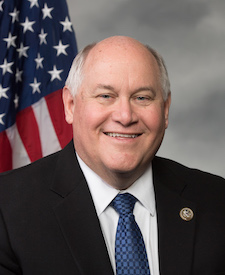
Rep. Ron Estes
Sponsored bills
Maddy summaryThe FOCA Act of 2023 requires federal agencies to stop mandating or banning contractor agreements with labor organizations (like union contracts) in construction project bids and contracts. It directly affects federal contractors, subcontractors, and agencies managing construction projects funded by the government. The bill prohibits favoring or penalizing contractors based on their labor affiliation status, aiming to promote fair competition and reduce costs. It also mandates updates to federal contracting rules within 60 days of enactment to implement these changes.
Maddy summaryThis bill requires Medicare Advantage plans to implement electronic prior authorization systems by 2027 and publish detailed data on their approval and denial rates for medical services by 2026. It directly affects Medicare Advantage plans (private insurers offering Medicare coverage) and their enrollees (seniors 65+), mandating transparency about prior authorization decisions, processing times, and appeal outcomes. Key provisions include requiring plans to report annual statistics on request approvals/denials, average processing times, and use of technology, with this data published publicly by the Centers for Medicare & Medicaid Services. The bill also sets timelines for plan responses to prior authorization requests and mandates reports to Congress on implementation and impacts.
Maddy summary# Summary of Tariff Suspensions and Reductions Document This document is a section of U.S. tariff legislation that adds new duty suspensions and reductions to the Harmonized Tariff Schedule of the United States. It contains 120 new tariff items (numbered 9902.19.01 through 9902.20.24) that provide temporary duty-free or reduced-duty status for various goods. Key features of the document: 1. **Content**: The list includes chemical compounds, food ingredients, and specialty materials (such as shelled pine nuts, licorice extract, refined carrageenan, various chemicals like neodymium metal, tungsten concentrate, and numerous organic compounds). 2. **Tariff Treatment**: Most entries are listed as "Free" (meaning duty-free), with a few having small duty rates (e.g., 0.7%, 1.8%, 2.3%, 2.9%, 4.3%). 3. **Effective Period**: All listed suspensions and reductions are effective "On or before 12/31/2025." 4. **Purpose**: These tariff suspensions are intended to support specific industries, reduce costs for manufacturers, or provide temporary relief for certain imported goods. 5. **Technical Details**: Each entry includes the chemical name, CAS number, Harmonized Tariff Schedule code, duty rate, and a brief description of the product. This document represents a legislative amendment to the Harmonized Tariff Schedule, specifically adding new subchapter II of chapter 99 to provide temporary duty relief for these specific items.
Maddy summaryThis bill updates Medicare's physician fee schedule to better align with current healthcare costs and support providers. It extends a key deadline for geographic payment adjustments from 2024 to 2025, increases the rate for payment adjustments from 1.25% to 3%, and extends incentive payments for doctors in alternative payment models (APMs) through 2026. For 2026, it imposes payment reductions (34% for 4-6 years in APMs, 67% for 7+ years) but allows exceptions if providers increased their financial risk compared to 2025. The bill also raises Medicare's budget neutrality threshold to $53 million in 2025 and requires regular updates to cost data (like staff wages and equipment prices) every five years. These changes directly affect Medicare-participating physicians, especially those in APMs, by altering payment calculations and incentives.
Maddy summaryHR 6344, the Simon Crosier Act, requires Medicare and Medicaid providers to establish written policies for do-not-resuscitate (DNR) orders involving unemancipated minors (under 18 without legal independence). It mandates that providers must inform at least one parent or legal guardian in person or by phone (with 72 hours of effort) before considering a DNR, allow parents/guardians to refuse consent, and prohibit overriding parental objections to life-sustaining treatment. The bill also requires providers to continue life-sustaining care for 15 days if a parent requests a transfer and explicitly prohibits using disability as the sole basis for DNR decisions. These requirements apply to all Medicare/Medicaid-covered facilities and directly affect minors, their parents, and healthcare providers.
Maddy summaryThe Maximum Pressure Act (HR 6114) is a legislative proposal that would maintain and expand U.S. sanctions against Iran. The bill would codify existing sanctions, require Iran to meet 12 specific conditions before sanctions could be lifted (including ending support for terrorism, releasing hostages, and ending nuclear enrichment), and expand sanctions on Iran's Revolutionary Guard Corps and missile programs. It also establishes new reporting requirements for the U.S. government to monitor Iran's activities and the impact of sanctions. The legislation would require congressional review before any sanctions could be lifted or modified, preventing the executive branch from unilaterally easing restrictions.
Maddy summaryThis bill, HR 5796, prohibits the Department of Health and Human Services from implementing a proposed rule requiring minimum staffing levels in nursing homes. It creates an advisory panel of 15 members - including rural nursing home staff and experts - to study workforce shortages and report on access barriers for seniors, especially in rural areas. The panel must submit an initial report within 60 days, analyzing staffing challenges and recommending solutions to strengthen the nursing home workforce. These provisions directly aim to prevent nursing home closures (like the 129 that occurred in 2022) that threaten rural seniors’ access to care.
Maddy summaryThis bill changes how Medicare counts hospital stays for coverage of skilled nursing care. It treats time spent in outpatient observation (not admitted as an inpatient) as part of the required 3-day inpatient hospital stay. This means beneficiaries who received outpatient observation services will have that time counted toward the 3-day requirement, potentially making them eligible for skilled nursing facility coverage they might otherwise have lost. The change applies to services beginning January 1, 2024, with limited retroactive appeal options for services completed before the law's enactment. It directly affects Medicare beneficiaries needing skilled nursing care after hospital treatment.
Maddy summaryThis bill requires Medicare to collect detailed cost data from air ambulance providers every three years, including operating costs per base, revenue, and service utilization. It also directs the Government Accountability Office (GAO) to study air ambulance costs, Medicare payment adequacy, geographic variations, and payor mix. The goal is to inform future adjustments to Medicare's payment rates for these services. This directly affects Medicare beneficiaries using air ambulance services and the providers operating them.