

Maddy summaryHJRES 142 is a congressional disapproval resolution targeting a Department of Labor rule issued on April 25, 2024. It seeks to block the "Retirement Security Rule: Definition of an Investment Advice Fiduciary" (89 Fed. Reg. 32122), which defined standards for financial advisors handling retirement accounts. If passed, this resolution would make the Labor Department's rule ineffective, directly affecting retirement plan advisors and financial institutions subject to the regulation. The bill uses a specific procedural mechanism under Title 5, U.S. Code, to nullify the rule without creating new law.
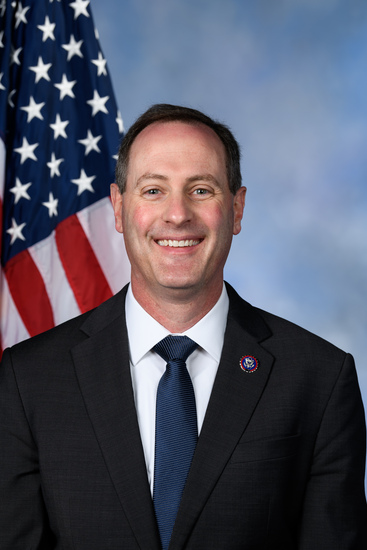
Rep. Tracey Mann
Sponsored bills
Maddy summaryHRES 1614 is a symbolic resolution expressing support for recognizing December 2024 as "National Impaired Driving Prevention Month." It highlights that impaired driving causes over 13,000 deaths annually (32% of U.S. traffic fatalities) and urges public awareness of preventable crashes. The resolution promotes existing efforts by the Department of Transportation and law enforcement, including the "Drive Sober or Get Pulled Over" campaign, without creating new laws or policies. It directly affects the public by encouraging safe driving practices like planning for a sober ride home.
Maddy summaryThis bill establishes a commission to study whether the Weitzman National Museum of American Jewish History in Philadelphia should be transferred to the Smithsonian Institution. The commission, composed of 8 members appointed by congressional leaders with expertise in Jewish American history and museum administration, will examine the museum's collections, financial status, governance, and feasibility of transfer within two years. The commission must submit a report detailing findings, a fundraising plan, and legislative recommendations for any potential transfer. The bill does not transfer the museum but creates a process to evaluate the possibility.
Maddy summaryHR 7438 directs the U.S. Treasury to mint commemorative coins for the 2026 FIFA World Cup, including 100,000 $5 gold coins, 500,000 $1 silver coins, and 750,000 half-dollar coins. The coins will be sold to the public at face value plus surcharges ($35, $10, and $5 per coin, respectively), with all surcharge revenue paid to FWC2026 US, Inc. for U.S. soccer programs. These funds must support soccer initiatives, particularly in underserved communities and youth development, as specified in the bill. The coins are legal tender but will only be issued during 2026, with no net cost to the U.S. government.
Maddy summaryThis bill requires federal agencies to provide specific details when certifying that a new regulation won't significantly impact small businesses. Agencies must now include the number of affected small businesses (with industry codes), an estimate of compliance costs (as a percentage of revenue or similar measure), and a determination of whether the costs constitute a significant economic impact. It directly affects small businesses subject to federal regulations and the agencies creating those rules. The key change is adding mandatory transparency requirements to agency certifications under existing law.
Maddy summaryHR 10300, the Chevron Re-Review Act, establishes a new process for Congress to review and disapprove federal agency rules that relied on Chevron deference (the legal doctrine where courts defer to agency interpretations of ambiguous laws). The bill requires agencies to provide Congress with specific information about such rules - including cost-benefit analyses and litigation history - within 30 days of a disapproval resolution's introduction. If Congress passes a joint resolution disapproving a rule, the rule is treated as if it never took effect. This procedural bill directly affects agencies and Congress, applying only to rules explicitly based on Chevron deference or upheld by courts using that doctrine.
Maddy summaryHR 3365, the Supply Chain Improvement Act, requires the U.S. Department of Transportation to prioritize projects that enhance supply chain resiliency when awarding specific transportation grants. This affects state and local governments, contractors, and infrastructure developers seeking federal funding under titles 23 and 49 of the U.S. Code, including highway and multimodal projects. The bill mandates that the Transportation Secretary give priority consideration to these resiliency-focused projects alongside existing grant selection criteria. It does not create new funding but changes how existing transportation grant dollars are allocated to strengthen supply chain infrastructure.
Maddy summaryThe Working Dog Commemorative Coin Act (HR 807) directs the U.S. Treasury to mint three types of commemorative coins honoring working dogs' service: $5 gold coins, $1 silver coins, and half-dollar coins with specific weight and composition requirements. Each coin will carry a surcharge ($35 for $5 coins, $10 for $1 coins, $5 for half-dollars) that will be paid directly to America's VetDogs to support their programs providing service dogs for veterans, the disabled, and others. The coins will be issued in 2027 with designs reflecting working dogs' roles in military, detection, therapy, and assistance work. The legislation specifies that all surcharge revenue must fund America's VetDogs' operations without creating new government programs. This is a commemorative measure focused on honoring working dogs' contributions through coin sales, with all surcharge funds going to a specific nonprofit organization.
Maddy summaryHRES 1594 is a symbolic House resolution supporting the designation of "National Rural Health Day," observed annually on the third Thursday of November. It recognizes rural health care providers and the communities they serve, highlighting challenges like hospital closures, workforce shortages, and access barriers in rural areas. The resolution expresses the House's commitment to improving rural health care accessibility and affordability but does not create new laws or allocate funding. It is a non-binding gesture aligning with an existing observance since 2011, organized by the National Rural Health Association.
Maddy summaryThis bill reauthorizes federal funding for graduate medical education (GME) programs at children's hospitals through fiscal year 2028. It prohibits payments to any children's hospital that provided gender-affirming care to minors during the previous fiscal year (with a special rule for 2024 payments covering July-September 2023). The bill defines "gender-affirming care" as specific medical treatments like surgeries or puberty-blocking medications for gender transition, but excludes care for certain medical conditions or gender dysphoria treatment not classified as such. This directly affects hospitals receiving GME funding that serve minors, potentially impacting their federal support if they provided the specified care. The policy change modifies existing funding rules without altering broader healthcare access for minors.