

Maddy summaryThis bill, titled the Trump Accounts for All Generations Act, makes a specific program related to "Trump accounts" permanent and adjusts its contribution limits. It directly affects individuals who contribute to these accounts by altering their long-term availability and value. The legislation permanently extends the "Trump accounts" contribution program by removing its scheduled expiration date of January 1, 2029. Furthermore, it introduces an annual inflation adjustment for the program's $1,000 contribution amount, beginning in taxable years after 2028. The bill also removes the word "pilot" from the program's title and related sections of the tax code, formally establishing it as an ongoing program.
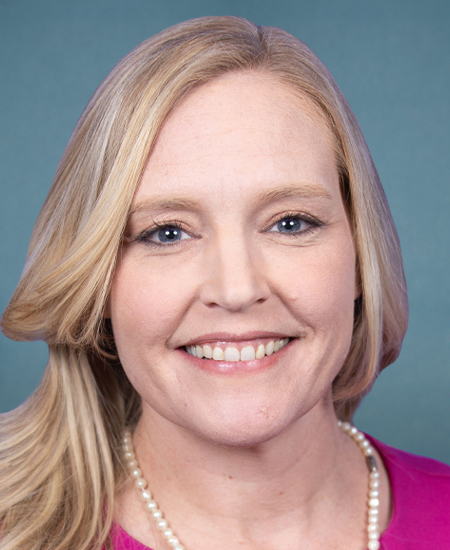
Rep. Erin Houchin
Sponsored bills
Maddy summaryHR 8295, the Protecting Families from Fertility Fraud Act of 2026, creates a new federal crime for knowingly misrepresenting the nature or source of DNA used in assisted reproductive technology or assisted insemination. This directly affects fertility clinics, practitioners, and patients undergoing such procedures. Individuals found guilty could face up to 10 years in prison, a fine, or both. The bill defines federal jurisdiction for these offenses, primarily involving interstate commerce, and extends the statute of limitations to 10 years after identification through DNA testing. It also adds this new crime to the list of "racketeering activities" under federal law.
Maddy summaryHR 2289, the Proportional Reviews for Broadband Deployment Act, exempts wireless broadband infrastructure deployments from certain federal environmental and historic preservation reviews. Specifically, it removes the requirement for National Environmental Policy Act (NEPA) and National Historic Preservation Act (NHPA) reviews when federal agencies approve "eligible facilities requests" for wireless facilities. This directly affects wireless providers seeking federal permits to build broadband infrastructure, streamlining their approval process by eliminating these specific review requirements. The bill modifies existing law to treat such deployments as not constituting "major Federal actions" under NEPA or "undertakings" under NHPA.
Maddy summaryThis resolution requires Members of Congress who must reimburse the Treasury for payments related to sexual harassment or discrimination claims to publicly disclose the details of those reimbursements in the House chamber. It mandates that the Office of Congressional Workplace Rights report these cases to the Clerk, who will then read the Member's name, the reimbursement amount, and related information aloud during a House session. Members who fail to comply within 30 days face restrictions on committee assignments and leadership duties, while former Members are barred from entering the House building until they complete reimbursement and undergo the public disclosure process. The measure also establishes that failures to comply with these requirements can be investigated separately by the House Ethics Committee.
Maddy summaryThe Strengthen Taxpayer Rights Act of 2026 limits which IRS employees can participate in appeals conferences without taxpayer permission. Specifically, it prohibits IRS staff from attending these conferences unless the taxpayer explicitly agrees to their presence. This change directly affects individuals requesting appeals through the IRS Independent Office of Appeals. The provision aims to give taxpayers more control over who represents the government during their appeal hearings. It applies to all conferences held after the law is enacted.
Maddy summaryHR 3420, the Words Matter Act of 2025, updates federal law to replace the terms "mentally retarded" and "mental retardation" with "intellectual disability" across numerous statutes. It amends over 20 provisions in laws governing healthcare (like the Social Security Act and Indian Health Care Improvement Act), disability services, criminal justice, and federal programs to use more respectful and current terminology. The bill specifically targets definitions in areas such as medical care for families, nursing home regulations, legal sentencing, and grant programs, ensuring consistent language for individuals with intellectual disabilities. The legislation explicitly states this terminology change is purely linguistic and does not alter eligibility, coverage, or rights for affected individuals.
Maddy summaryThis bill appoints specific members of the House of Representatives to various standing committees, including Homeland Security, Agriculture, and Transportation and Infrastructure. The key provision formally assigns Mr. LaLota to the Homeland Security Committee, Mr. Valadao to Agriculture, Mr. Downing to Natural Resources, Mr. Yakym to Transportation and Infrastructure, Mr. McCormick to Oversight and Government Reform, and Mr. Miller of Ohio to Foreign Affairs. Some assignments include ranking positions relative to other members, such as Mr. LaLota ranking immediately after Mr. Crane. This procedural measure organizes committee membership for the 119th Congress without changing policy or affecting public programs.
This resolution provides for the consideration of the bill (H.R. 8029) making appropriations for the Department of Homeland Security for the fiscal year ending September 30, 2026, and for other purposes; providing for consideration of the resolution (H. Res. 1128) expressing the support of the House of Representatives for the Department of Homeland Security; providing for consideration of the bill (H.R. 5103) to establish a program to Beautify the District of Columbia and establish the District of Columbia Safe and Beautiful Commission; providing for consideration of the bill (H.R. 7084) to amend title 46, United States Code, with respect to the types of vessels that may enter or operate in navigable waters of the United States or transfer cargo in any port or place under the jurisdiction of the United States, and for other purposes; and for other purposes.
Maddy summaryThis bill would require colleges to demonstrate that at least 15% of their student loan borrowers successfully reduce their loan principal within two years of entering repayment, or risk losing eligibility for federal student loan programs starting in fiscal year 2028. It also creates a new bonus grant program for institutions with repayment rates above 25% and requires colleges to pay fees based on the amount of loans their students fail to repay. The legislation defines repayment success as borrowers who are not in default and have made at least a one-dollar reduction in their principal balance, while excluding students in deferment for military service, graduate school, or public service.
Maddy summaryHR 5688, the Non-Domiciled CDL Integrity Act, changes rules for issuing commercial driver's licenses (CDLs) to people who don't live in the state where the license is issued. It allows states to issue CDLs to foreign nationals with lawful U.S. immigration status and work-related visas (valid for up to one year or until their stay ends), requiring states to verify status before issuing and keep records for two years. For residents of U.S. territories like Puerto Rico, it requires proof of U.S. citizenship or permanent residency before issuing CDLs, with similar verification and record-keeping rules. The bill directly affects commercial drivers from foreign countries and U.S. territories seeking CDLs in states where they are not residents.