

This resolution supports the designation of National FFA Week. It also (1) recognizes the important role of the National FFA Organization (Future Farmers of America) in developing the next generation of globally conscious leaders who will change the world; and (2) celebrates the 10th anniversary of the Give the Gift of Blue program, which has donated more than 17,000 FFA blue jackets to FFA members in need.
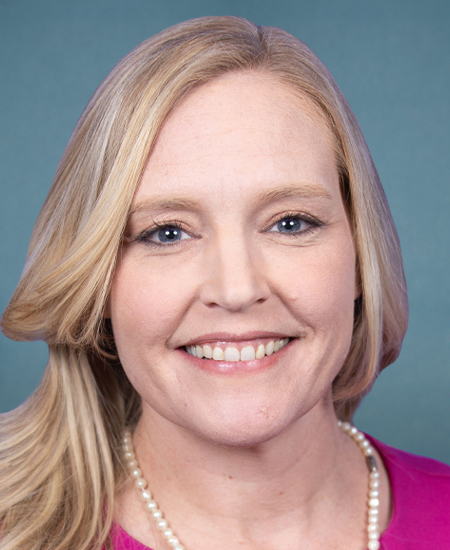
Rep. Erin Houchin
Sponsored bills
Maddy summaryHR 9274, the SHAWL Act, establishes two new Smithsonian museums: the National Museum of the American Latino and the American Women’s History Museum. It authorizes both museums to be located within the National Mall’s "Reserve" area, overriding prior restrictions, and requires federal agencies managing potential sites to transfer jurisdiction to the Smithsonian after notifying congressional committees. The bill mandates that both museums accurately represent diverse cultures, histories, and viewpoints within Latino and women’s communities through exhibits and programs, requiring input from a broad range of community experts. It also requires the Smithsonian to submit biennial reports to Congress detailing compliance with these representation requirements.
Freedom from Unfair Gun Taxes Act of 2024 This bill prohibits states or localities from imposing a levy or collecting an excise tax on the sale of a firearm, ammunition, or any part or component thereof, by a manufacture or retailer.
Maddy summaryHJRES 127 is a congressional disapproval resolution targeting a Securities and Exchange Commission (SEC) rule requiring public companies to standardize climate-related financial disclosures. It seeks to block the SEC’s March 2024 rule (89 Fed. Reg. 21668), which would mandate consistent reporting on climate risks for investors. If passed, this resolution would prevent the SEC rule from taking effect, directly affecting publicly traded companies required to comply with the proposed disclosure standards. The bill uses a specific congressional process under Title 5, U.S. Code, to nullify the rule without creating new regulations.
Maddy summaryHJRES 124 is a resolution seeking congressional disapproval of a rule issued by the Office of the Comptroller of the Currency (OCC) that required large financial institutions to adopt climate-related risk management practices. The rule, published in October 2023 (88 Fed. Reg. 74183), would have mandated major banks to assess and manage climate change risks in their operations. This resolution, if passed, would block the rule from taking effect by invoking the congressional disapproval process under Title 5 of the U.S. Code. It directly affects large banks and financial institutions that would have been required to comply with the climate risk management standards. The bill does not create new rules but aims to prevent the implementation of the OCC's existing proposal.
Maddy summaryHJRES 126 is a congressional disapproval resolution targeting a Federal Deposit Insurance Corporation (FDIC) rule issued in October 2023. The resolution seeks to block the FDIC's "Principles for Climate-Related Financial Risk Management for Large Financial Institutions" rule, which required major banks to assess climate risks. If passed, this resolution would nullify the rule, directly affecting large financial institutions by removing a requirement to manage climate-related financial risks. The resolution uses a procedural mechanism under federal law to halt the rule's implementation without creating new regulations.
Maddy summaryThis resolution establishes a House task force to investigate the July 13, 2024, attempted assassination of Donald J. Trump in Butler, Pennsylvania. The task force, composed of up to 11 members appointed by the Speaker (with minority leader input), will examine actions by federal, state, local, and private entities related to the incident and must issue a final report with recommendations by December 13, 2024. It has standing committee authority to hold hearings, issue subpoenas, and access relevant records, and will terminate 10 days after submitting its report. The task force directly affects the House of Representatives and the entities under investigation.
Maddy summaryHJRES 165 is a congressional resolution seeking to block a Department of Education rule issued in April 2024 that updated protections against sex discrimination in schools receiving federal funding. The resolution aims to disapprove this specific rule (published as 89 Fed. Reg. 33474), which would have required schools to address sex-based discrimination in educational programs. If passed, the rule would no longer be in effect, meaning schools would not need to comply with its requirements. This resolution directly affects all schools and educational programs receiving federal financial assistance, as it targets the implementation of the new nondiscrimination standard.
Maddy summaryThe SAVE Act (HR 8281) requires U.S. citizens to provide documentary proof of citizenship when registering to vote in federal elections. It defines acceptable proof as documents like passports, REAL ID-compliant IDs, military IDs, or birth certificates, and mandates that states verify citizenship using information from government agencies like DHS and Social Security. States must establish processes for voters without required documentation to provide an attestation under penalty of perjury. The law also requires states to remove noncitizens from voter rolls when verified evidence shows they're not citizens. This bill directly affects all applicants registering to vote in federal elections and state election officials who must implement these requirements.
Maddy summaryThis bill requires the HUD Inspector General to provide annual testimony before the House Financial Services Committee and Senate Banking Committee by October 1 each year. The testimony must cover specific areas: efforts to detect fraud/waste, audit and investigation capabilities, program improvement opportunities, and ongoing oversight activities. It directly affects HUD's Inspector General and the designated congressional committees by establishing a formal reporting requirement. The bill does not change HUD programs but mandates regular transparency about oversight work.