

Maddy summaryThe Kids Online Safety Act (HR 7891) would require major online platforms (with high revenue or user numbers) to implement safety features for children and teens, including default protective settings, parental controls, and age verification. It would mandate platforms to report annually on risks to minors and their safety measures, and prohibit advertising harmful products (like tobacco, alcohol, or gambling) to minors. The bill directly affects social media platforms, online video games, and video streaming services that are used by minors, with the goal of preventing mental health harms, compulsive usage, and cyberbullying.
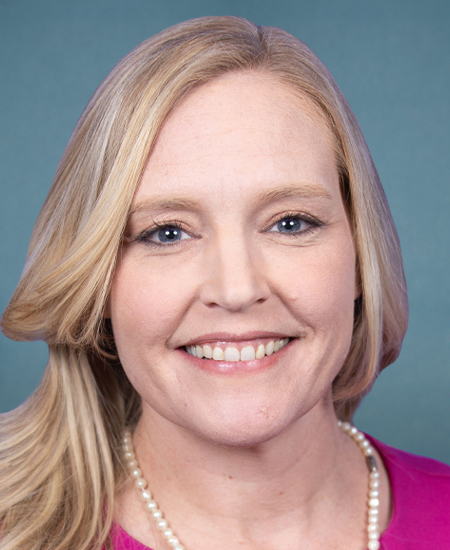
Rep. Erin Houchin
Sponsored bills
Maddy summaryHR 1425, the "No WHO Pandemic Preparedness Treaty Without Senate Approval Act," requires the U.S. Senate to approve any World Health Organization (WHO) pandemic preparedness treaty through a two-thirds vote. The bill deems any convention, agreement, or international instrument on pandemic prevention drafted by the WHO’s International Negotiating Body (INB) as a treaty subject to Senate ratification, rather than allowing it to take effect as an executive agreement. This directly affects U.S. foreign policy implementation regarding WHO agreements, ensuring Congress has a formal role in approving such binding international commitments. The bill stems from congressional concerns about WHO’s pandemic response and public skepticism toward the organization, as outlined in its findings.
Maddy summaryHR 705, the Veterans 2nd Amendment Protection Act, prohibits the Department of Veterans Affairs (VA) from automatically sending veterans' personal information to the national background check system solely because a fiduciary (like a guardian) manages their benefits. It specifically blocks the VA from sharing this data with the Justice Department without a court order finding the veteran a danger to themselves or others. This directly affects veterans who have a fiduciary appointed due to incapacity but are not deemed dangerous, preventing automatic barriers to firearm purchases based only on their fiduciary status. The bill amends 38 U.S.C. § 5501B to require judicial authorization before such data can be transmitted.
Maddy summaryHR 9586 prohibits federal funds from being used to provide or refer for specific medical procedures intended to change a person's physical characteristics to align with their gender identity. It directly affects individuals in U.S. Department of Homeland Security (DHS) or Department of Health and Human Services (HHS) custody, banning federal funding for procedures like hysterectomies, chest implants, puberty blockers, or hormone therapies at supraphysiologic doses. The bill defines "specified gender transition procedures" to include surgeries (e.g., mastectomy, phalloplasty) and certain medications, with "sex" defined by biological factors present at birth. This policy change restricts federal healthcare funding for these specific treatments within immigration and federal detention systems.
Maddy summaryThis bill adds the Secretary of Agriculture to the Committee on Foreign Investment in the U.S. (CFIUS) for transactions involving agricultural land, biotechnology, or agriculture-related infrastructure (like transportation, storage, or processing). It requires the Secretary to notify CFIUS about transactions where a foreign person from China, North Korea, Russia, or Iran acquires U.S. agricultural assets, as defined by existing law. CFIUS then decides whether to review such transactions or take other action. The provisions apply only to transactions involving those four countries and sunset once they are removed from the official list of "foreign adversaries" in federal regulations.
Maddy summaryHR 8282, the "Illegitimate Court Counteraction Act," imposes U.S. sanctions on foreign individuals or entities supporting the International Criminal Court (ICC) in investigating or prosecuting "protected persons." Protected persons include U.S. military personnel, officials, and allied personnel (from non-ICC member countries) who are not under ICC jurisdiction. The bill requires the President to block assets and deny visas to targeted foreign persons and their immediate family members within 60 days of the ICC attempting such actions. It mandates congressional notification of sanctions and allows termination if the ICC ceases all such efforts against protected persons. The law focuses on restricting U.S. economic and travel access to ICC supporters targeting specific U.S. and allied personnel.
Maddy summaryHR 7089, the Global Anti-Human Trafficking Enhancement Act, expands the U.S. State Department's authority to investigate cross-border human trafficking cases. It authorizes the Secretary of State to probe violations of federal trafficking laws (Title 18, Chapter 77) when part of the crime occurs outside the U.S. or involves foreign nationals. The bill amends the State Department Basic Authorities Act to explicitly include these transnational trafficking investigations under the Secretary's existing powers. This change directly affects the State Department's investigative capabilities for international trafficking cases involving foreign elements. The law creates a specific mechanism for U.S. authorities to address trafficking networks operating across borders.
Maddy summaryHJRES 125 is a congressional resolution seeking to block a Federal Reserve rule requiring large financial institutions to manage climate-related financial risks. It targets the rule published in the Federal Register on October 30, 2023 (88 Fed. Reg. 74183), which established "Principles for Climate-Related Financial Risk Management." The resolution would prevent this rule from taking effect by invoking a specific legal process under Title 5 of the U.S. Code. This disapproval resolution directly affects major banks and financial firms subject to the Federal Reserve's oversight.
Maddy summaryThis bill establishes the Benjamin Harrison National Recreation Area (approximately 29,382 acres) and adds about 15,300 acres to the Charles C. Deam Wilderness within Indiana's Hoosier National Forest. It requires the Forest Service to manage the area while protecting Monroe Reservoir's water quality, allowing recreational activities like hiking and mountain biking (with possible seasonal restrictions for safety or endangered species), and developing a public-input management plan within five years. The bill uses existing funding, clarifies that Corps of Engineers permits for Monroe Lake remain unchanged, and ensures no closure of public roads or access to private land within the designated areas.
Maddy summaryHR 3161, the CDFI Fund Transparency Act, requires the Treasury Secretary (or their designee) to annually testify before the House Financial Services Committee and Senate Banking Committee about the operations of the Community Development Financial Institutions (CDFI) Fund. This testimony would cover the Fund's activities from the previous year and is requested at the discretion of the committee chairs. The bill does not change how the CDFI Fund provides funding but mandates regular reporting to Congress on its operations. It directly affects the Treasury Department's reporting obligations and the congressional committees overseeing the Fund. This is a procedural transparency measure, not a substantive policy change.