

Maddy summaryThis bill would require all states to recognize valid concealed carry permits issued by other states, allowing permit holders to carry concealed handguns (excluding machine guns) in any state that either issues such permits or doesn't prohibit concealed carry. It directly affects law-abiding gun owners with valid permits from their home state, ensuring they can carry in states with similar permit systems or no prohibitions. Key provisions include treating valid permit documents as proof of legal carry (reducing officer stops), shifting the burden of proof to prosecutors if challenged, and allowing civil lawsuits for violations with attorney's fee awards. The bill does not override state laws restricting firearms on private property or government land, nor does it affect federal gun restrictions like those in section 922(q).
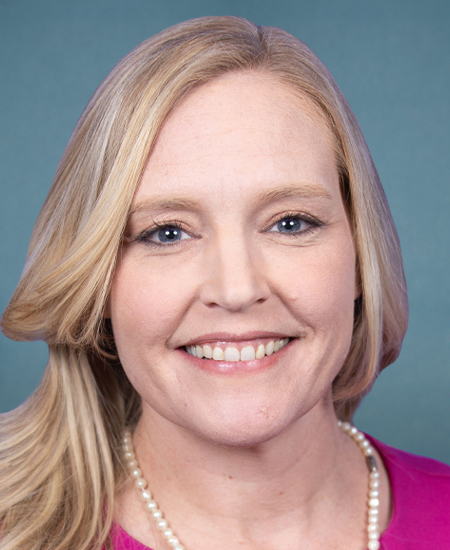
Rep. Erin Houchin
Sponsored bills
Maddy summaryThis bill requires five federal agencies (Housing and Urban Development, Agriculture, Veterans Affairs, Treasury, and the Federal Housing Finance Agency) to coordinate housing data sharing and jointly propose policy solutions. Within one year of enactment, the agencies must establish a shared agreement and submit a report to Congress addressing mortgage costs, housing construction barriers, local regulations, insurance availability, down payment assistance, and disaster resilience. The report will outline specific proposals to improve housing affordability and market efficiency. This is a procedural bill focused on interagency coordination, not direct policy changes or benefits for homeowners.
Maddy summaryHR 5629 would prevent the Department of Health and Human Services' final rule on opioid treatment medications from taking effect, except for changes to accreditation standards for opioid treatment programs. The rule, published in February 2024, aimed to expand access to certain medications for opioid use disorder by modifying treatment protocols. This bill would maintain current regulations for medication-assisted treatment by blocking the rule's implementation, while leaving accreditation requirements unchanged. As a result, existing treatment guidelines would remain in place, but program accreditation standards would still be updated per the rule's exception.
Maddy summaryHR 5630 amends the Public Health Service Act to require states receiving Substance Use Prevention, Treatment, and Recovery Services block grants to include specific new information in their state plans. The bill mandates that states describe four key elements: the types of drugs used in medication-assisted treatment (MAT) within their system, their protocols to prevent MAT diversion or misuse, data on misuse (including mixing MAT drugs with other prescriptions), and their drug screening protocols for MAT patients. These requirements apply directly to states administering the block grant programs. The change focuses on improving transparency and data collection around MAT services without altering existing grant funding or treatment protocols.
Maddy summaryHRES 771 is a symbolic House resolution supporting the designation of September 2025 as "National Kinship Care Month." It recognizes that over 2.5 million children in the U.S. are raised by kinship caregivers (such as grandparents, siblings, or tribal relatives) in both formal foster care and informal arrangements. The resolution encourages Congress to improve policies supporting these caregivers, honors their role in helping children maintain family connections and stability, and highlights the need for better resources to prevent children from entering foster care. It does not create new laws or funding but formally acknowledges the importance of kinship care.
Maddy summaryHR 5580, the Charlie Kirk Commemorative Coin Act, authorizes the U.S. Mint to produce 400,000 $1 silver coins in 2026 to honor Charlie Kirk, founder of Turning Point USA, who died in 2025. The coins must feature Kirk's image on the obverse and "well done, good and faithful servant" on the reverse, with standard minting specifications. They will be sold at face value plus production costs to collectors, with no net cost to the government. This bill has no policy impact beyond commemoration; it affects only the U.S. Mint and coin collectors.
Maddy summaryHRES 719 is a House resolution honoring Charles "Charlie" James Kirk, the founder of Turning Point USA who was assassinated on September 10, 2025. The resolution condemns his assassination and all political violence, extends condolences to his family, and calls on Americans to reject violence while promoting civil discourse. It specifically recognizes Kirk's legacy as a defender of constitutional principles and his role in inspiring youth through free speech and faith-based civic engagement. As a commemorative resolution, it does not enact policy changes but formally expresses the House's stance on honoring his life and legacy.
National Coal Council Reestablishment Act This bill provides statutory authority for the National Coal Council and directs the Department of Energy to reestablish the council in accordance with the charter that was in effect on November 19, 2021. Established in 1984, the council made recommendations to DOE on matters relating to coal and the coal industry. In addition, the bill removes the requirement under the Federal Advisory Committee Act for the council to be re-chartered every two years.
Maddy summaryHRES 742 is a ceremonial resolution recognizing the 250th anniversary of the U.S. Navy's founding on October 13, 1775, when the Continental Congress established the first U.S. naval force. It formally acknowledges the Navy's historical role in protecting American interests and its current global presence (over 290 ships, 3,700 aircraft, and 500,000 personnel). The resolution expresses appreciation for Navy personnel past and present and reaffirms congressional support for the Navy as a key element of national defense and global stability. As a commemorative resolution, it has no policy or funding impact - it serves only to honor the Navy's legacy.
Maddy summaryHRES 722 is a procedural resolution that sets rules for the House of Representatives to consider two specific measures. It enables debate and passage of H.R. 5371 (a bill providing continuing funding for federal operations through fiscal year 2026) and H.Res. 719 (a resolution honoring Charles "Charlie" James Kirk). The resolution waives objections to these measures, limits debate to one hour equally divided between party leaders, and amends a prior deadline from March 31 to January 31, 2026. This resolution itself does not change policy but streamlines the process for the House to act on the two pending bills.