

Maddy summaryHR 1321, the "Ending DOGE Conflicts Act," requires special government employees (like officials overseeing federal contracts) who own, control, or lead companies doing business with the government to file financial disclosure reports with the Office of Government Ethics. These employees must now comply with the same financial disclosure rules as other government officials under Title 5 of the U.S. Code. Until their initial report is certified as compliant by the Office of Government Ethics, these employees are prohibited from performing any official duties related to federal contracting. The bill directly affects high-level government officials with direct financial ties to federal contractors.
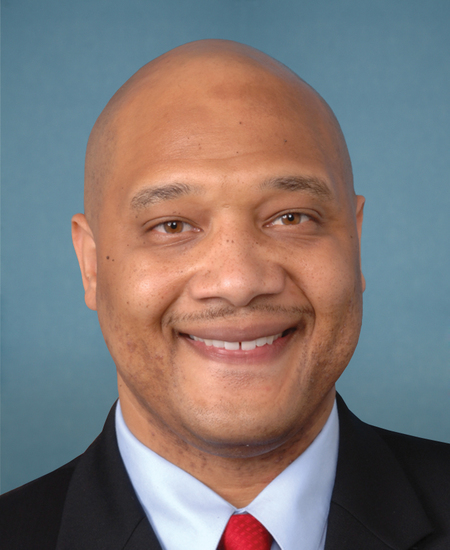
Rep. André Carson
Sponsored bills
Maddy summaryThe Office of Gun Violence Prevention Act of 2025 would create a new office within the Department of Justice to coordinate federal efforts on reducing gun violence. The office, led by a Director appointed by the Attorney General, would integrate existing DOJ programs, evaluate data gaps, and develop evidence-based recommendations for Congress and the President. It would also establish an advisory council including survivors of gun violence, public health officials, and community representatives to guide its work. The office would produce annual reports detailing gun violence trends and policy proposals, while collaborating with agencies like Health and Human Services and the FBI.
Maddy summaryThis bill creates a new National Center for Alternatives to Animals in Research and Testing within the National Institutes of Health (NIH). It requires NIH to establish incentives for researchers to adopt non-animal methods - such as organoids, AI models, and 3D human cell systems - before approving animal-based studies, and mandates that all federally funded institutions publicly report annual animal usage data by species. Covered entities must also submit biennial plans to reduce animal use and update their reports every two years. The law aims to implement a 1993 congressional mandate for reducing animal research through transparency, new resources, and standardized evaluation of alternatives.
Maddy summaryHR 1251, the All Access Act of 2025, requires Members of Congress (House members and Senators) to present official identification to enter federal public buildings during regular business hours. For access outside these hours, Members must notify the building head at least 12 hours in advance. The bill establishes clear, procedural access rules for congressional members but does not create new policies or affect the public. It is a straightforward procedural measure governing Member access to federal facilities.
Maddy summaryThis bill proposes a constitutional amendment stating that only "natural persons" (living humans) have rights protected by the U.S. Constitution, explicitly denying constitutional rights to corporations, LLCs, and other artificial entities. It would require governments to regulate campaign contributions and spending to prevent money from influencing elections, banning the view that spending to influence elections constitutes protected speech under the First Amendment. The amendment would not affect the constitutional right to a free press. This change would directly impact how corporations and other non-human entities can legally challenge laws or regulations in court.
This resolution recognizes and celebrates the contributions of immigrants to the United States; condemns discrimination against immigrants; and supports comprehensive immigration reform that addresses the needs of the economy, strengthens communities, and reflects the values of compassion, fairness, and opportunity for all.
Maddy summaryHR 1269, the Honoring Our Fallen Heroes Act of 2025, expands benefits for public safety officers (like police and firefighters) who develop certain cancers linked to their work. It adds 22 specific cancers - including lung, mesothelioma, and breast cancer - to the list of conditions presumed to be "exposure-related" and sustained in the line of duty. This presumption applies if the officer served at least 5 years, was diagnosed with the cancer within 15 years after last active duty, and the cancer directly caused death or permanent disability. The bill also establishes a process for adding new cancers every 3 years based on medical evidence from agencies like NIOSH, and allows claims to be filed within 3 years of the law's enactment.
Maddy summaryThe Fair Play for Women Act would require schools and athletic associations receiving federal funding to collect and publicly disclose detailed data on gender equity in sports, including participation rates, funding, facilities, and coaching. It mandates annual training for staff and athletes about Title IX rights and establishes civil penalties for schools that fail to comply with gender equity requirements. The bill directly affects all public elementary, secondary, and higher education institutions, as well as state athletic associations. Key provisions include requiring detailed reporting on gender disparities in sports participation and funding, and creating enforcement mechanisms to hold schools accountable for noncompliance.
Maddy summaryHR 1196 prohibits using federal funds to eliminate the U.S. Agency for International Development (USAID) as an independent agency, as defined by law. It requires the Secretary of State to certify annual compliance with this restriction to the House Foreign Affairs and Senate Foreign Relations committees. The bill directly affects USAID's operational status and U.S. foreign aid programs by preventing congressional or executive actions that would dismantle or merge the agency, maintaining its role in U.S. international development efforts.
Maddy summaryHR 1189, the National Plan for Epilepsy Act, creates a coordinated federal strategy to address epilepsy through a National Plan for Epilepsy. The plan requires the Secretary of Health and Human Services to establish an annual assessment, maintain a diverse Advisory Council (including people with epilepsy, caregivers, and experts), and coordinate research and care across federal agencies. Key provisions include annual progress reports to Congress, data sharing between agencies, and recommendations to improve diagnosis, treatment access, and reduce epilepsy-related disparities. The plan expires December 31, 2035, and directly affects the estimated 3.4 million people in the U.S. living with epilepsy and their caregivers.