

Maddy summaryThis bill amends the WIC program to replace "drug abuse" with "substance use disorder" throughout its provisions, directly affecting WIC participants who may have substance use disorder. Key mechanisms include creating new nutrition education materials for pregnant individuals with substance use disorder and infants affected by prenatal exposure, establishing an online clearinghouse for these resources, and authorizing $1 million for fiscal year 2026. The changes aim to provide evidence-based, non-judgmental support through updated program materials and outreach. The bill specifically targets WIC participants impacted by substance use disorder, not broader population changes.
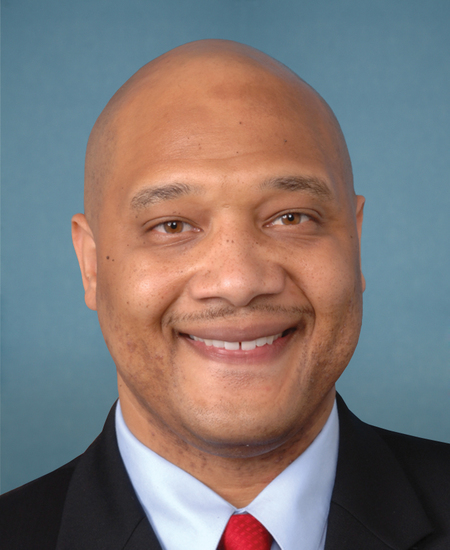
Rep. André Carson
Sponsored bills
Maddy summaryThis bill repeals key provisions of the Protection of Lawful Commerce in Arms Act (PLCAA), which previously shielded gun manufacturers and dealers from civil lawsuits. It allows gun trace data from the federal Firearms Trace System to be used as evidence in civil court cases involving gun violence. Victims of gun violence (or their families) who sue gun manufacturers, dealers, or distributors in state or federal court can now access and rely on this trace information. The bill directly changes the legal landscape by removing a major barrier to holding gun industry entities accountable in civil cases. It does not alter criminal proceedings or affect gun ownership rights.
Maddy summaryThis resolution (HRES 459) is a symbolic gesture recognizing National Poppy Day, observed the Friday before Memorial Day. It supports the tradition of wearing red poppies as a symbol honoring U.S. military veterans who died in service, referencing the historical connection to World War I poetry and veterans' organizations. The resolution encourages all U.S. citizens, residents, and visitors to wear poppies on this designated day to express appreciation for those who died preserving freedom. It does not create new laws, funding, or obligations, but formally acknowledges the poppy's role in commemorating military sacrifice.
Maddy summaryThis resolution (HRES 457) is a symbolic measure expressing congressional support for designating June 6, 2025, as "National Gun Violence Awareness Day" and June 2025 as "National Gun Violence Awareness Month." It does not create new laws or policies but encourages public awareness through specific actions: wearing orange on June 6, focusing on gun safety during summer months, and holding community discussions. The resolution references statistics on gun violence deaths and honors Hadiya Pendleton, a teen victim killed in 2013. It directly affects the public by calling for voluntary observance and community engagement, not government mandates.
Maddy summaryHR 3694, the VALID Act of 2025, requires lenders to include specific information about VA loans in mortgage disclosures. It amends the National Housing Act to mandate that disclosures state the loan-to-value ratio and clarify that VA loans are available under Chapter 37 of Title 38 (veterans' benefits law), assuming prevailing interest rates. The bill also requires the Federal Housing Finance Agency to add a military service question to the Uniform Residential Loan Application form, placing it above the signature line within six months of enactment. This directly affects veterans and active-duty service members applying for VA-guaranteed mortgages, as well as the lenders processing those applications.
Maddy summaryHR 3674, the Global Alzheimer’s Initiative Now Act, authorizes the U.S. government to contribute to the Davos Alzheimer’s Collaborative (DAC), a global public-private initiative focused on advancing Alzheimer’s research, prevention, and care. The bill requires U.S. funding to be matched by non-U.S. sources and caps U.S. contributions at 33% of DAC’s total funding from all sources during fiscal years 2026-2030. It mandates annual reports to Congress detailing U.S. financial commitments, governance participation, and how DAC aligns with U.S. global health strategies. The legislation directly affects U.S. foreign assistance programs and the DAC’s operations, aiming to support international efforts to address the growing global burden of Alzheimer’s disease.
Maddy summaryThis bill requires new passenger cars, SUVs, and light trucks (under 10,000 lbs) to have automatic emergency braking systems that detect cyclists in all lighting conditions and across diverse appearances. The rule must be finalized within 3 years of enactment, with manufacturers required to comply within two model years after the rule's release. It mandates systems that activate at appropriate speeds and recognize vulnerable road users like bicyclists, regardless of skin tone, clothing, or protective gear. The law directly affects vehicle manufacturers and aims to improve safety for cyclists through standardized vehicle technology.
Maddy summaryThe Menstrual Equity For All Act of 2025 requires schools, colleges, correctional facilities, and federal buildings to provide free menstrual products to those who need them. It makes menstrual products covered by Medicaid, prohibits states from taxing these products, and creates grant programs to support low-income individuals. Key provisions include mandating free products in educational settings, requiring employers with 100+ employees to provide them, and expanding Medicaid coverage for these items. The bill directly affects students, incarcerated individuals, homeless people, Medicaid beneficiaries, and low-income families by addressing period poverty through concrete access requirements.
Maddy summaryThis bill amends federal law (Section 1983) to eliminate qualified immunity as a defense in civil rights lawsuits. It would prevent government officials from avoiding liability by claiming they acted in good faith, believed their actions were lawful, or didn't know a right was clearly established at the time. This directly affects individuals who sue police, law enforcement, or other officials for violating constitutional rights. The change would apply to lawsuits filed after the bill's enactment, requiring officials to face liability under the original standard of Section 1983.
Maddy summaryHR 3603, the Andrew Kearse Accountability for Denial of Medical Care Act of 2025, requires federal law enforcement officers, Bureau of Prisons staff, and U.S. Marshals Service personnel to provide immediate medical care when someone in federal custody shows medical distress (like breathing difficulties). It makes it a crime for these officials to negligently fail to act, punishable by fines, up to one year in prison, or both. The bill mandates agency inspector general investigations for such failures resulting in harm, requires staff training on medical assistance, and allows state attorneys general to pursue civil legal remedies for affected residents. This directly affects federal custody staff and aims to prevent avoidable harm through enforceable medical response standards.