

Maddy summaryHR 3868, the Enhanced Background Checks Act of 2025, modifies federal firearm background check procedures to address delays. It requires federal firearms licensees to wait 10 business days after a background check query if the system doesn’t immediately flag a transfer, unless the buyer submits an electronic petition confirming they aren’t prohibited from owning firearms. The petition process includes a 10-day response deadline from the Attorney General, with licensees allowed to proceed if the system remains silent after 10 days. The bill also mandates detailed annual reports from the FBI on petition delays and GAO reports on implementation, focusing on how these changes affect firearm transfers to prohibited individuals.
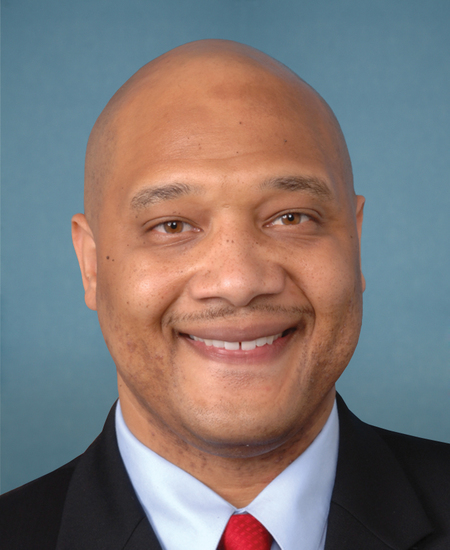
Rep. André Carson
Sponsored bills
Maddy summaryHR 3876, the LIHEAP Staffing Support Act, amends the Low-Income Home Energy Assistance Act to establish staffing requirements for the program. It requires the Secretary to employ at least 20 full-time staff dedicated to administering LIHEAP, limits contractors to no more than 40% of these staff, and mandates increasing staffing to at least 30 during declared emergencies (as defined under existing law). These provisions directly affect the administrative capacity of the LIHEAP program, which provides energy assistance to low-income households. The bill focuses on ensuring consistent staffing levels to support program delivery, with specific rules for emergency periods lasting up to 180 days.
Maddy summaryThis bill amends U.S. Code to allow marine terminals to use Capital Construction Funds for purchasing or replacing U.S.-made cargo handling equipment (like cranes or loaders), or foreign-made equipment only if U.S. options are unavailable or unsuitable. It directly affects U.S. marine terminals operating at ports, enabling them to fund equipment upgrades with federal funds. Key provisions include banning purchases of Chinese-made cranes, prohibiting fully automated equipment that could cause job losses, and requiring the Secretary to annually publish U.S. equipment availability. The bill updates existing fund rules without creating new programs, focusing on domestic equipment use and job impact.
Maddy summaryThis resolution designates specific Capitol rooms (H-315 to H-319) housing the House Press Gallery as the "Frederick Douglass Press Gallery." It honors Frederick Douglass, who was the first Black journalist permitted to cover Congress in the Capitol press galleries (1871-1875), recognizing his pioneering role in journalism and advocacy during Reconstruction. The resolution is purely ceremonial, with no new policies, funding, or obligations; it only changes the name of an existing space to commemorate Douglass's historical significance.
Maddy summaryThis bill requires drug labels to clearly state if a medication contains major food allergens (like peanuts, dairy, or shellfish) or gluten from grains (such as wheat, barley, or rye). It applies to human drugs sold in the U.S. and mandates manufacturers to identify these specific ingredients on labels. The requirement takes effect within two years of the bill's passage, giving companies time to update packaging. This directly affects drug manufacturers and helps people with allergies make safer choices by providing clear ingredient information.
Maddy summaryThe Elder Pride Protection Act of 2025 establishes a federal task force (the ELDER Task Force) within the Department of Justice to address elder abuse targeting LGBTQI+ individuals. The task force, created within 90 days of the bill’s passage, will study the rise in such abuse, develop national best practices for law enforcement, and create educational materials for prevention and response. It will coordinate efforts across local, state, and federal agencies and submit a report to Congress within one year. The bill directly affects older LGBTQI+ adults (aged 60+) facing abuse, which includes physical, sexual, emotional, or financial harm, but does not create new funding or penalties.
Maddy summaryThe VET PFAS Act (HR 3639) provides VA health care coverage for veterans and their family members exposed to PFAS chemicals at military bases, without requiring proof linking illness to exposure. Veterans who served at contaminated bases and family members who resided there (or were in utero while the veteran lived there) can now receive treatment for specific conditions like testicular cancer, kidney cancer, thyroid disease, and pregnancy-related hypertension. The law creates a presumption that these conditions are service-connected, streamlining access to VA benefits. Annual reports will track program usage, including the number of veterans and families receiving care and the conditions treated.
Maddy summaryThis bill removes pay limits for two types of medical physicists working with veterans: therapeutic medical physicists (who specialize in radiation treatment) and diagnostic medical physicists (who specialize in imaging). It updates VA personnel rules to treat these roles like physicians and dentists for pay purposes, including adding them to pay tables, qualification standards, and grade structures. The bill directly affects VA-employed medical physicists in these specialties by allowing them to receive higher salaries previously restricted. Key provisions amend Title 38 to explicitly include "therapeutic medical physicist" and "diagnostic medical physicist" in all relevant pay and appointment sections.
Maddy summaryThe bill's title ("Protect Vulnerable Immigrant Youth Act") does not align with its actual provisions. HR 3763 amends two sections of the Immigration and Nationality Act to adjust employment-based visa categories, specifically adding "or (J)" to existing numerical limitations and preference allocation rules. These changes would affect certain employment-based visa applicants (e.g., those in categories like "J" for religious workers or other specific employment groups) by removing numerical caps that previously applied to them. The bill contains no provisions related to youth protection, immigration status for minors, or direct safeguards for vulnerable immigrant youth.
Maddy summaryHRES 473 is a non-binding House resolution calling on the U.S. government to urgently use diplomatic efforts to ensure food and medical supplies reach civilians in Gaza. It directly addresses the needs of approximately 2.2 million Palestinians facing acute hunger, including 10,000 children identified with acute malnutrition, following a border blockade that blocked aid from March to May 2025. The resolution specifically urges the White House and State Department to secure "immediate and secure delivery and disbursement" of aid and a lasting end to the conflict, citing collapsed bakeries, exhausted food rations, and a near-total health system collapse.