

Maddy summary# Summary of Legislative Text This is a comprehensive legislative proposal focused on addressing substance use disorder through public health approaches, with significant funding and program requirements. Key elements include: 1. **Major Funding Programs:** - **Subtitle A (Local Grants):** $3.0 billion annually (2024-2033) for local entities to provide prevention, treatment, and recovery services - **Subtitle B (State/Regional Grants):** $4.6 billion annually (2024-2033) for state-level programs - **Subtitle C (Other Grants):** $1.0 billion annually (2024-2033) for specific entities and underserved populations - **Subtitle D (Innovation/Training):** $1.5 billion annually (2024-2033) for training, research, and capacity building 2. **Key Program Requirements:** - Mandates for evidence-based treatment services across multiple levels of care - Requirements for cultural competency, particularly for Native American communities - Specific focus on harm reduction, prevention, and recovery support - Provisions for naloxone distribution and overdose reversal programs 3. **Regulatory Changes:** - New certification requirements for covered manufacturers, distributors, and dispensers of Schedule II controlled substances - Penalties for failure to submit certifications or submitting false certifications - Creation of a "Comprehensive Addiction Resources Fund" for penalty revenues 4. **Focus Areas:** - Prevention services (including trauma-informed approaches) - Early intervention services - Recovery support services - Harm reduction programs - Workforce development for treatment providers - Special attention to underserved populations (rural communities, racial minorities, formerly incarcerated individuals) 5. **Funding Priorities:** - 10% of funds for Native American communities - Specific requirements for cultural competency and language access - Mandated data collection and reporting systems This legislation represents a significant shift toward public health approaches to substance use disorder, emphasizing prevention, treatment, and recovery support rather than punitive measures, with substantial funding commitments over a decade.
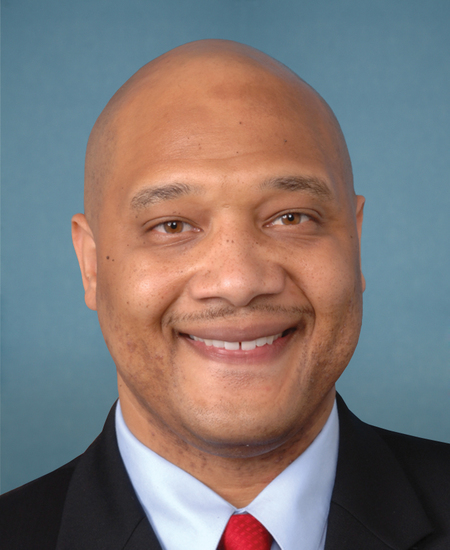
Rep. André Carson
Sponsored bills
Maddy summaryThe Public Service Freedom to Negotiate Act of 2024 establishes federal minimum standards for collective bargaining rights for public employees and supervisory employees. The Federal Labor Relations Authority will determine if each state's laws "substantially provide" for these rights, and if not, federal standards will apply to that state. These standards include the right to self-organization, collective bargaining, recognition of labor organizations, and procedures for resolving disputes. The bill preserves existing collective bargaining agreements and excludes certain employee categories like emergency services workers from some provisions.
Maddy summaryThis bill requires the Consumer Product Safety Commission (CPSC) to create new safety standards for lithium-ion batteries used in electric bicycles and scooters within 180 days of the bill's enactment. The standards aim to prevent battery-related fires by setting specific safety requirements for these batteries and devices. The CPSC must define which battery types and devices fall under the rule as part of the standard. Once established, the standard will function as an official safety rule under existing consumer product safety law.
Maddy summaryThe READ Act Reauthorization Act of 2023 extends the authorization period for the Reinforcing Education Accountability in Development Act (commonly known as the READ Act) from five to ten fiscal years. This change allows U.S. international education programs, administered by agencies like USAID, to operate without annual reauthorization for a longer period. The bill directly affects programs providing educational support in developing countries, such as teacher training and literacy initiatives. The key mechanism is amending Section 4(a) of the existing law to adjust the funding duration, ensuring continued program stability.
Maddy summaryThis symbolic resolution (HRES 1231) recognizes the Nakba - the 1948 displacement of Palestinians - as a historical event and ongoing process, affirming U.S. support for Palestinian refugee rights under UN Resolution 194 and the Universal Declaration of Human Rights. It urges the U.S. government to commemorate the Nakba, reject denial of Palestinian rights, support UNRWA services for refugees, and promote public education about the refugee crisis. As a non-binding resolution, it does not change U.S. policy but expresses congressional sentiment. The resolution directly affects how the U.S. government may frame discussions on Palestinian rights and refugee issues.
Maddy summaryHR 8407, "Domenic and Ed's Law," amends the Higher Education Act to allow parents who took out federal student loans for their children to have those loans forgiven if their child becomes permanently disabled or dies. The bill expands existing loan forgiveness provisions to include these two specific circumstances, directly affecting parents with outstanding federal education loans. Key provisions require the child's disability to be determined as permanent and total by the Secretary or the child's death, with no requirement that the disability or death occurred after the loan was taken out. This change applies to all parent loans, regardless of when the loan was received or when the disability or death occurred.
Maddy summaryThe Rights for the TSA Workforce Act of 2024 would transition Transportation Security Administration (TSA) employees, particularly screening agents, from TSA-specific personnel rules to the standard federal government personnel system under Title 5 of the U.S. Code by December 31, 2024. The bill prohibits changes to current personnel policies for covered employees until the transition date and ensures no reduction in pay or benefits during the conversion process. It preserves certain benefits like law enforcement availability pay for Federal air marshals and maintains collective bargaining rights for screening agents. The bill also requires various reports to Congress on recruitment, implementation, diversity, and workplace safety to be submitted within specified timeframes.
Better Utilizing Infrastructure for Lasting Development of Veterans Businesses Act of 2024 or the BUILD Veterans Businesses Act of 2024 This bill requires a specified percentage of certain federal-aid highway and public transportation funds to be expended through veteran-owned small businesses. Further, the Department of Transportation (DOT) must establish minimum requirements and criteria for states to use in (1) certifying businesses that qualify as a veteran-owned small business; and (2) reporting to DOT on veteran-owned small business awards, commitments, and achievement.
Maddy summaryHRES 1206 is a symbolic House resolution supporting the designation of May 2024 as "Mental Health Awareness Month." It does not create new laws or funding but aims to raise public awareness about mental health challenges, emphasizing the need to reduce stigma and treat mental well-being as equally important as physical health. The resolution cites statistics on rising mental health crises - including increased anxiety, depression, and suicide rates among youth, LGBTQ+ individuals, veterans, and communities of color - to underscore the urgency of the issue. It encourages nationwide efforts to promote mental health awareness and access to care during this designated month.
Maddy summaryThis bill directs the Health and Human Services Secretary to fund research on early detection and treatment of uterine fibroids, with a focus on reducing health disparities. It authorizes grants to states for screening programs (including advanced imaging), patient navigation services, and public education campaigns - prioritizing areas with socially vulnerable populations at higher risk. States receiving funds must implement evidence-based strategies to improve access to early intervention. The bill also requires regular reports to Congress on grant outcomes and research findings related to fibroid treatment disparities and related conditions like Asherman’s Syndrome.