

Maddy summaryThe School Hunger Elimination Act of 2024 automatically certifies children for free or reduced-price school meals if they are already receiving Medicaid benefits (with household income at or below 133% of the federal poverty line for free meals) or Supplemental Security Income (SSI). It requires states to establish data-sharing agreements with Medicaid agencies by the 2025 school year, eliminating the need for families to submit separate applications for meal eligibility. This change directly affects children in low-income households already enrolled in Medicaid or SSI, streamlining access to school meals without additional paperwork.
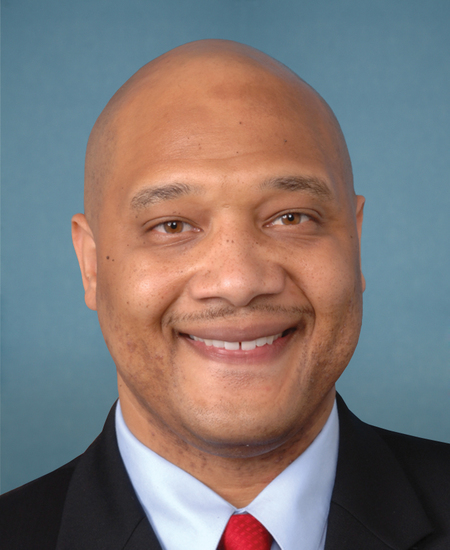
Rep. André Carson
Sponsored bills
Maddy summaryThis bill prioritizes funding for rural healthcare facilities through the USDA's Community Facilities Program. For fiscal years 2025-2031, the Secretary of Agriculture must give priority to rural hospitals and healthcare providers seeking loans or grants to develop essential facilities. Funds can be used for medical supplies, telehealth expansion, staffing support, or renovating closed facilities. Additionally, 10% of guaranteed loan funds under the program must be reserved annually to support these rural healthcare projects.
Maddy summaryThis bill temporarily expands SNAP (food assistance) eligibility for households including recently separated veterans. For 100 days after a veteran receives their discharge paperwork (DD-214), only the veteran's income is counted toward household eligibility under SNAP rules, ignoring other household members' income. It directly affects veteran households transitioning from military service during this 100-day period. The provision takes effect 90 days after the bill is enacted.
Maddy summaryHR 8199, the *Increasing Nutrition Access for Seniors Act of 2024*, would make it easier for seniors and disabled individuals in SNAP (food stamp) households to qualify for benefits. It expands certification periods to 36 months for households without earned income and creates a new standard medical deduction: states can automatically deduct $155 monthly (adjusted yearly for inflation) from income for seniors/disabled members who report over $35 in monthly medical expenses. States may also set higher deductions if they provide evidence of higher average medical costs in their area. These changes apply to new certification periods starting 180 days after enactment.
Maddy summaryHR 8096, the Future of Water Act of 2024, amends the Commodity Exchange Act and related law to prohibit the trading of water, water rights, or water-related financial products (like indices or data) as commodities for future delivery. This change directly affects commodity markets, futures traders, and entities seeking to create financial instruments based on water resources. The bill adds specific language to existing statutes to explicitly exclude water and water rights from being traded as future commodities, preventing their inclusion in futures contracts or related financial products. It does not alter water management, rights, or usage rules, only restricting their financial speculation in commodity markets.
Maddy summaryThis bill would require the federal government to cover 100% of state agencies' costs for SNAP program staff salaries, hiring, and training. It sets minimum wage standards for SNAP workers at the same rate as federal employees, with annual updates tied to federal pay increases. States must submit detailed wage plans for federal approval. The policy aims to improve staffing stability and retention for SNAP operations.
Maddy summaryThis bill amends the Food and Nutrition Act to expand SNAP (food stamp) eligibility for foster care youth and homeless youth aged 18 to 26 enrolled at least half-time in college. It adds specific definitions for these groups and allows them to use SNAP benefits for meals prepared by their college dining services, provided their housing lacks individual cooking facilities. The bill treats these young adults as a separate household for SNAP purposes, ensuring their benefits aren’t affected by household size. These changes directly support vulnerable college students transitioning from foster care or experiencing homelessness, improving access to nutritious food during their education.
Maddy summaryThis bill amends the Department of Veterans Affairs' procurement rules to ensure women-owned small businesses receive equal priority in contracting preferences. It requires the VA to treat preferences for women-owned small businesses the same as other small business preferences under federal procurement law. Specifically, it adds a new provision (Section 8(m) of the Small Business Act) to VA procurement guidelines, mandating that all such preferences be afforded "the same degree of priority." This directly affects VA contracting officers and women-owned small businesses seeking federal contracts with the VA.
Maddy summaryThe Save our Safety-Net Hospitals Act of 2024 modifies Medicaid payment rules to better support hospitals serving large numbers of low-income patients. It removes a restriction that previously prevented some safety-net hospitals from receiving full reimbursement for care provided to these patients. The bill allows these hospitals to count payments from Medicare and other programs when calculating their Medicaid reimbursement, ensuring they are fully compensated for services. This change applies to fiscal years beginning October 1, 2021, and prevents states from recouping past payments made under the old rules.
Maddy summaryHR 9337, the "Don’t STEAL Act," requires employers to pay employees the full wage rate specified in their employment contracts (including collective bargaining agreements) if it exceeds the minimum rate under the Fair Labor Standards Act (FLSA). This directly affects workers engaged in commerce or production for commerce, ensuring they receive agreed-upon higher wages. The bill adds criminal penalties for willful wage theft, including fines and up to 5 years in prison for violations exceeding $1,000, with penalties based on severity and business size. It also directs fines collected from violations to fund the Department of Labor’s Wage and Hour Division enforcement efforts. The law applies to unpaid wages or overtime violations occurring 90 days after enactment.