

Maddy summaryHCONRES 130 is a symbolic concurrent resolution commending state and local governments that treat reproductive rights as human rights following the *Dobbs* decision. It recognizes efforts by cities like Austin, Texas, and Montgomery County, Maryland, to expand abortion access and condemn criminalization of pregnancy outcomes. The resolution affirms that reproductive rights are human rights, urges states to repeal restrictive laws, and references U.S. obligations under international human rights treaties. As a non-binding resolution, it does not create new laws or alter existing policies.
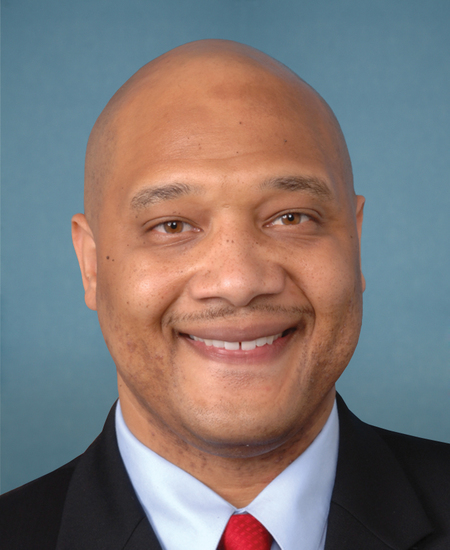
Rep. André Carson
Sponsored bills
Maddy summaryHRES 1495 designates September 2024 as "Sickle Cell Disease Awareness Month" to raise public education about sickle cell disease (SCD), which affects approximately 100,000 people in the U.S., predominantly in African American communities. The resolution urges the Department of Health and Human Services to address access barriers for SCD treatments in Medicare and Medicaid, calls for increased National Institutes of Health research funding, and proposes forming a federal interagency cabinet to coordinate SCD policy. It also encourages public events during September to highlight early detection, treatments, and preventative care for SCD complications. As a symbolic resolution, it does not create new laws but directs federal agencies to prioritize equitable access and research for SCD.
Maddy summaryHRES 1489 is a symbolic House resolution designating the week of September 23-27, 2024, as "National Clean Energy Week." It expresses congressional support for recognizing clean energy's role in economic growth (citing 8.35 million jobs in the sector) and encourages voluntary actions like public awareness, investment in clean energy technologies, and supporting local clean energy jobs. The resolution does not create new laws, funding, or obligations - it only formally endorses the week-long observance to highlight clean energy’s economic and environmental benefits. It directly affects no specific group but aims to raise national awareness of the clean energy sector.
Maddy summaryHRES 1485 designates the third Friday of September each year as "National POW/MIA Recognition Day" to honor prisoners of war and missing-in-action military personnel. The resolution expresses the House's support for this designation and encourages Americans to observe the day through community commemorations, displaying the POW/MIA flag, and performing acts of service for families of those affected. It does not create new laws or alter existing policies but builds on the existing National POW/MIA Flag Act (Public Law 116-67) that requires the POW/MIA flag to be flown on federal properties. The resolution focuses on symbolic recognition and public engagement rather than substantive policy changes.
Maddy summaryHRES 1491 is a ceremonial resolution designating October 23, 2024, as "Public Radio Music Day" to honor public radio music stations. It expresses the House's appreciation for these stations' role in serving listeners, musicians, and communities across all 50 states, the District of Columbia, and Puerto Rico. The resolution highlights how these noncommercial stations provide unique access to diverse music genres, support local artists, and foster community cultural engagement. As a symbolic gesture with no legal or financial impact, it does not change any policies or directly affect specific groups beyond recognizing the stations' contributions.
Maddy summaryHRES 1484 is a symbolic resolution recognizing the value of evidence-based parenting and caregiving education in elementary and secondary schools. It encourages schools to promote such programs, which focus on teaching positive parenting practices like predictable routines, emotional warmth, and effective discipline strategies. These programs aim to support children's social-emotional development, reduce risks of child abuse and neglect, and improve long-term outcomes like academic success and mental health. The resolution does not create new programs or funding but highlights existing federal initiatives (like Head Start and CDC-backed research) that support this approach. It directly affects schools as implementers and families as beneficiaries of these educational resources.
Maddy summaryThis bill establishes a Diversity and Inclusion Administrator at the Department of Labor to increase African American participation in apprenticeship programs. It requires all new and renewing registered apprenticeship programs to submit plans for boosting African American enrollment, and authorizes competitive grants for programs targeting underrepresented groups in industries like construction, tech, and healthcare. Grant recipients must report on metrics including participant demographics, program completion rates, and job placement in related fields. The law directly affects African American youth and other underrepresented groups by mandating systemic changes to apprenticeship programs nationwide.
Maddy summaryThe NFIP Premium Transparency Act (HR 9726) requires the National Flood Insurance Program (NFIP) to include detailed, plain-language information on all flood insurance policy declarations. This includes current premiums, specific discounts (like pre-FIRM construction or community rating system benefits), risk factors (such as property elevation), flood history, and estimated years until premiums reach full-risk rates. It also mandates an online "flood insurance information tool" by 2027, allowing homeowners and prospective buyers to view property-specific data, adjust variables (like sea level rise), and see how mitigation efforts might lower future costs. The bill directly affects NFIP policyholders, insurers, and local communities by making flood insurance pricing and risk factors more transparent and accessible.
Maddy summaryThis bill removes a barrier for parents who borrowed Federal Direct PLUS loans to pay for their dependent children's education. It amends the Higher Education Act to make these PLUS loans eligible for income-contingent repayment (ICR) and income-based repayment (IBR) plans - previously excluded from both. As a result, affected parents can now use income-driven repayment options that adjust payments based on their earnings, rather than being limited to standard repayment. The change applies to existing PLUS loans for dependent students and related consolidation loans, effective upon the bill's enactment.
Maddy summaryHRES 1478 is a non-binding House resolution recognizing access to water, sanitation, electricity, heating, cooling, broadband, and public transportation as basic human rights. It declares these services must be accessible, affordable, climate-resilient, and safe for all people, without discrimination. The resolution does not create new laws or funding but affirms principles like banning utility shutoffs for non-payment and ending privatization of water systems. It urges federal action to support public utilities and address affordability crises, but has no legal force.