Taxpayer Receipt Act This bill requires the Department of the Treasury to provide to each taxpayer a one-page estimate of how such taxpayer's money was spent by the government during the immediately preceding calendar year.
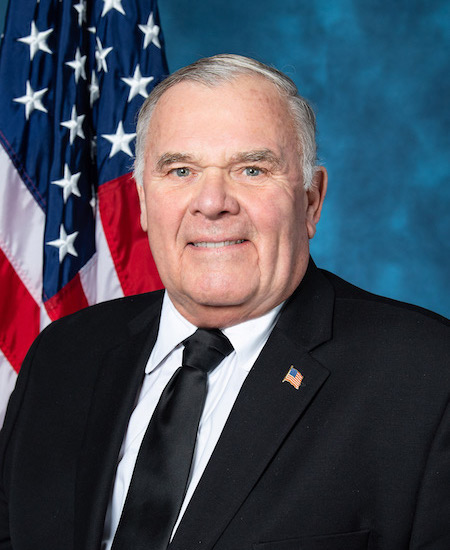
Rep. James R. Baird
Sponsored bills
New Markets Tax Credit Extension Act of 2021 This bill makes the new markets tax credit permanent. It also modifies the credit to (1) provide for an inflation adjustment to the limitation amount for the credit after 2021, and (2) allow an offset against the alternative minimum tax for the credit (determined with respect to qualified equity investments initially made after 2020).
Fiscal State of the Union Act This bill requires both chambers of Congress to assemble each year in the Hall of the House of Representatives to receive a presentation reviewing the Government Accountability Office's audit of the financial statement of accounts and associated activities of the executive branch, together with an analysis of the financial position and condition of the federal government.
Keystone XL Pipeline Construction and Jobs Preservation Act This bill authorizes the TransCanada Keystone Pipeline to construct, connect, operate, and maintain the pipeline facilities in Phillips County, Montana, for the import of oil from Canada to the United States.
This resolution commemorates the 30th anniversary of Operation Desert Storm's 100-hour ground campaign, honors the legacy of the 697,000 U.S. Desert Storm veterans, and pays tribute to the 299 men and women who lost their lives.
This resolution opposes lifting specified sanctions on Iran and resolves that these sanctions may be terminated only after Iran has ceased providing support for acts of international terrorism and has dismantled its nuclear, biological, and chemical weapons and related technologies.
National Right-to-Work Act This bill repeals those provisions of the National Labor Relations Act and the Railway Labor Act that permit employers to make an agreement with a labor union to require employees to join such union as a condition of employment. Currently, at least 27 states have enacted laws prohibiting employers from compelling employees to become members of a union as a condition of employment.
Gold Star Altitude Act This bill authorizes the Department of Defense to offer, on a space-available basis, transportation on military aircraft to the children, surviving spouses, parents, and siblings of members of the Armed Forces who die during active service.
Direct Interstate Retail Exemption for Certain Transactions Act or the DIRECT Act This bill allows meat and poultry products inspected by State Meat and Poultry Inspection programs to be sold by retail stores, restaurants, or similar retail-type establishments over the internet and shipped by a carrier in commerce (other than for export to a foreign country), provided the meat and poultry products so inspected are shipped directly to household consumers and in normal retail quantities. (Under the inspection programs, the Department of Agriculture Food Safety and Inspection Service allows states that meet certain requirements to inspect meat and poultry. The state-inspected products are currently limited to intrastate commerce, unless a state opts into a separate Cooperative Interstate Shipment Program.)

Rural Equal Aid Act This bill requires the Department of Agriculture (USDA) to pay the principal, interest, and any associated fees owed on loans made under certain rural development loan programs for a nine-month period. A single monthly payment of principal, interest, and associated fees with respect to a loan in the last three months of the nine-month period must not exceed $9,000. USDA must also encourage the Federal Deposit Insurance Corporation, the Office of the Comptroller of the Currency, and state bank regulators to not require lenders to increase their reserves on account of receiving such payments made by USDA. USDA must waive statutory limits on maximum loan maturities for certain loan durations where the lender provides a deferral and extends the maturity of such loans and, when necessary to provide more time because of difficulties during the COVID-19 (i.e., coronavirus disease 2019) pandemic, extend lender site visit requirements.