

Maddy summaryHR 9913, the "Ending FCC Meddling in Our Elections Act," prohibits the Federal Communications Commission (FCC) from finalizing or enforcing a specific proposed rule about AI-generated content in political ads. The bill blocks the FCC from acting on its July 10, 2024, proposed rule (FCC 24-74) requiring disclosure of AI-generated content in political TV and radio advertisements, and also prevents the FCC from creating similar rules. This directly affects the FCC’s regulatory authority and political advertisers using AI-generated content in broadcast ads. The bill halts the FCC’s current rulemaking process without creating new requirements or altering existing disclosure laws.
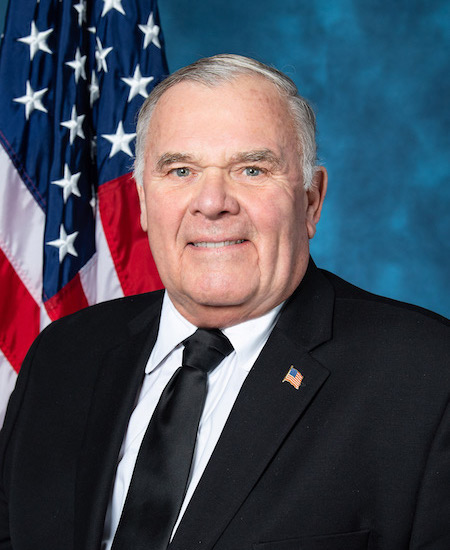
Rep. James R. Baird
Sponsored bills
Maddy summaryThis bill prohibits U.S. Small Business Administration (SBA) assistance - including loans, contracts, and other support - from going to small businesses that are either headquartered in China or have more than 25% of their voting stock owned by Chinese-affiliated entities. It directly affects small business concerns meeting either of these criteria, blocking their access to SBA programs. The bill amends the Small Business Act to add this restriction and requires the SBA to update its regulations (including specific sections of the Code of Federal Regulations) to implement the change. The policy change is a direct eligibility requirement for SBA programs, with no additional funding or program modifications.
Maddy summaryThis bill amends the Clean Air Act to modify ethanol waiver processes and fuel volatility standards. It adds a new provision allowing fuel to enter commerce if it meets Reid Vapor Pressure requirements through similarity to certified vehicles or existing waivers, and adjusts vapor pressure limits from 10% to 10-15% in several sections. Small refineries that retired credits for 2016-2018 compliance years may now have those credits returned or applied to future years if their petitions remained pending as of December 1, 2022. The changes directly affect fuel retailers, ethanol producers, and small refineries by altering compliance pathways for fuel standards and credit management under the renewable fuel program.
Maddy summaryHRES 1517 is a symbolic resolution expressing the U.S. House of Representatives' support for designating October 7-12, 2024, as "National 4-H Week." It does not create new laws or policies but formally recognizes 4-H, the nation’s largest youth development program, which engages nearly 6 million young people through hands-on learning in health, science, and leadership. The resolution highlights 4-H’s role in developing youth leadership via its network of volunteers, land-grant universities, and the Department of Agriculture. It has no direct impact on any specific group or program, as it only serves as a formal acknowledgment of the organization’s work.
Maddy summaryHR 3433, the "Give Kids a Chance Act of 2024," requires pharmaceutical companies developing certain cancer drugs to conduct pediatric studies if the drugs target molecular pathways relevant to childhood cancers. It directly affects drug manufacturers submitting new applications for cancer treatments, particularly those combining previously approved adult cancer drugs or containing a single new active ingredient. The bill amends FDA regulations to mandate these pediatric investigations only when specific conditions are met, such as when a drug's molecular target is relevant to pediatric cancer growth. The FDA must issue implementing guidance within 12 months, and reports to Congress will track implementation and effectiveness starting 2 years after enactment.
Maddy summaryHR 1735, the Mathematical and Statistical Modeling Education Act, provides federal funding to improve K-12 math and statistics education through grants for schools and educators. The bill directs the National Science Foundation to award competitive grants to institutions of higher education and nonprofits for developing innovative teaching methods focused on real-world data analysis, computational tools, and problem-solving - specifically targeting middle-to-high school transitions and underserved student groups. It requires grant recipients to create professional development for teachers, integrate community-based learning, and use authentic data sets with imperfections (like missing values or multiple formats). Additionally, the bill mandates a National Academies report to study implementation barriers and best practices in modeling education, with findings to be shared publicly and used to inform future policy.
Maddy summaryThis bill restricts federal funding for jurisdictions that limit cooperation with federal immigration enforcement. It defines a "sanctuary jurisdiction" as any state or local government that prohibits sharing immigration status information or complying with federal detainer requests (except for crime victims/witnesses). Starting after enactment, such jurisdictions lose eligibility for federal funds intended to provide food, shelter, healthcare, legal services, or transportation to undocumented immigrants. The law directly affects cities and states with specific immigration policies, not the immigrants themselves.
Maddy summaryHJRES 144 is a congressional disapproval resolution targeting a specific rule issued by the Bureau of Alcohol, Tobacco, Firearms, and Explosives (ATF) on April 19, 2024. The resolution seeks to block the ATF's rule that redefined the term "engaged in the business" for firearm dealers, which would have affected how federal licensing requirements apply to certain sellers. If enacted, this resolution would nullify the rule, preventing it from taking effect under procedures in Title 5 of the U.S. Code. The bill directly impacts firearm dealers operating under the current regulatory framework and the ATF's enforcement authority.
Maddy summaryThis bill (HJRES 163) is a congressional disapproval resolution targeting an Environmental Protection Agency (EPA) rule finalized on May 9, 2024. The EPA rule established new emissions standards for greenhouse gases from fossil fuel power plants (both new and existing) and repealed a previous rule called the Affordable Clean Energy Rule. The resolution would block this EPA rule from taking effect by invoking the Congressional Review Act (Chapter 8 of Title 5, U.S. Code). If passed, it would prevent the EPA rule from being enforced, directly affecting fossil fuel power plant operators and the EPA’s regulatory authority over emissions.
Maddy summaryH.J. Res. 117 is a joint resolution that would disapprove an Environmental Protection Agency (EPA) rule concerning the reconsideration of National Ambient Air Quality Standards for particulate matter. The EPA rule, published on March 6, 2024, was part of the agency’s process to review these standards, which set limits for harmful air pollutants. This resolution invokes a congressional disapproval procedure under federal law to block the rule from taking effect. If enacted, the rule would have no force or effect, preserving the existing air quality standards for particulate matter.