

Maddy summaryThis bill prohibits federal funding for gender transition procedures - including hormone therapy, puberty blockers, and surgeries like genital reassignment - across all federal programs and health plans. It exempts procedures for medical conditions (such as disorders of sex development) and treatment of complications arising from such procedures. The bill also blocks Affordable Care Act premium tax credits and cost-sharing reductions for health plans covering these services, though individuals may purchase separate non-federal-funded coverage. State and private insurers can still offer such coverage using their own funds, but federal subsidies cannot be applied to it.
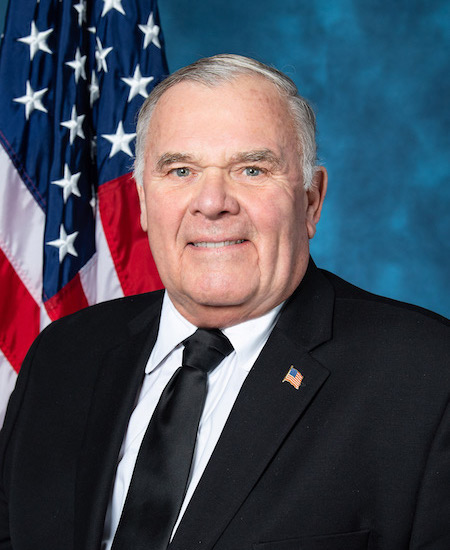
Rep. James R. Baird
Sponsored bills
Maddy summaryThis bill expands Medicare Part B coverage to include specific pharmacist services, directly affecting Medicare beneficiaries and pharmacists who provide these services. It adds new coverage for pharmacist evaluations and treatments related to certain illnesses (like COVID-19, flu, or strep throat) and public health emergencies, requiring payment at 80% of the lesser of actual charge or 85% of physician payment rates (100% during emergencies). The bill also prohibits balance billing for these services, ensuring beneficiaries pay only the standard Medicare copayment. These changes aim to improve access to pharmacist care during health crises while aligning payment with existing physician service frameworks.
Maddy summaryThis bill requires the Treasury Secretary to review 10 specific Chinese companies within 60 days to determine if they are responsible for or complicit in serious human rights abuses against Uyghurs and other Muslim groups in Xinjiang, or meet criteria under existing sanctions laws. If determined to meet these criteria, the companies - such as Hikvision, BGI Group, Tiandy Technologies, Alibaba, and ByteDance - would be added to a U.S. sanctions list blocking their assets. The Treasury must then report its findings to Congress, including the reasons for the determination, in an unclassified report with a potential classified annex. The bill directly affects these listed entities by subjecting them to potential U.S. financial sanctions.
Maddy summaryHR 589, the MAHSA Act, imposes U.S. sanctions on Iran's Supreme Leader, President, and affiliated entities responsible for human rights abuses and terrorism. It targets the Supreme Leader's Office, the President's cabinet, security forces involved in the crackdown following Mahsa Amini's death, and entities financing abuses. The bill requires the President to annually determine and apply existing sanctions - like property blocking and visa bans - against these individuals and entities. This directly affects Iran's top leadership and security apparatus, aiming to hold them accountable for abuses including the Morality Police's role in Amini's detention and the subsequent violent suppression of protests.
Maddy summaryThis bill extends a temporary COVID-19 emergency waiver that allows nurse aides in training to count hours worked during the pandemic toward their certification requirements at nursing facilities. It specifically permits these hours to satisfy the 75-hour minimum training requirement and allows facilities to conduct competency evaluations on-site if states don’t offer them weekly. The waiver remains in effect for at least 24 months after enactment, with a requirement for the Secretary to study its continued appropriateness within one year. The policy directly affects nurse aides working in skilled nursing facilities and nursing facilities under federal Medicare/Medicaid rules. It does not create new training programs but maintains pandemic-era flexibility for staffing.
Maddy summaryHR 407, the "Protect the UNBORN Act," prohibits federal agencies from implementing or enforcing two specific executive orders issued by President Biden in 2022 (Executive Orders 14076 and 14079), which aimed to protect access to reproductive healthcare services. The bill bans the use of federal funds, including those from the 2022 Consolidated Appropriations Act, to carry out, administer, or enforce these executive orders. It directly affects federal agencies and programs that would otherwise comply with the Biden administration's policies on reproductive healthcare access. The bill does not create new healthcare rules but blocks the implementation of existing executive actions.
Maddy summaryThe MERIT Act of 2024 modifies federal personnel procedures by repealing Chapter 43 performance-based actions, shortening timelines for adverse actions (requiring decisions within 15 business days), and extending probationary periods to 2 years for Senior Executive Service and competitive service employees. It establishes new rules for recouping bonuses from employees who commit misconduct, modifies furlough procedures with specific requirements for emergency furloughs, and creates a process to reduce retirement benefits for employees convicted of felonies related to their official duties. These changes primarily affect federal employees, supervisors, and senior executives in the civil service, with the goal of streamlining personnel management while providing clearer standards for disciplinary actions.
Maddy summaryThis bill (HR 1432, the VETT Act) amends the tax code to allow members of the Armed Forces to deduct charitable contributions made to certain military service organizations. Specifically, it adds qualifying federally chartered military service organizations (under IRS section 501(c)(19)) as deductible charities for active duty and retired service members. The change applies to tax returns filed for taxable years beginning after the bill's enactment date (December 12, 2024). It directly affects military personnel who make donations to these designated organizations, expanding their eligible charitable deductions.
Maddy summaryHR 7438 directs the U.S. Treasury to mint commemorative coins for the 2026 FIFA World Cup, including 100,000 $5 gold coins, 500,000 $1 silver coins, and 750,000 half-dollar coins. The coins will be sold to the public at face value plus surcharges ($35, $10, and $5 per coin, respectively), with all surcharge revenue paid to FWC2026 US, Inc. for U.S. soccer programs. These funds must support soccer initiatives, particularly in underserved communities and youth development, as specified in the bill. The coins are legal tender but will only be issued during 2026, with no net cost to the U.S. government.
Maddy summaryThe STAND Act would temporarily halt federal funding for non-defense foreign aid (including bilateral, multilateral, and humanitarian assistance) by the State Department and USAID for 60 days after a natural disaster is declared under the Stafford Act. This means no such aid spending could occur during that period, directly affecting how these agencies allocate taxpayer funds in disaster response. The freeze could only be lifted if Congress passes a joint resolution that the President signs into law. The bill focuses on pausing foreign aid to prioritize domestic disaster relief efforts in the immediate aftermath of events.