

Maddy summaryThe Maximum Pressure Act (HR 6114) is a legislative proposal that would maintain and expand U.S. sanctions against Iran. The bill would codify existing sanctions, require Iran to meet 12 specific conditions before sanctions could be lifted (including ending support for terrorism, releasing hostages, and ending nuclear enrichment), and expand sanctions on Iran's Revolutionary Guard Corps and missile programs. It also establishes new reporting requirements for the U.S. government to monitor Iran's activities and the impact of sanctions. The legislation would require congressional review before any sanctions could be lifted or modified, preventing the executive branch from unilaterally easing restrictions.
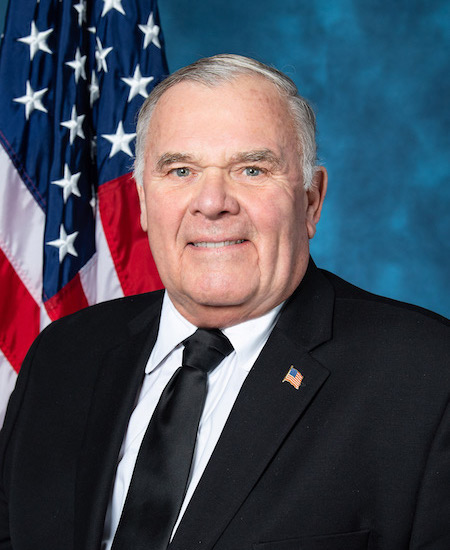
Rep. James R. Baird
Sponsored bills
Maddy summaryHR 5967, the Unemployment Integrity Act of 2023, requires unemployment claimants to participate in job-seeking activities to maintain benefits. Specifically, it mandates that claimants respond to work-related requests, attend reemployment interviews, and comply with reasonable requests like drug testing or skills assessments. The bill also requires states to conduct a study on increasing random audits of unemployment claims and mandates that states adopt these new requirements to receive federal funds for extended unemployment benefits. These changes apply to weeks beginning one year after the bill's enactment, with adjustments for states holding biennial legislative sessions. The law directly affects individuals claiming unemployment benefits by linking eligibility to active job-seeking participation.
Maddy summaryThis bill makes permanent Medicare coverage for telehealth services provided by Federally Qualified Health Centers (FQHCs) and Rural Health Clinics (RHCs), including audio-only visits. It directly affects Medicare beneficiaries who use these services and the FQHCs/RHCs delivering them by removing location restrictions - allowing telehealth visits to occur regardless of the patient's geographic location. Key provisions include permanently covering audio-only telehealth (previously temporary), treating telehealth visits as equivalent to in-person visits for payment, and ensuring costs for telehealth are included in FQHC/RHC payment calculations. These changes simplify access to telehealth for rural and underserved communities while maintaining consistent Medicare reimbursement for providers.
Maddy summaryHR 5107, the Pandemic Unemployment Fraud Recoupment Act, extends the statute of limitations for enforcing fraud related to pandemic unemployment benefits from 3 years to 10 years across multiple programs, including Pandemic Unemployment Assistance, Federal Pandemic Unemployment Compensation, and Lost Wages Assistance. It requires states to recover overpayments from individuals who knowingly received benefits they weren’t entitled to, through deductions from future unemployment benefits, while maintaining existing due process protections like hearings before repayment. States may waive repayment if the overpayment wasn’t the individual’s fault or if repayment would be unfair. The bill applies directly to individuals who received pandemic-era unemployment benefits through fraudulent means, ensuring states have a longer timeframe to address these cases under established fraud procedures.
Maddy summaryHR 4847, the Safeguarding Syria Sanctions Act, prohibits the Treasury Department from extending or renewing any temporary licenses allowing transactions with Syria's Assad regime for earthquake relief after the initial 180-day period. It directly affects the Treasury Department (which must halt new licenses) and humanitarian groups relying on exemptions, though existing pre-earthquake humanitarian licenses remain in effect. The bill mandates that Treasury notify Congress 15 days before any changes to Syria sanctions regulations, including new licenses or authorizations. Its core purpose is to maintain existing U.S. sanctions against the Assad regime and its allies (Russia/Iran), preventing potential exploitation of relief efforts for regime gain.
Maddy summaryHR 3748, the SAFE Act of 2023, requires U.S. agricultural agencies to proactively negotiate trade agreements with foreign governments to minimize export disruptions caused by animal disease outbreaks. It directs the Secretary of Agriculture, in coordination with the U.S. Trade Representative, to establish regionalization, zoning, or compartmentalization agreements with key export markets for U.S. livestock and animal products. The bill also mandates that the Food Safety and Inspection Service notify state agricultural departments and producer groups within three days if export-related information is removed from official libraries. This directly affects livestock producers and exporters by aiming to stabilize access to international markets during disease events. The law amends the Animal Health Protection Act to formalize these negotiation and notification requirements.
Maddy summaryThis bill simplifies regulations for rural health clinics (RHCs) by reducing administrative burdens. It allows RHCs to contract with physician assistants and nurse practitioners (instead of requiring direct employment), updates the definition of "rural" to exclude areas with 50,000+ residents, and removes outdated lab service requirements by requiring only "prompt access" to clinical labs. These changes directly affect RHCs, enabling them to more flexibly staff and operate while complying with state practice laws. The amendments take effect January 1, 2024, applying to services provided on or after that date.
Maddy summaryHR 3611, the Kazakhstan Permanent Normal Trade Relations Act of 2023, makes Kazakhstan's existing "normal trade relations" (NTR) status permanent by removing the need for annual U.S. presidential reviews under the Trade Act of 1974. This bill directly affects U.S. trade policy with Kazakhstan, ending the requirement for the President to annually determine whether Kazakhstan meets emigration freedom standards (which it has satisfied since 1997). The key provision allows the President to formally extend permanent NTR treatment to Kazakhstan's products, eliminating the current annual review process. Once enacted, Kazakhstan would automatically receive the same most-favored-nation tariff rates as other NTR countries, streamlining trade without further congressional action.
Maddy summaryHR 3561, the PATIENT Act of 2023, requires hospitals, health insurance plans, and pharmacy benefit managers to publicly disclose detailed pricing information for healthcare services and drugs. Hospitals must publish standard charges for 300+ shoppable services, including gross charges, payer-specific negotiated rates, and discounted cash prices, with updates required annually. Health plans must provide real-time information on in-network rates, cost sharing, deductibles, and prior authorization requirements for covered services. The bill establishes enforcement mechanisms, including civil monetary penalties for non-compliance, with fines ranging from $300 per day for small hospitals to $5 million for large hospitals that fail to comply with the transparency requirements.
Maddy summaryHR 3417, the FAIR Act, requires hospitals with off-campus outpatient departments (OCODs) to use separate unique health identifiers for those departments by January 1, 2025. It mandates that these departments bill Medicare and other insurers using specific formats (HIPAA X12 837P or CMS 1500) with their unique identifier, rather than billing under individual practitioners. This directly affects hospitals operating OCODs, changing how they submit claims for services provided at those locations. The bill takes effect for claims submitted on or after January 1, 2025, ensuring clearer billing accountability for these departments.