Maddy summaryThis bill prohibits federal funding under Title X (which supports family planning services) for clinics or organizations that perform or fund abortions, except in cases of rape, incest, or when a physician certifies a life-threatening condition. It requires grantees to certify compliance annually and mandates detailed annual reports to Congress on exceptions, including abortion counts by circumstance. The law directly affects Title X-funded providers who currently offer abortion services, potentially forcing them to stop providing abortions or lose federal funding. Key mechanisms include the certification requirement, exception criteria, and the new reporting obligations for the Secretary of Health and Human Services.
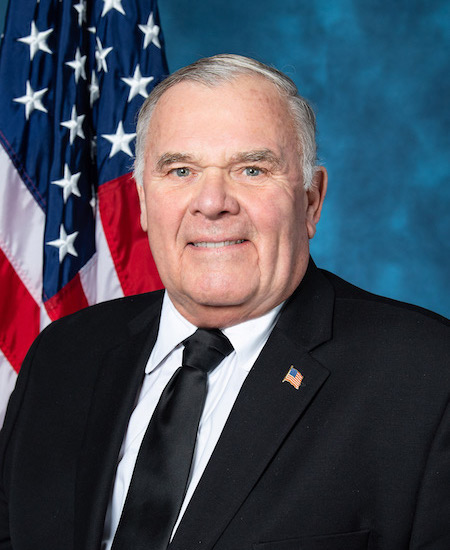
Rep. James R. Baird
Sponsored bills
Maddy summaryHR 361, the "Make Greenland Great Again Act," authorizes the President to begin negotiations with Denmark for the U.S. acquisition of Greenland starting January 20, 2025. It requires the President to submit any resulting agreement to specific congressional committees (Foreign Affairs and Foreign Relations) within five days, followed by a 60-day congressional review period. If Congress takes no action during that period, the agreement would automatically take effect. The bill does not change Greenland’s current status as part of Denmark’s Kingdom but proposes a diplomatic process for potential transfer. Note: This appears to be a symbolic or satirical proposal, as Greenland is an autonomous territory within Denmark’s Kingdom and not subject to unilateral acquisition.
Maddy summaryHR 283 authorizes the President, with coordination from the Secretary of State, to negotiate with Panama to reacquire the Panama Canal. The bill requires the President to submit a report to Congress within 180 days of enactment, detailing negotiation progress, challenges, and expected outcomes. This procedural bill focuses solely on initiating talks and reporting requirements, without specifying repurchase terms or funding. It directly affects U.S. executive branch actions and congressional oversight, not the canal’s current operations or Panama’s government.
Maddy summaryHR 256, the SAVE Act, prohibits the sale of petroleum products drawn from the U.S. Strategic Petroleum Reserve (SPR) to entities headquartered in specific countries listed under federal regulations or to any entity based in Russia. This law directly affects SPR sales by blocking transactions with companies from designated nations (as defined in 22 CFR §126.1) and all Russian entities. The key mechanism adds Section 170 to the Energy Policy and Conservation Act, requiring the Secretary to enforce this sales ban across all SPR-related transactions. The bill makes no changes to SPR stockpiling or other reserve operations, focusing solely on restricting sales to the specified entities.
Maddy summaryHR 327, the Valor Earned Not Stolen Act of 2025, increases criminal penalties for falsely claiming military medals or decorations. It raises the maximum prison sentence from one year to three years for fraudulent misrepresentation of receiving military decorations, the Congressional Medal of Honor, or combat badges under federal law. The bill also requires the Attorney General to study how individuals fraudulently obtain government benefits using fake military honors and report findings to Congress within 180 days. This law directly affects individuals who falsely claim military service honors and aims to address fraud in benefit programs.
Maddy summaryHR 274, the Sunset Chevron Act, requires the Government Accountability Office (GAO) to compile a list of federal court decisions that upheld agency rules using Chevron deference (a judicial practice deferring to agency interpretations of laws) and are still in effect. The bill mandates that the GAO publish this list within 180 days of enactment, organizing it by agency and assigning each rule a sunset date. The most recent rule from each agency expires 30 days after the list's publication, with earlier rules expiring 30 days after the prior rule’s sunset date. This creates an automatic expiration process for specific agency rules upheld under Chevron deference, directly affecting federal agencies whose rules are included in the GAO's list.
Maddy summaryThis bill allows disabled veterans with qualifying service-connected disabilities to use HOV lanes as single-occupant vehicles. It requires a special license plate, transponder, or other identification approved by the transportation authority. Disabled veterans meeting VA disability rating thresholds (defined in the bill) can use HOV lanes without paying tolls, bypassing standard occupancy rules. The law amends federal transportation code to add this exception for disabled veterans under specific identification and disability criteria.
Maddy summaryThis bill designates the U.S. Postal Service facility at 119 North Anderson Street in Elwood, Indiana, as the "Officer Noah Jacob Shahnavaz Post Office Building" to honor Officer Noah Jacob Shahnavaz. It updates all federal references - such as laws, maps, and documents - to use this new name for the building. The bill has no substantive policy changes beyond renaming the facility and does not affect any specific group or program.
Maddy summaryHR 7365, the VETS Safe Travel Act, provides free TSA PreCheck access to veterans with specific service-connected disabilities. It applies to veterans enrolled in VA healthcare who have lost or lost use of an extremity, experience paralysis, or have permanent blindness, requiring mobility aids like wheelchairs or prosthetics. The bill requires TSA and the VA to coordinate implementation within one year, including outreach to veterans about this benefit and reporting to Congress on progress.
Maddy summary# Summary of the EXPLORE Act Legislative Text This is a comprehensive legislative text (likely the "EXPLORE Act" - Enhancing Recreation Opportunities for People of All Abilities, and Veterans) that establishes several key initiatives to improve outdoor recreation access across Federal lands. ## Key Focus Areas: ### 1. Accessibility for People with Disabilities (Title II - Access America) - Requires comprehensive assessments of outdoor recreation facilities on Federal lands within 5 years - Mandates development of 3 new accessible trails per region for each agency (Forest Service, National Park Service, BLM, USFWS) within 1 year - Requires development of 2 new accessible recreation opportunities per region within 1 year - Requires making accessibility information available on public websites within 7 years - Requires development of accessible features including trail bridges, parking, and restrooms ### 2. Military and Veterans Programs - Requires educational materials for military members/veterans on accessing Federal lands free of charge within 2 years - Establishes Military Veterans Outdoor Recreation Liaisons within relevant agencies within 1 year - Requires a National Strategy for Military and Veteran Recreation within 1 year - Creates a pilot program for veteran employment in conservation positions - Promotes partnerships with organizations providing outdoor recreation for veterans ### 3. Youth Access - Requires a strategy to increase youth recreation visits to Federal lands within 2 years - Extends the "Every Kid Outdoors" program until September 30, 2031 - Focuses on increasing opportunities for underserved youth ### 4. Recreation Permitting Modernization (Title III) - Defines special recreation permits and establishes fee structures - Creates categories for different types of recreation permits - Establishes a process for application and review of permits - Includes provisions for multijurisdictional trips across different Federal lands The legislation aims to improve access to outdoor recreation for people with disabilities, veterans, and youth while modernizing the permitting process for recreational activities on Federal lands. It requires specific timelines for implementation and includes detailed definitions and requirements for each component of the bill.