

Maddy summaryHR 682, the Heartbeat Protection Act of 2025, prohibits physicians from performing abortions without first checking for a detectable fetal heartbeat according to standard medical practice and informing the patient of the results. It directly affects physicians and clinics performing abortions, requiring them to document heartbeat checks and comply with strict exceptions for life-threatening conditions, rape (with 48-hour documentation of counseling/treatment), or incest involving minors (with proof of prior report to authorities). Violations could result in fines or up to five years in prison, though the bill explicitly states it does not create or recognize a right to abortion. The law adds detailed documentation requirements for exceptions and mandates retention of medical records per federal health privacy rules.
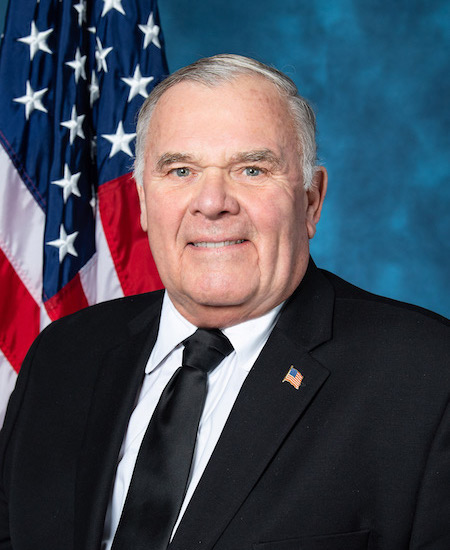
Rep. James R. Baird
Sponsored bills
Maddy summaryHR 587 removes the lesser prairie-chicken (all populations) from the federal lists of threatened and endangered species under the Endangered Species Act. It also permanently amends the law to prevent the U.S. Fish and Wildlife Service from ever listing the bird as threatened or endangered in the future. This bill directly affects the lesser prairie-chicken by ending its current legal protections under the Endangered Species Act. The key mechanism is a specific exclusion added to the Act’s listing authority, blocking any future federal protection for this species.
Maddy summaryHR 563 requires the Bureau of Alcohol, Tobacco, Firearms and Explosives (ATF) to destroy all firearm transaction records from discontinued businesses within 90 days of the law's enactment. It also amends a federal law to prevent future registration of such transactions by removing language that required these records to be delivered to the Attorney General. The bill mandates that the ATF submit a report to Congress detailing how many records were destroyed. This legislation directly affects ATF record-keeping procedures, not individual gun owners or firearm ownership rights.
This bill increases the annual limit on the tax credit for qualified railroad track maintenance expenses (also referred to as the short line railroad tax credit) and expands eligibility for claiming the credit. Under current law, the tax credit is limited each tax year to $3,500 multiplied by the sum of the number of miles of railroad track owned or leased by the taxpayer (miles owned or leased) and the number of railroad track miles assigned to the taxpayer by a Class II or III railroad (miles assigned). This bill increases the annual limit to $6,100 multiplied by the sum of miles owned or leased and miles assigned. The $6,100 amount used in the calculation of the tax credit limit is adjusted for inflation for tax years beginning after 2025. The bill also expands eligibility for the tax credit to include gross expenses for maintaining railroad tracks owned or leased as of January 1, 2024. Under current law, the tax credit is limited to gross expenses for maintaining railroad tracks owned or leased as of January 1, 2015.
Maddy summaryHR 507, the Veterans Member Business Loan Act, amends the Federal Credit Union Act to explicitly include loans made to veterans as qualifying "member business loans" under credit unions. This change directly affects veterans seeking business financing through federal credit unions, allowing them to access these loans under the same framework as other small business borrowers. The key mechanism is adding a new definition category ("made to a veteran") to the existing eligibility criteria for business loans, using the standard military definition of "veteran" from Title 38, U.S. Code. The bill does not create new funding or programs but expands existing credit union lending options to include veterans. This definition change takes effect six months after the bill's enactment.
Maddy summaryHR 404, the "Hearing Protection Act," reclassifies firearm silencers (devices that reduce gunfire noise) as firearms for federal tax and regulatory purposes. It imposes a 10% federal tax on silencers, requires the destruction of all existing federal silencer registration records within one year, and preempts state laws that tax or regulate silencers. The bill clarifies that silencers are treated as firearms under federal law, including for licensing and marking requirements, and defines "firearm silencer" to include specific components. Note: The bill’s title is misleading - it addresses firearm silencer regulation, not hearing protection for people.
Maddy summaryHR 450, the FORCE Act, prevents the U.S. government from removing Cuba from the State Sponsors of Terrorism list. It requires the President to make a specific determination under the 1996 LIBERTAD Act before Cuba can be removed. The bill directly affects Cuba's international designation status and U.S. foreign policy actions toward the country. It does not change existing law but blocks any removal until the specified determination is made. The provision applies to both the President and the Secretary of State.
Maddy summaryHRES 36 creates a new House committee, the Committee on the Elimination of Nonessential Federal Programs, to review and recommend cutting underperforming or unnecessary federal programs. The committee, composed of 14 members (including four from key committees and a bipartisan chair/vice chair), must annually report findings and propose specific legislation to eliminate targeted programs. It establishes expedited rules for such legislation, including a 10-hour debate limit and no amendments, while dissolving after the 120th Congress. This resolution directly affects House procedures and future budget decisions by streamlining program-cutting efforts.
Maddy summaryHR 342, the Honor Inauguration Day Act, requires the U.S. flag to be flown at its highest peak on every presidential Inauguration Day, overriding any conflicting laws. This procedural bill directly affects all federal buildings and properties where the flag is displayed on that specific day. It mandates a ceremonial flag display to "commemorate and celebrate" the presidential election process, as stated in the congressional findings. The bill makes no substantive policy changes but establishes a specific flag protocol for Inauguration Day.
Maddy summaryHR 332, the Travel Trailer and Camper Tax Parity Act, would amend the tax code to allow business owners to claim a tax deduction for financing travel trailers and campers used for recreation. Specifically, it adds these vehicles to the definition of "floor plan financing" by clarifying that trailers/campers designed for temporary living (recreational, camping, or seasonal use) qualify, if towed or attached to a motor vehicle. This change directly affects small businesses and owners who finance such vehicles for commercial use, aligning their tax treatment with other similar vehicles. The provision would take effect for tax years beginning after December 31, 2024.