

Maddy summaryThe DEFIANCE Act of 2025 creates a new civil legal remedy for victims of non-consensual intimate digital forgeries (synthetic images or videos manipulating real people into sexual contexts without consent). It allows affected individuals to sue perpetrators in federal court for damages up to $250,000, injunctions to remove content, and privacy protections like pseudonyms. The bill specifically covers cases where forgeries are created or shared with intent to disclose, including scenarios involving sexual assault or harassment. It expands existing federal protections under 15 U.S.C. 6851 to address digital forgeries while ensuring state laws remain in effect.
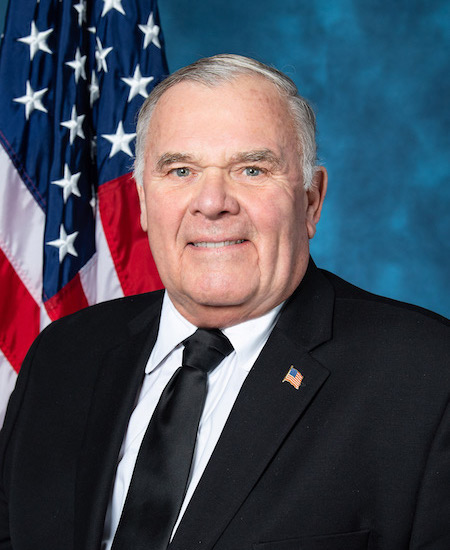
Rep. James R. Baird
Sponsored bills
Maddy summaryHR 513, the Offshore Lands Authorities Act of 2025, reverses multiple existing presidential protections that blocked oil and gas leasing on offshore federal lands. It nullifies 8 specific presidential withdrawals (including areas in the Arctic, Atlantic, Gulf of Mexico, and Pacific) and restricts future presidential actions by limiting withdrawals to 150,000 acres per action, capping them at 20 years, and requiring Congressional approval for cumulative withdrawals exceeding 500,000 acres. The bill mandates that before any withdrawal, the Secretary must complete four assessments covering mineral resources, economic/energy value, revenue impacts, and national security. It also establishes a fast-track process for Congress to disapprove withdrawals within 20 days, with limited debate (10 hours) on the resolution.
Maddy summaryHR 3452, the "Six Assurances to Taiwan Act," formally codifies six longstanding U.S. policy commitments regarding Taiwan that were established in 1982. It reaffirms that the U.S. has never agreed to set a date for ending arms sales to Taiwan, consult with China on such sales, mediate between Taiwan and China, revise the Taiwan Relations Act, take a position on Taiwan's sovereignty, or pressure Taiwan to negotiate with China. The bill’s key mechanism requires the President to notify Congress before taking any action that could alter these assurances, giving Congress 30 days (or 60 days during a specific period) to review proposals through a joint resolution process. This applies to actions like pausing arms sales, negotiating with China on arms, or changing U.S. policy on Taiwan’s status. The bill directly affects U.S. executive branch decisions on Taiwan policy and Congressional oversight authority.
Maddy summaryThis resolution blocks a Department of Energy rule that would have set new energy efficiency standards for gas-fired instant water heaters. It prevents the rule from taking effect, meaning appliance manufacturers would not have to meet the proposed efficiency requirements. The rule, submitted in December 2024, directly affected manufacturers of these water heaters and consumers purchasing them. Congress approved this disapproval through a joint resolution passed on May 9, 2025.
Maddy summaryThis bill allows U.S. Representatives and Senators to use space within Department of Veterans Affairs (VA) facilities for meetings with veterans who are their constituents. It requires the VA Secretary to establish clear rules within 90 days, including that meeting spaces must be visible, accessible during business hours, and rented at rates similar to commercial office space in the area. The bill prohibits political campaigning, recording veterans without consent, or using VA spaces during the 60 days before federal elections. It directly affects veterans seeking in-person help from their representatives and the VA facilities managing these access points. The key change is creating a formal, regulated process for congressional access to VA locations, not altering veterans' benefits or policies.
Maddy summaryHR 3208, the "No Official Palestine Entry Act of 2025," prevents U.S. funding for United Nations agencies that grant Palestine any status, rights, or privileges beyond its current observer status. The bill amends two existing laws to replace the phrase "full membership" with "any status, rights, or privileges beyond observer status" in funding restrictions. This directly affects U.S. government decisions on contributing to UN agencies if Palestine's standing is upgraded. The policy change specifically targets funding eligibility, not direct impacts on Palestinian citizens or officials. The bill explicitly excludes Taiwan from its provisions.
Maddy summaryThis bill expands access to employee ownership by modifying the Small Business Act to allow S corporations owned by employee stock ownership plans (ESOPs) to retain small business status, even when an ESOP owns over 49% of the company. It creates a new Treasury Department office to provide education and technical assistance for S corporations establishing ESOPs, and establishes a Labor Department Advocate for Employee Ownership to coordinate outreach and resolve disputes. These changes directly affect S corporations transitioning to ESOP ownership and their employees, who gain retirement benefits through ESOP accounts. The bill aims to increase employee ownership by removing eligibility barriers and improving support for businesses adopting this model.
Maddy summaryThis bill amends federal law to allow qualified active and retired law enforcement officers who already meet specific certification standards (under sections 926B and 926C) to carry concealed firearms in school zones while on duty. It removes the existing prohibition that prevented such officers from carrying concealed weapons in school areas, but only for those already authorized under current law. The change applies solely to officers with pre-existing authorization, not to all police or new categories of personnel. It does not alter school safety requirements for other individuals or create new exceptions.
Maddy summaryThe Strengthening Local Processing Act of 2025 provides targeted support to small and very small poultry and meat processing businesses (defined by a 1996 rule). It creates a free, searchable database of safety validation studies and scale-appropriate model food safety plans for these businesses, and increases federal funding for state inspection programs from 50% to 65%. The bill establishes a grant program offering up to $500,000 per grant to help small processors improve safety, expand capacity, and build resilience. Additionally, it funds training programs to develop workforce skills in meat and poultry processing through partnerships with educational institutions.
Maddy summaryHR 2326, the Dietary Guidelines Reform Act of 2025, requires the U.S. Department of Agriculture (USDA) and Health and Human Services (HHS) to update the Dietary Guidelines for Americans at least every 10 years, instead of the previous 5-year cycle. The bill mandates guidelines be based on "significant scientific agreement" through evidence-based reviews, include input from an Independent Advisory Board (with specific member requirements and conflict-of-interest disclosures), and exclude topics like taxation or social policies. It also requires the Secretaries to notify Congress 90 days before updates and assign evidence strength ratings to each guideline. These changes directly affect the federal agencies responsible for creating the guidelines and the public who rely on them for health guidance.