

Maddy summaryHR 4083, the Marshall “Major” Taylor Congressional Gold Medal Act, authorizes the posthumous presentation of a Congressional Gold Medal to honor cyclist Marshall Walter "Major" Taylor (1878-1932), recognizing his pioneering achievements as a Black athlete who broke racial barriers in professional cycling during the late 19th and early 20th centuries. The bill directs the Secretary of the Treasury to strike the medal with his name and image, to be presented to Taylor’s great-granddaughter, Karen Donovan. It also permits the sale of bronze duplicates to cover costs, classifying all medals as national commemorative items under U.S. law. This is a ceremonial bill with no policy changes, solely focused on commemorating Taylor’s legacy.
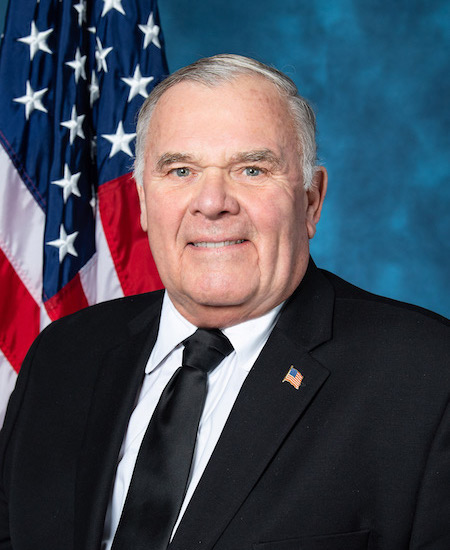
Rep. James R. Baird
Sponsored bills
Maddy summaryHR 4081, the Foreign Adversary Federal Offense Act of 2025, increases penalties for economic espionage and defense information offenses committed to benefit nations designated as adversaries by the U.S. government. It adds mandatory minimum 10-year prison terms (up to 20 years for severe harm) and fines up to $5 million for individuals, while imposing organizational fines of up to $20 million or 5 times the value of stolen trade secrets. The law specifically targets offenses involving critical infrastructure data - such as security vulnerabilities of systems covered under the USA PATRIOT Act - that could cause significant harm if exploited. This directly affects individuals and organizations convicted of sharing U.S. economic or defense secrets with foreign adversaries.
Maddy summaryThe STOP CSAM Act of 2025 would strengthen protections for child victims and witnesses in federal court by creating a new definition of "covered person" to include minors under 18 who are victims or witnesses of abuse, exploitation, or kidnapping. The bill requires internet service providers to report apparent child sexual exploitation to the CyberTipline within 60 days, with civil penalties of $50,000-$250,000 per violation and criminal fines up to $1 million for non-compliance. It also creates new civil remedies allowing victims to sue platforms that host or promote child sexual exploitation, with minimum $300,000 in damages. Additionally, large platforms would be required to submit annual reports to the Attorney General and FTC detailing their safety measures and child exploitation on their platforms.
Maddy summaryHR 3783, the Plant Biostimulant Act of 2025, defines "plant biostimulant" as substances or microorganisms that improve plant growth, nutrient use, and stress tolerance without relying on nutrient content. It amends the Federal Insecticide, Fungicide, and Rodenticide Act to create this new category, excluding products primarily intended as nutrients or plant regulators. The bill requires the EPA to update regulations within 120 days and directs the Secretary of Agriculture to conduct a two-year study on how biostimulants improve soil health, reduce runoff, and support climate benefits like carbon sequestration. This directly affects farmers using biostimulants, manufacturers of these products, and federal agencies regulating agricultural inputs.
Maddy summaryHR 649, the Whole Milk for Healthy Kids Act of 2025, amends the National School Lunch Act to allow schools participating in the program to offer students both organic and non-organic whole milk, in addition to reduced-fat, low-fat, and fat-free options. Key provisions include clarifying that milk fat in whole milk should not count toward saturated fat limits for meal compliance, prohibiting schools from purchasing milk from Chinese state-owned enterprises, and ensuring schools cannot be barred from offering the full range of milk types listed. The bill directly affects public and private schools serving the National School Lunch Program by expanding their milk options for students. It focuses on concrete policy changes to dietary offerings and sourcing restrictions within the school nutrition program.
Maddy summaryHR 3707, the NSF and USDA Interagency Research Act, requires the U.S. Department of Agriculture (USDA) and the National Science Foundation (NSF) to coordinate research efforts through formal agreements. It directs them to jointly fund collaborative projects focused on agricultural challenges, food security, rural economic development, and emerging technologies like AI and precision agriculture. The bill establishes mechanisms for awarding grants to universities, community colleges, and nonprofits to create centers for agricultural research and workforce development, while mandating annual reports to Congress on coordination progress. This legislation directly affects USDA, NSF, and institutions seeking federal research funding in agricultural science.
Maddy summaryHR 3694, the VALID Act of 2025, requires lenders to include specific information about VA loans in mortgage disclosures. It amends the National Housing Act to mandate that disclosures state the loan-to-value ratio and clarify that VA loans are available under Chapter 37 of Title 38 (veterans' benefits law), assuming prevailing interest rates. The bill also requires the Federal Housing Finance Agency to add a military service question to the Uniform Residential Loan Application form, placing it above the signature line within six months of enactment. This directly affects veterans and active-duty service members applying for VA-guaranteed mortgages, as well as the lenders processing those applications.
Maddy summaryHR 3608, "Connor’s Law," requires commercial motor vehicle operators (like truck and bus drivers) to read and speak English well enough to converse with the public, understand English traffic signs, respond to officials, and complete reports. The bill adds this language requirement to existing federal safety rules for commercial drivers. Drivers found noncompliant with this rule would face an "out of service" order, meaning they cannot operate their vehicle until they meet the requirement. This directly affects commercial drivers operating in the U.S. under federal safety regulations.
Maddy summaryHR 3583 requires funeral honors details presenting a folded U.S. flag to military members or veterans at funerals to recite the 13 specific "Folds of Honor" with their symbolic meanings (e.g., "The 1st fold is a symbol of life"). This applies to flag presentations under federal law for deceased service members or veterans, directly affecting military funeral honors teams. Families may opt out of the recitation if they choose, per the bill's exception clause. The bill adds this requirement to U.S. Code without changing existing funeral procedures.
Maddy summaryHR 1701, the Strategic Ports Reporting Act, requires the State and Defense Departments to map global ports critical to U.S. national security and economic interests, including identifying Chinese government or company efforts to control such ports. It mandates a comprehensive study on Chinese activities at strategic ports - such as promoting products like LOGINK and setting industry standards - and assesses how Chinese control could harm U.S. interests. The departments must submit a detailed, unclassified report to Congress within one year, including lists of ports controlled by China or the U.S., vulnerability assessments, and a strategy for securing trusted investments in port infrastructure. The report will also evaluate costs for replacing Chinese products and identify funding sources for U.S. alternatives.