Maddy summaryThis bill directs the U.S. President to identify Pakistani officials responsible for undermining democracy and human rights within 180 days of enactment, then impose Global Magnitsky sanctions on them. It targets senior government, military, or security officials found to have committed gross human rights violations or interfered with democratic processes, such as during Pakistan’s 2024 elections or through constitutional changes. Sanctions would include asset freezes and travel bans, with exceptions for humanitarian aid, UN obligations, and national security activities. The bill expires on September 30, 2030, and aims to pressure Pakistan to uphold democratic norms, human rights, and judicial independence.
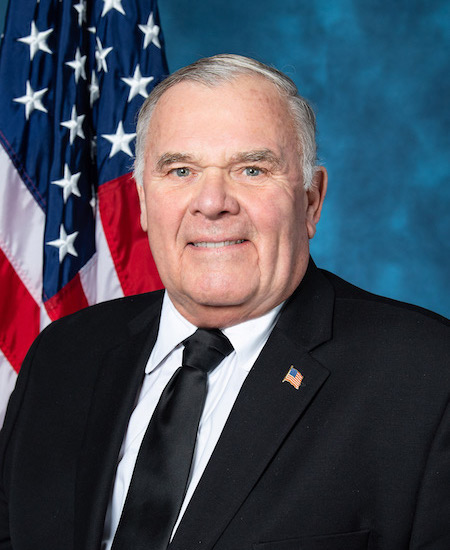
Rep. James R. Baird
Sponsored bills
Maddy summary# Summary of the Weather Act Reauthorization Act of 2025 This comprehensive legislation reauthorizes and modernizes the National Oceanic and Atmospheric Administration's (NOAA) weather and climate programs through 2030, with several key focuses: ## Core Program Reauthorizations - **Commercial Data Program** ($100M annually): Establishes a formal program to acquire weather/environmental data from private sector entities, including standards, prioritization, and data assimilation practices - **Commercial Data Pilot Program** (15% of Commercial Data Program funds): Tests and evaluates private sector data for use in NOAA operations - **Advanced Weather Interactive Processing System**: Requires transition to cloud-based operations by 2030 to enable more flexible workforce ## Hazard Communication Improvements - **Hazardous Weather Risk Communication Program**: Focuses on simplifying and improving communication of weather hazards through social, behavioral, and risk science research - **Post-Storm Surveys**: Requires systematic surveys after significant weather events, with emphasis on vulnerable populations - **NOAA Weather Radio Modernization**: Expands coverage, enhances reliability, and transitions to internet protocol-based communications ## Operational Modernization - **National Weather Service Workforce**: Includes hiring assessments, health/morale evaluations, and designation of service hydrologists - **Aviation Weather Program**: Enhances turbulence forecasting, data acquisition, and coordination with the Federal Aviation Administration - **Data Management**: Establishes consistent data standards, infrastructure, and sharing practices across NOAA ## Specialized Programs - **Atmospheric Rivers Forecast Improvement Program**: Focuses on improving forecasts of atmospheric rivers that impact the western U.S. - **Coastal Flooding and Storm Surge Program**: Improves coastal inundation forecasting and warning systems - **National Integrated Drought Information System**: Enhances drought monitoring and forecasting capabilities - **National Mesonet Program**: Expands environmental observation networks across the U.S., with 15% of funds for financial assistance to state/local entities - **National Coordinated Soil Moisture Monitoring Network**: Supports soil moisture monitoring for agricultural and drought management - **Precipitation Forecast Improvement Program**: Aims to improve precipitation forecasting across all timescales ## Funding The bill authorizes significant funding across these programs, with annual appropriations ranging from $10M to $70M depending on the program, for fiscal years 2026-2030. The legislation represents a major effort to modernize NOAA's infrastructure, improve weather communication to the public, and better integrate commercial data sources while maintaining NOAA's leadership in weather and climate science.

Maddy summaryThis bill amends the Social Security Act to remove an exclusion for rural facilities primarily treating mental health conditions from Medicare coverage. It specifically changes Section 1861(aa)(2) by deleting the phrase "or a facility which is primarily for the care and treatment of mental diseases," allowing these facilities to qualify for Medicare reimbursement. The change directly affects rural behavioral health centers specializing in mental health care that were previously excluded. The amendment takes effect on January 1, 2027, enabling these facilities to access federal Medicare funding for services.
Maddy summaryThis bill changes federal rules for rural healthcare facilities that employ physician assistants (PAs) and nurse practitioners (NPs). It requires these facilities (not run by a physician) to have arrangements consistent with state laws governing PA/NP practice, ensuring services follow state regulations. The policy directly affects rural clinics and hospitals seeking federal reimbursement for PA/NP services. The changes take effect January 1, 2027, aligning federal requirements with existing state oversight of these healthcare providers.
Maddy summaryHR 5198, the Rural Health Clinic Location Modernization Act of 2025, changes Medicare eligibility rules for rural health clinics by updating the definition of "urban area" used to determine clinic qualification. It replaces the current "urbanized area" standard with a clearer definition: any urban area (per Census Bureau data) having a population of 50,000 or more. This adjustment directly affects clinics seeking Medicare certification, ensuring they meet consistent geographic criteria for rural designation. The change takes effect January 1, 2027, aiming to simplify qualification rules without altering Medicare coverage or benefits.
Maddy summaryHR 5156, the COUNT Act, requires federal agencies to share specific immigration and demographic data with the Department of Commerce to improve national citizenship statistics. It mandates agencies like DHS, SSA, and HHS to provide access to records including immigration files, passport applications, and Medicaid data, while directing the Census Bureau to add a citizenship question to the 2030 census and American Community Survey. The bill also directs the Commerce Department to seek state administrative records for citizenship data and requires annual reports to Congress on state cooperation. This directly affects federal and state agencies by altering data-sharing protocols for immigration and citizenship tracking.
Maddy summaryHR 5023, the Fentanyl Kills Act, redefines "trafficked fentanyl" to broadly cover activities like producing, distributing, financing, or transporting illicit fentanyl, its precursors, or related substances - both domestically and internationally with intent to distribute in the U.S. It directly affects individuals involved in fentanyl trafficking by automatically classifying such offenses as "attempted murder" under existing federal law. The bill adds specific definitions for trafficking activities (including manufacturing, distributing, or possessing intent) and mandates that convicted traffickers face penalties under murder statutes. This changes sentencing by treating fentanyl trafficking as an attempted homicide, increasing penalties for those involved in the supply chain.
Maddy summaryThe Biomanufacturing and Jobs Act of 2025 aims to strengthen the U.S. biobased products industry by increasing federal procurement of products made from renewable agricultural resources like corn and soybeans. It establishes new definitions for biobased terms, creates a Biobased Task Force within the Department of Agriculture to coordinate research and promotion, and requires federal agencies to update procurement systems to identify biobased products and train staff on their purchase. The bill mandates annual reporting on procurement progress, creates a labeling system for biobased products, and requires the Department of Agriculture to conduct public education on biobased products. This legislation directly affects farmers, biobased manufacturers, and federal procurement agencies, with the goal of supporting rural economic development.
Maddy summaryHR 4863, the Fairness for Khobar Act of 2025, provides lump sum catch-up payments to victims of the 1983 Beirut barracks bombing and 1996 Khobar Towers bombing who were previously denied compensation due to confusing Department of Justice guidance. The bill requires the Special Master to authorize these payments to individuals who relied on outdated guidance stating they could not apply for lump sum payments if already eligible for regular distributions. Victims can prove their reliance through documentation, sworn statements, or other methods approved by the Special Master. Payments will be made from a reserve fund or the main compensation fund, ensuring those who were wrongly excluded can now receive full compensation they were entitled to under the law.
Maddy summaryHR 4780 (USTRx Act) creates a new Chief Pharmaceutical Trade Negotiator within the U.S. Trade Representative's office to address foreign government drug pricing policies. The bill requires annual reports assessing whether high-income countries' pharmaceutical pricing practices are unfair, non-market-based, or deny U.S. market access. If such practices are found, the USTR must submit a response plan within 30 days to Congress. This bill directly affects U.S. pharmaceutical manufacturers and consumers by aiming to ensure foreign governments pay their "fair share" for drug innovation developed in the U.S.