

Maddy summaryThis bill requires states to connect foster youth aged 18-21 who are pregnant or parenting with home visiting programs and support services under existing federal law. It mandates that states certify they have systems to inform these youth about evidence-based home visiting services and provide tailored case management to help them access resources. The law directly affects expectant and parenting foster youth in care by expanding access to health, parenting, and stability services. Key provisions amend federal law to ensure these youth receive coordinated support through state child welfare systems. The changes take effect one year after enactment for new service plans.
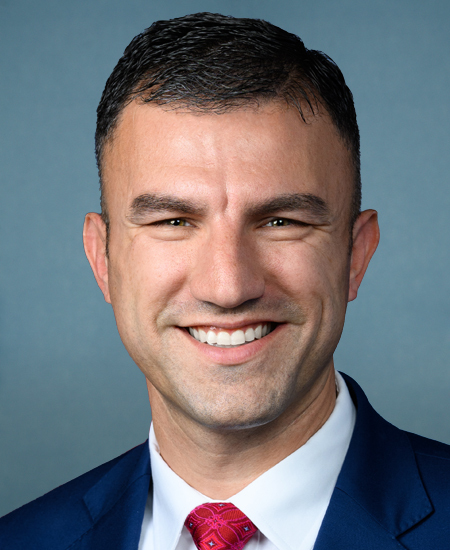
Rep. Rudy Yakym III
Sponsored bills
Maddy summaryThis bill proposes to allow taxpayers to deduct interest payments on loans used to purchase certain vehicles, including cars, trucks, motorcycles, and recreational vehicles. The legislation defines eligible vehicles as those with fewer than 14,000 pounds gross vehicle weight rating or those designed for temporary living quarters like campers and trailers. These tax benefits would only apply to debts incurred after December 31, 2025, expanding the current rules that previously excluded most vehicle loans from interest deductions.
Maddy summaryHR 2424, the Modern, Clean, and Safe Trucks Act of 2025, repeals a 12% federal excise tax on new heavy trucks, tractors, and trailers. This tax currently adds significant costs - $7,000+ for trailers, $20,000+ for clean diesel trucks, and up to $50,000 for advanced technology trucks - discouraging replacement of older, less efficient vehicles. The bill directly affects truck manufacturers, dealers, and fleet operators by removing this cost barrier, making newer, cleaner models more affordable. It aims to accelerate the adoption of modern trucks with improved safety and environmental features, particularly benefiting electric and alternative-fuel vehicles that face higher upfront costs.
Barcode Automation for Revenue Collection to Organize Disbursement and Enhance Efficiency Act or the BARCODE Efficiency Act This bill requires the Internal Revenue Service (IRS) to use barcodes, barcode scanning technology, and optical character recognition (or similar) technology to digitize certain federal tax return information and correspondence, unless the technology is slower or less reliable than other IRS processes (subject to conditions). Specifically, the bill requires a scannable barcode on electronically-prepared federal tax returns that are printed and filed in paper format with the IRS. The bill also requires the IRS to use barcode scanning technology to convert data included on such returns into an electronic format. Further, the bill requires the IRS to use optical character recognition (or similar) technology to transcribe federal tax returns and correspondence received by the IRS that are not prepared electronically and are received in paper format. However, under the bill, the use of barcodes, barcode scanning technology, and optical character recognition (or similar) technology is not required if (1) such technology is slower or less reliable than manual transcription or any other IRS process, and (2) the IRS provides a report to Congress regarding the determination to not use such technology.
Maddy summaryThis bill modifies state unemployment programs to help job seekers start businesses. It removes the requirement that participants must first exhaust regular unemployment benefits before accessing self-employment assistance. States must now approve business plans or require entrepreneurial training/counseling for participants, who must also certify weekly participation. The bill also raises the cap on program participants from 5% to 10% of unemployed individuals. These changes aim to expand access to business ownership support through state unemployment systems.
Clergy Act This bill establishes a two-year window for certain members of the clergy and Christian Science practitioners to revoke their exemption from Social Security and Medicare taxes on ministerial earnings. Under current law, such individuals who object to participation in public insurance programs on religious or conscientious grounds may apply to the Internal Revenue Service (IRS) for an irrevocable exemption and will not receive Social Security or Medicare benefits in retirement unless they have qualifying credits from other employment. The IRS must develop a plan to inform members of the clergy and Christian Science practitioners of their eligibility to revoke prior exemptions, pursuant to the bill's changes.
Maddy summaryThis House Resolution recognizes the efforts and public safety contributions of linemen and the important role they play in maintaining the nation's energy infrastructure. It expresses support for designating April 18, 2026, as "National Lineman Appreciation Day" and acknowledges linemen as first responders.
Maddy summaryThe Stop Climate Shakedowns Act of 2026 prohibits state and local governments from suing energy companies for damages related to climate change or greenhouse gas emissions. This bill declares that regulating emissions is exclusively a federal responsibility and voids any state laws that hold energy businesses liable for alleged climate harms. Consequently, all pending lawsuits of this nature against energy producers must be dismissed immediately, preventing states from imposing retroactive penalties for past lawful operations. The legislation directly affects companies involved in the production, refinement, and sale of oil, gas, and coal by shielding them from civil liability in both state and federal courts.
Maddy summaryThe KIDNEY Remote Monitoring Act (H.R. 8319) aims to ensure Medicare payment for remote physiologic monitoring services provided to individuals with end-stage renal disease (ESRD) who receive home dialysis. The bill amends the Social Security Act to direct that these monitoring services, when furnished by a physician, will be paid for under Medicare Part B. This change would take effect for services provided on or after January 1, 2028, aligning their payment with the standard fee schedule for physician services.
Maddy summaryThis bill, titled the Trump Accounts for All Generations Act, makes a specific program related to "Trump accounts" permanent and adjusts its contribution limits. It directly affects individuals who contribute to these accounts by altering their long-term availability and value. The legislation permanently extends the "Trump accounts" contribution program by removing its scheduled expiration date of January 1, 2029. Furthermore, it introduces an annual inflation adjustment for the program's $1,000 contribution amount, beginning in taxable years after 2028. The bill also removes the word "pilot" from the program's title and related sections of the tax code, formally establishing it as an ongoing program.