

Maddy summaryThis bill requires the Federal Housing Finance Agency (FHFA) to revert mortgage guarantee fees for single-family homes to the rates in effect before May 1, 2023, effectively undoing a 2023 fee increase. It prohibits fees based on a borrower’s debt-to-income ratio and restricts future fee adjustments without following standard federal rulemaking procedures. The bill directly affects mortgage borrowers (particularly middle-class homeowners) and lenders who pay these fees, as it changes how mortgage finance agencies charge for loan guarantees. A GAO study will also examine the FHFA’s previous fee changes and their economic impact, with a report due within 14 months.
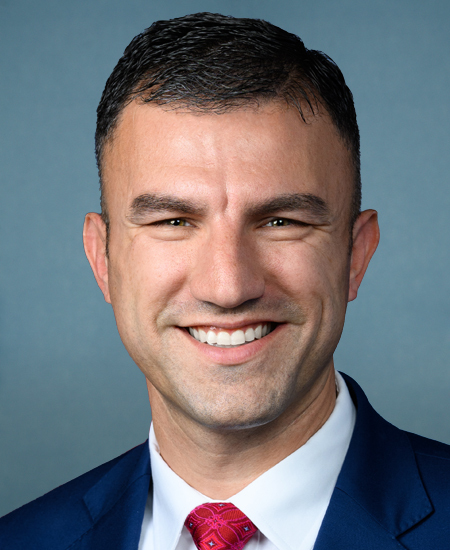
Rep. Rudy Yakym III
Sponsored bills
Maddy summaryHRES 563 is a symbolic resolution recognizing Vice Admiral Sean Buck for his 44 years of military service. It honors his career, including his role as Superintendent of the U.S. Naval Academy and his retirement on July 7, 2023, while highlighting his family military legacy and awards. The resolution has no policy impact - it is purely ceremonial, expressing the House’s commendation without creating new laws or affecting any individuals or programs. It directly acknowledges Buck’s service to the nation and Indiana, where he was born and attended high school.
Maddy summaryHR 4378, the SMART Energy Efficiency Standards Act, amends the Energy Policy and Conservation Act to change when efficiency standards apply to certain appliances. It shifts the compliance date from when a product is installed to when it is manufactured or imported into the U.S. This directly affects appliance manufacturers and importers of furnaces, central air conditioners, and heat pumps. The bill ensures these products meet federal efficiency standards at the point of entry into the U.S. market, rather than when installed by consumers.
Maddy summaryHRES 535 is a symbolic resolution designating November 12, 2023, as "National Warrior Call Day" to raise awareness about veterans' mental health and connection to support systems. It does not create new programs or funding but encourages Americans to call veterans or military members for meaningful conversation and to connect them with resources. The resolution cites rising veteran suicide rates (6,261 in 2019) and aims to address isolation through public engagement. It directly affects veterans, active-duty service members, and first responders by promoting community support. This is a non-binding awareness measure with no concrete policy changes.
Maddy summaryHR 4323 delays any changes to the National Oceanic and Atmospheric Administration's (NOAA) current rule limiting ship speeds to protect North Atlantic right whales. The bill requires NOAA to wait until two conditions are met: (1) new whale protection protocols from the 2022 Coast Guard Act are fully developed and deployed, and (2) the Secretary submits a report to four congressional committees detailing how those protocols will shape future rule updates. This directly affects NOAA's regulatory authority and vessel operators who must follow the existing speed rules. The law does not change the current rule but pauses any amendments until these specific steps are completed.
Maddy summaryThe Consensual Donation and Research Integrity Act of 2023 requires entities that buy and sell human bodies or body parts for education, research, or medical training (not for transplants) to register with the federal government. It mandates detailed record-keeping for each donation - including donor consent documentation, medical history, and chain-of-custody tracking - and sets strict labeling and packaging rules to include donor names, cause of death, and health information. The law restricts how donor information can be used and requires proper disposal of remains, while exempting organ transplant networks, funeral homes, and medical schools from registration. Violations may result in fines or loss of registration.
Maddy summaryHJRES 44 is a congressional resolution seeking to block a 2021 rule by the Bureau of Alcohol, Tobacco, Firearms, and Explosives (ATF). The rule classified firearms with stabilizing braces as "short-barreled rifles," which would have required additional licensing and regulation. This resolution uses a specific legal process (under Title 5, U.S. Code) to formally disapprove the ATF rule, meaning the rule would no longer be in effect. It directly affects firearm owners, manufacturers, and dealers who would have been subject to the rule’s requirements.
Maddy summaryHJRES 45 is a congressional disapproval resolution targeting a specific Department of Education rule about federal student loans. It seeks to block the rule implementing "One-Time Federal Student Loan Debt Relief" (including modifications to Perkins, FFEL, and Direct Loan programs) by invoking the Congressional Review Act. If passed, this resolution would nullify the rule, preventing the Department of Education from using it to modify or waive student loan obligations. The bill directly affects borrowers who might have qualified for debt relief under the targeted rule.
Maddy summaryHR 277 would require Congress to approve major federal regulations before they take effect. Major rules are defined as those with significant economic impact ($100 million+ annually), major cost increases for consumers or industries, or significant adverse effects on competition, employment, or innovation. Agencies must submit detailed information about these rules to Congress, including cost-benefit analyses, before they can take effect. Congress would have 70 session days to approve the rule with a joint resolution; if they don't act within that timeframe, the rule would not take effect. This would increase congressional oversight of federal regulations and require more detailed information about proposed rules before they become law.
Maddy summaryThe FAIR Act (HR 4144) establishes a new income-driven repayment assistance plan that would limit borrowers' monthly payments to 10% of their adjusted gross income, with full loan forgiveness after 20 years of payments. It requires the Department of Education to provide borrowers with multiple notifications about repayment options, including the new income-driven plan, and creates new deferment options for borrowers facing economic hardship, medical issues, or military service. The bill modifies loan rehabilitation processes to allow borrowers to rehabilitate loans two times instead of one time and limits the Secretary's authority to issue regulations that could increase subsidy costs. This legislation directly affects borrowers of federal student loans made under Title IV of the Higher Education Act of 1965.