

Maddy summaryHR 7478, the PROTECT Jewish Student and Faculty Act, amends the Higher Education Act to require colleges and universities receiving federal funds to take specific steps against antisemitism. The bill mandates that these institutions include the International Holocaust Remembrance Alliance's definition of antisemitism in all campus conduct documents and explicitly state that antisemitic conduct by students may lead to expulsion, while antisemitic conduct by employees may result in termination. This directly affects all institutions covered under the Higher Education Act by imposing new requirements for policy documentation and disciplinary consequences. The key mechanism is the mandatory inclusion of the IHRA definition and clear statements of penalties, aiming to standardize how institutions address antisemitism on campus.
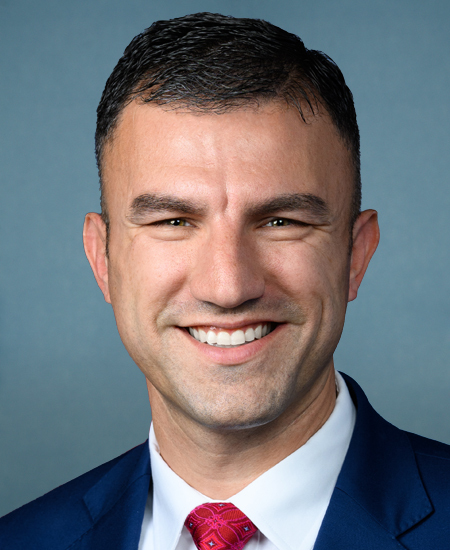
Rep. Rudy Yakym III
Sponsored bills
Maddy summaryThe Uyghur Policy Act of 2023 establishes a U.S. Special Coordinator for Uyghur Issues within the State Department to coordinate policy and advocate for the protection of Uyghur cultural, religious, and linguistic identity in Xinjiang. It authorizes $250,000 annually for Uyghur human rights advocates to speak at public diplomacy events in Muslim-majority countries and mandates Uyghur language training for U.S. diplomats. The bill also directs the U.S. government to support United Nations monitoring of Xinjiang human rights issues and oppose efforts to block discussions of Xinjiang at the UN. These provisions focus on diplomatic advocacy and information-sharing, not direct sanctions or enforcement actions against China.
Maddy summaryHR 7450, the Protecting Privacy in Purchases Act, prohibits payment card networks and covered entities (like payment processors) from requiring or assigning merchant category codes that specifically identify firearms retailers as different from general stores or sporting goods retailers. This directly affects firearms retailers and payment networks by preventing them from using business classification codes that could flag firearm sales. The bill establishes an enforcement process where the Attorney General investigates complaints, issues remediation notices, and can seek court injunctions for non-compliance, while preempting state or local laws on this issue. It does not create private lawsuits for individuals.
Maddy summaryThis bill allows law enforcement officers, firefighters, and emergency medical personnel (covered employees) to sue their public safety employers if they face termination or other punishment for expressing personal opinions about work-related issues. It specifically protects speech on topics like public safety service delivery, pay/benefits, working conditions (including equipment), workplace policies, and even political/religious views. However, the protection does not cover on-duty speech, speech advocating violence or discrimination, disclosure of confidential information, or threats to withhold essential services. The law creates a new legal remedy but explicitly states it does not override existing federal or state civil rights laws.
Maddy summaryHR 7366 requires U.S. Customs and Border Protection (CBP) to publish monthly border encounter data on its public portal by the 7th of each month. This affects CBP directly, as it mandates the timely release of data on encounters at the border during the previous month. The bill also includes a penalty: if CBP misses this deadline, funding for the Office of the Secretary of Homeland Security is reduced by 25% for the following month. The law focuses on ensuring transparency in border data reporting through specific deadlines and financial consequences.
Maddy summaryHRES 966 is a symbolic resolution condemning alleged sexual violence committed by Hamas during its October 7, 2023, attack on Israel. It specifically references eyewitness accounts, forensic evidence, and Hamas fighters' admissions of ordering gang rape, sexual mutilation, and assault against Israeli civilians. The resolution calls for international condemnation of such acts as weapons of war, urges nations to criminalize sexual violence, and supports investigations into Hamas' actions. As a non-binding resolution, it does not create new laws or directly affect any individuals but formally expresses the House's position on the issue.
Maddy summaryHR 7349, the Safe Passage on Interstates Act of 2024, makes it a federal crime to intentionally obstruct interstate highways. The bill prohibits deliberately slowing traffic, standing near vehicles, or endangering vehicle movement on interstate highways with the intent to block normal use. Violators face fines up to $15,000 and prison sentences up to 20 years, with harsher penalties for obstructing emergency vehicles or causing death. This law directly affects individuals who intentionally disrupt interstate traffic flow, aiming to protect the free movement of vehicles on the national highway system. The bill adds this new criminal provision to federal law without changing existing state traffic regulations.
Maddy summaryHJRES 114 is a joint resolution seeking congressional disapproval of a Federal Highway Administration (FHWA) rule that would have required tracking greenhouse gas emissions as part of assessing performance for the National Highway System. The rule, published in the Federal Register in December 2023, aimed to establish specific metrics for evaluating highway system performance, including emissions data. If approved, this resolution would nullify the rule, preventing the FHWA from implementing the emissions tracking requirement. This action directly affects how the FHWA measures highway system performance, specifically regarding environmental metrics.
Maddy summaryH.J.Res. 113 proposes a constitutional amendment requiring the federal government to balance its annual budget. It would limit total annual spending to the average revenue from the previous three years (adjusted for population and inflation), excluding debt payments and borrowing. Congress could temporarily exceed this limit for one year with a two-thirds vote if declaring a specific emergency. The amendment would take effect after ratification by 38 states (three-fourths of states), with a phased reduction in excess spending over nine years. This would directly affect all federal spending decisions made by Congress and the executive branch.
Maddy summaryThis bill appropriates over $15 billion in supplemental funding for U.S. security assistance to Israel following attacks in Israel. It includes specific allocations such as $5.2 billion for Israel's Iron Dome, David's Sling, and Iron Beam defense systems, as well as funds for military personnel, operations, and equipment across all branches of the military. The bill requires the Secretary of Defense and Secretary of State to submit regular reports to Congress detailing security assistance provided to Israel and designates all funding as "emergency requirements" under federal law. This funding directly supports U.S. security assistance programs with Israel to respond to regional security threats.