

Maddy summaryThis resolution (HRES 335) is a symbolic gesture by the House of Representatives to recognize existing home visiting programs. It supports designating the week of April 21-25, 2025, as "National Home Visiting Week" to highlight the work of these programs. The resolution cites statistics showing these programs served over 139,000 parents and children in 2023, emphasizing their role in promoting child development and family well-being. It does not create new policy or funding but aims to raise awareness about established community services that assist families with young children.
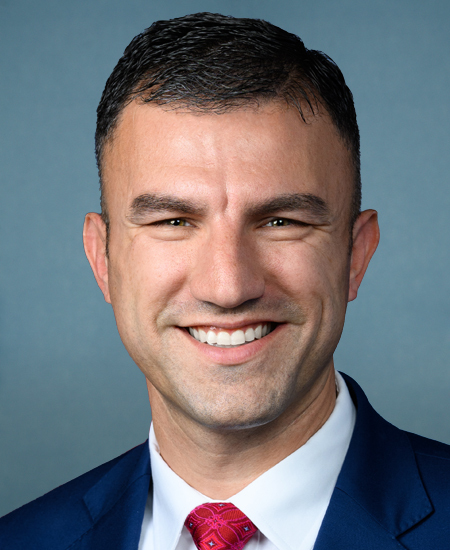
Rep. Rudy Yakym III
Sponsored bills
Maddy summaryHRES 339 is a non-binding House resolution supporting the Second Amendment and criticizing the Biden administration's firearm-related policies. It does not create new laws or directly affect anyone; instead, it formally disapproves of specific Biden-era actions by the Bureau of Alcohol, Tobacco, Firearms, and Explosives (ATF) and Bureau of Industry and Security (BIS) that the resolution claims restricted constitutional rights. Key provisions include condemning ATF rules limiting firearm access, BIS policies restricting firearm exports, and the Biden administration's "gun control agenda," while commending former President Trump for seeking to reverse these policies. The resolution reaffirms the constitutional right to bear arms but has no legal effect, as it is a symbolic statement of legislative opinion.
Maddy summaryThe Fight Fentanyl Act increases annual funding for fentanyl-related law enforcement efforts to $333 million from 2025 through 2030. It requires the Office of National Drug Control Policy to report annually on how HIDTA (High Intensity Drug Trafficking Area) funds target fentanyl trafficking, including seizure data and threat assessments. The bill also mandates the Attorney General to prioritize fentanyl prosecutions by temporarily reassigning U.S. attorneys to these cases. These provisions directly affect federal, state, local, and tribal law enforcement agencies working on fentanyl interdiction and prosecution.
Maddy summaryThis bill increases the federal tax credit for rehabilitating historic buildings. It raises the standard credit rate from 20% to 30% for qualifying small projects (with a $3.75 million expenditure cap) and further increases the cap to $5 million for projects in rural areas. The bill also allows taxpayers to transfer all or part of this credit to another taxpayer, creating a new market for the credit. These changes apply to properties placed in service after the bill's enactment date. The bill directly affects developers and owners of historic properties seeking tax incentives for rehabilitation projects.
Maddy summaryThis bill repeals a restriction that previously prevented individuals from rolling over funds directly from their Individual Retirement Accounts (IRAs) to donor-advised funds (DAFs) for charitable giving. It directly affects IRA account holders who wish to make tax-advantaged charitable contributions through DAFs. The key provision amends the Internal Revenue Code to remove the specific language barring such rollovers, allowing these transfers to occur without triggering taxable distributions. The change becomes effective after the bill's enactment, streamlining a pathway for donors to support charities via DAFs using IRA assets.
Maddy summaryThe Safeguarding Charity Act clarifies that tax exemptions for charitable organizations under the Internal Revenue Code (such as 501(c) status) do not count as "federal financial assistance" for regulatory purposes. This means tax-exempt charities and nonprofits will no longer be subject to federal rules or requirements typically applied to organizations receiving direct federal funding. The bill amends U.S. Code to explicitly exclude tax benefits from the definition of "federal financial assistance" unless a law specifically states otherwise. It does not change tax status or funding for these organizations but prevents misclassification under existing regulations. The law applies to all organizations with tax-exempt status under sections 501(c) or 401(a) of the Internal Revenue Code.
Maddy summaryThe Affordable Housing Credit Improvement Act of 2025 would reform the Low-Income Housing Credit program, which provides tax credits to developers of affordable housing. It would increase state allocations based on population with annual cost-of-living adjustments, modify tenant eligibility rules to allow higher income limits for some residents, and add protections for domestic violence victims in housing. The bill would simplify rules for rural and Native American housing projects, clarify credit eligibility requirements, and require greater transparency in program administration. These changes would directly affect developers, property owners, and low-income tenants in housing projects that receive LIHC tax credits.
Maddy summaryHR 2729, the "Carnivals are Real Entertainment Act," creates a new temporary work visa category for carnival and circus workers. It directly affects mobile entertainment providers (like traveling carnivals, circuses, and affiliated food/game concession services) and their workers who perform essential tasks such as transporting, assembling, operating, and maintaining rides and equipment at seasonal fairs and festivals. The bill amends immigration law to define "mobile entertainment workers" as those entering temporarily for functions integral to these operations, subject to labor program requirements similar to other temporary work visas. It requires the Departments of Homeland Security and Labor to issue implementing rules within one year of enactment.
Maddy summaryThis bill, HR 2102 (Major Richard Star Act), allows veterans with combat-related disabilities to receive both full military retired pay and veterans' disability compensation simultaneously, without the previous offset that reduced retired pay. It directly affects veterans already eligible for both benefits due to combat-related injuries, removing the requirement that their retired pay be reduced by the disability compensation amount. The key provision amends Title 10 and Title 38 to eliminate the offset rule (sections 5304 and 5305 of Title 38) for these veterans. The change applies to payments starting after the bill’s enactment date, effective for all qualifying veterans. This is a policy change to increase financial support for affected veterans, not a new benefit.
Maddy summaryThis bill codifies a "maximum pressure" policy toward Iran, requiring the U.S. to maintain all sanctions until Iran meets specific conditions related to its nuclear program, missile development, support for terrorism, and human rights violations. It expands sanctions on Iran's Revolutionary Guard Corps (IRGC) and entities supporting Iran's ballistic missile program, while prohibiting waivers of sanctions on these entities. The bill mandates regular reports to Congress on Iran's nuclear activities, support for terrorist groups like Hamas and Hezbollah, and human rights abuses within Iran. It also directs the use of frozen Iranian assets to support victims of state-sponsored terrorism and prevents the release of funds that could benefit Iran's terrorist proxies. The bill aims to maintain economic and diplomatic pressure on Iran until it changes its behavior across multiple fronts.